A weekday wardrobe does not need a long list of pieces to offer plenty of options. A few tops, bottoms, and layers that work in more than one combination can make getting dressed easier, especially when mornings are short or plans shift during the day. Start with the clothes you reach for often, then look for useful pairings rather than a perfect matching set. The goal is a reliable rotation that feels comfortable for your routine and still leaves room for personal style.
Start with the week you actually have
Before adding anything to your weekday rotation, consider what a typical week asks of your clothes. Think about whether you spend most of the day sitting, moving between errands, working in a casual setting, or switching between indoor and outdoor plans. Your answers help define which shapes and layers will earn regular use. A piece that suits your real schedule is more valuable than one that only works for an imagined occasion.
Choose a few dependable bottoms and tops that feel comfortable together. Include more than one level of polish if your days vary: a relaxed outfit for an ordinary workday and a sharper layer for a meeting or appointment. You do not need to set a strict uniform. Instead, use your routine as a filter when deciding whether a new piece can connect to clothes you already wear.
It can help to make a short list of combinations you would actually put on. If a top works with two bottoms and a layer you own, it may be more useful than a statement piece with only one possible pairing. Keep the list practical, and revise it when you notice a gap in your week.
Build a small, useful color range
A limited color range makes separates easier to combine without requiring every item to match. Choose two or three colors you already wear often, then add a neutral or a muted shade that sits comfortably alongside them. This is not a rule about which colors belong in a wardrobe; it is simply a way to reduce guesswork when you are getting dressed quickly.
Look at your existing clothes in daylight and notice which combinations you naturally repeat. If most of your bottoms are dark, a mix of light and mid-tone tops may give you more variety. If your tops already carry plenty of color or pattern, quieter bottoms and layers can help create balance. A small palette can still feel lively when you vary texture, neckline, or silhouette.
Try laying a new piece beside at least two items you own before deciding how it fits your rotation. Pay attention to whether it works with the clothing you wear most, not just with a favorite outfit. When reviewing a product online, check its listed color and product details rather than assuming a shade will coordinate from a screen alone.
Choose tops that can change roles
For a flexible weekday rotation, look for tops that can be worn on their own and also sit comfortably beneath a layer. A simple top may feel casual with an easy bottom, then look more considered under a structured layer. Neckline, sleeve shape, and length all affect which combinations feel natural, so think about what you already like wearing rather than chasing a single ideal cut.
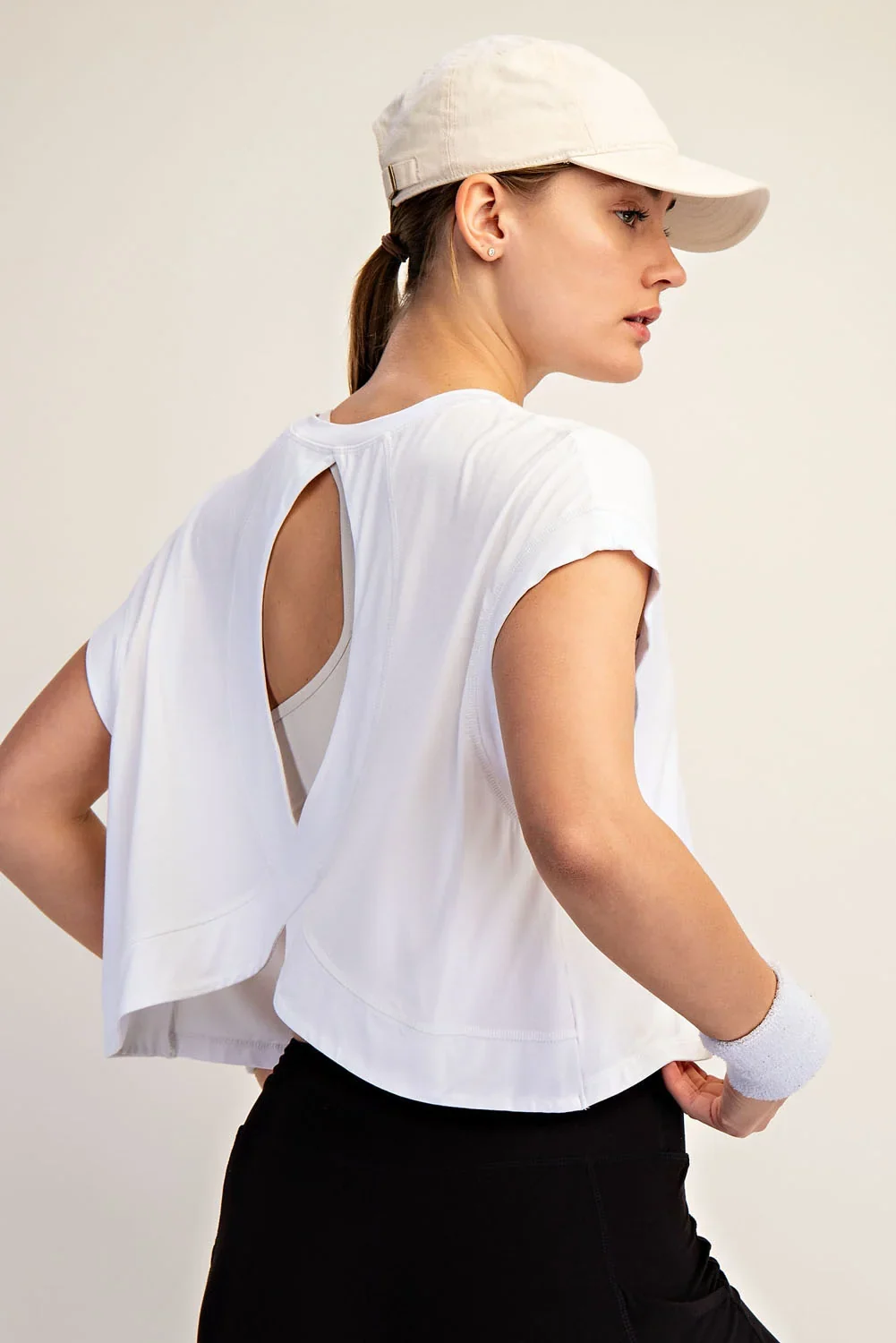
The Airflow Open-Back Athleisure Tee is described as a relaxed-fit, slightly cropped top with drop shoulders, a round neckline, and an open-back detail. Its source description suggests layering it over a sports bra and pairing it with leggings, biker shorts, or joggers. Those details make it a possible choice for casual, movement-friendly days; consider where the open back and slightly cropped length fit your own routine.
To compare options, browse the tops collection and check each item's listed silhouette, length, and fit notes. If a description does not answer a question that matters to you, use the product details as your reference rather than guessing. When selecting a size, follow the specific fit information provided for that item.
Make bottoms do more than one job
Bottoms can set the tone of an outfit, so it helps to choose a small variety that covers the situations you face most. One relaxed option can work for a casual day at home or a quick errand; another may feel better when you want a neater look. Consider waistband comfort, movement, and pockets as practical details, while keeping the rest of your outfit in mind.
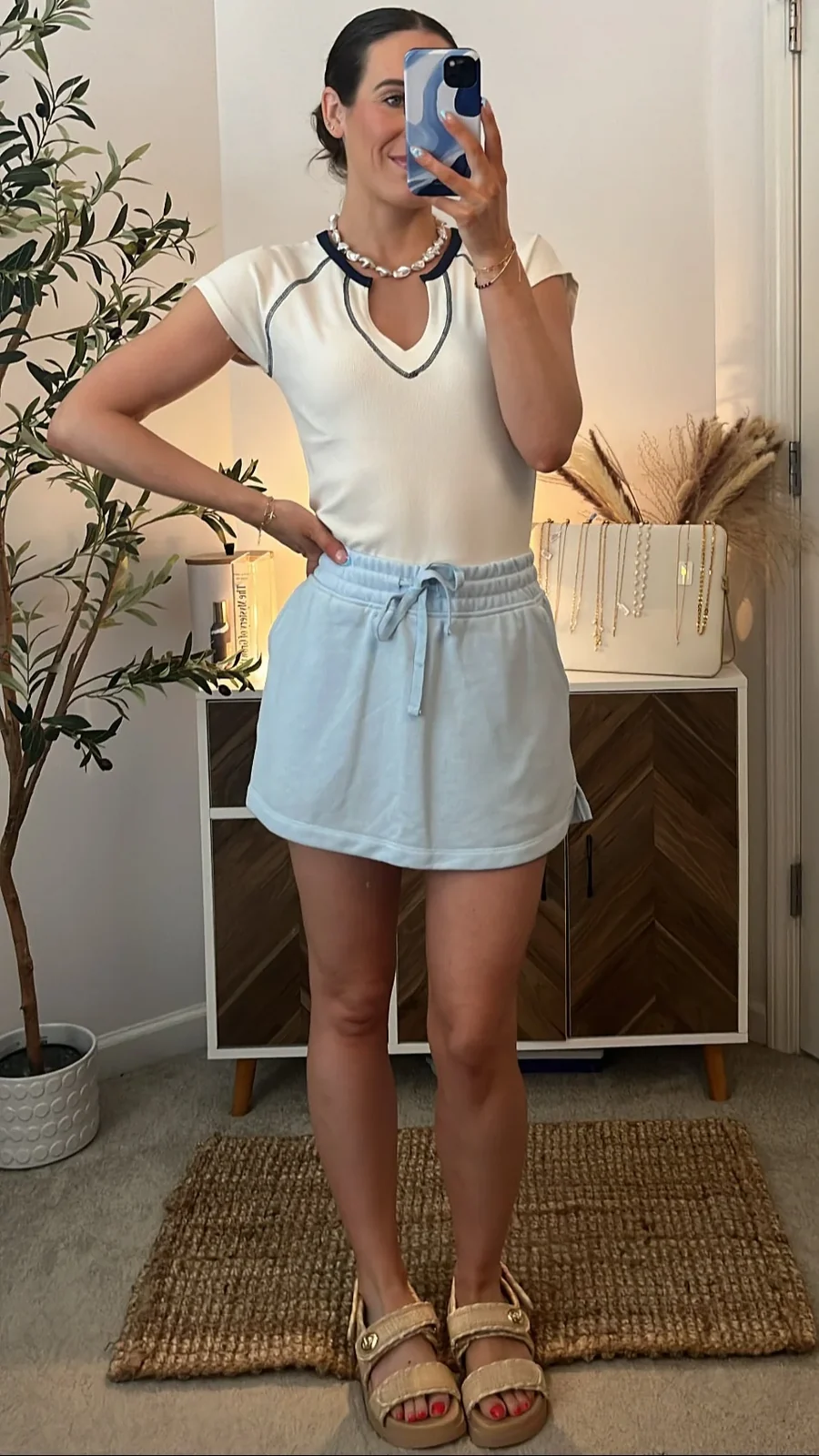
The Mediterranean Sky French Terry Skort is described as a pull-on style with an elastic waistband, adjustable drawstring, and side pockets. Its description suggests it for casual outings, lounging, picnics, or leisurely tennis. If that range suits your plans, try thinking of it as one part of a casual rotation rather than a piece reserved for a single activity. The listed fit note says it fits slightly small and advises sizing up for more room.
For more options, browse the bottoms collection and compare the details that matter to your day. A quick check of the product description can clarify construction and fit; do not assume a similar-looking garment will share the same features. The garment care label is the final authority for care.
Use layers to adjust the level of polish
A layer can make a familiar combination feel different and help an outfit adapt to changing settings. A cardigan, blazer, or other outer layer may add warmth, structure, or a more finished impression, depending on its shape. Keep the rest of the outfit simple while you test a new layer: this makes it easier to see whether the proportions and overall feel work for you.
The Oat Latte Blazer is described as longline, with two front buttons, and as fitting oversized. Its product details suggest pairing it with jeans or using it for a casual office day or brunch. Consider the oversized fit in relation to the tops you plan to wear beneath it. For more choices, explore the outerwear collection and review each item's listed silhouette and fit.
Try one layer over two different outfits before deciding how often you might wear it. A piece that works with several tops and bottoms is easier to incorporate than one that only suits a single combination. Check the garment care label for instructions; it is the final authority, regardless of the material listed in a product description.
Plan combinations, not a rigid uniform
Once you have a few useful separates, take a little time to test combinations before a busy week. Pick three tops and two bottoms, then see which pairings feel comfortable and appropriate for your plans. Add one layer to each outfit and notice whether it changes the look in a useful way. You may find that a small selection already produces enough variety for several days.
Keep the process flexible. If a combination feels awkward, note why: perhaps the lengths do not work together, the layer feels too warm, or the outfit is not suited to the day's activity. That observation gives you a clearer idea of what to look for next time. You do not need to buy more clothes to solve every gap; sometimes rearranging what you own is enough.
Before the week begins, set aside a couple of combinations you know you can wear comfortably and leave room to adjust. A weekday wardrobe built around easy separates should support your actual schedule, not make it more complicated. Choose pieces with details you understand, check fit information when shopping, and let repeat wear guide what belongs in your rotation.