A cardigan earns its place when it solves a real outfit problem: a cool room, a breezy morning, or a base layer that needs a little more structure. The best choice depends less on a rule about what everyone should own and more on three details: where the hem lands, how the front closes, and how much warmth the knit adds. Start with the clothes you plan to wear underneath. A simple top, a dress, and a thicker shirt each call for a different kind of layer. These checks can help you decide whether a cardigan adds useful shape and comfort—or simply interrupts the outfit you already like.
Start with the base outfit
Lay out the base outfit before choosing a cardigan. Notice where the top or dress ends, whether the fabric is close to the body or has volume, and which parts you want to keep visible. A fitted tank can usually sit under a range of knit shapes; a roomy blouse may need a cardigan with enough space through the sleeves and shoulders. With a dress, check whether the layer covers a feature you want to show, such as a waist seam or a distinctive neckline.
Think about the setting, too. A layer for a cold office may need more coverage than one for a mild afternoon. The goal is not to cover every inch of the base outfit, but to make the combination feel comfortable and considered. If the base already has a strong shape, let the cardigan support it rather than compete with it.
Match cardigan length to the hemline
Hem placement changes the proportions of an outfit. A cardigan that ends near the waistband can make a long top or dress look more defined; a longer layer creates a continuous vertical line and adds coverage. Neither length is automatically better. Look at where the cardigan hem lands in relation to the base garment, and decide whether that break feels deliberate. If both hems fall at nearly the same point, the outfit may look like one broad horizontal block. Shifting the layer shorter or longer can make the difference.
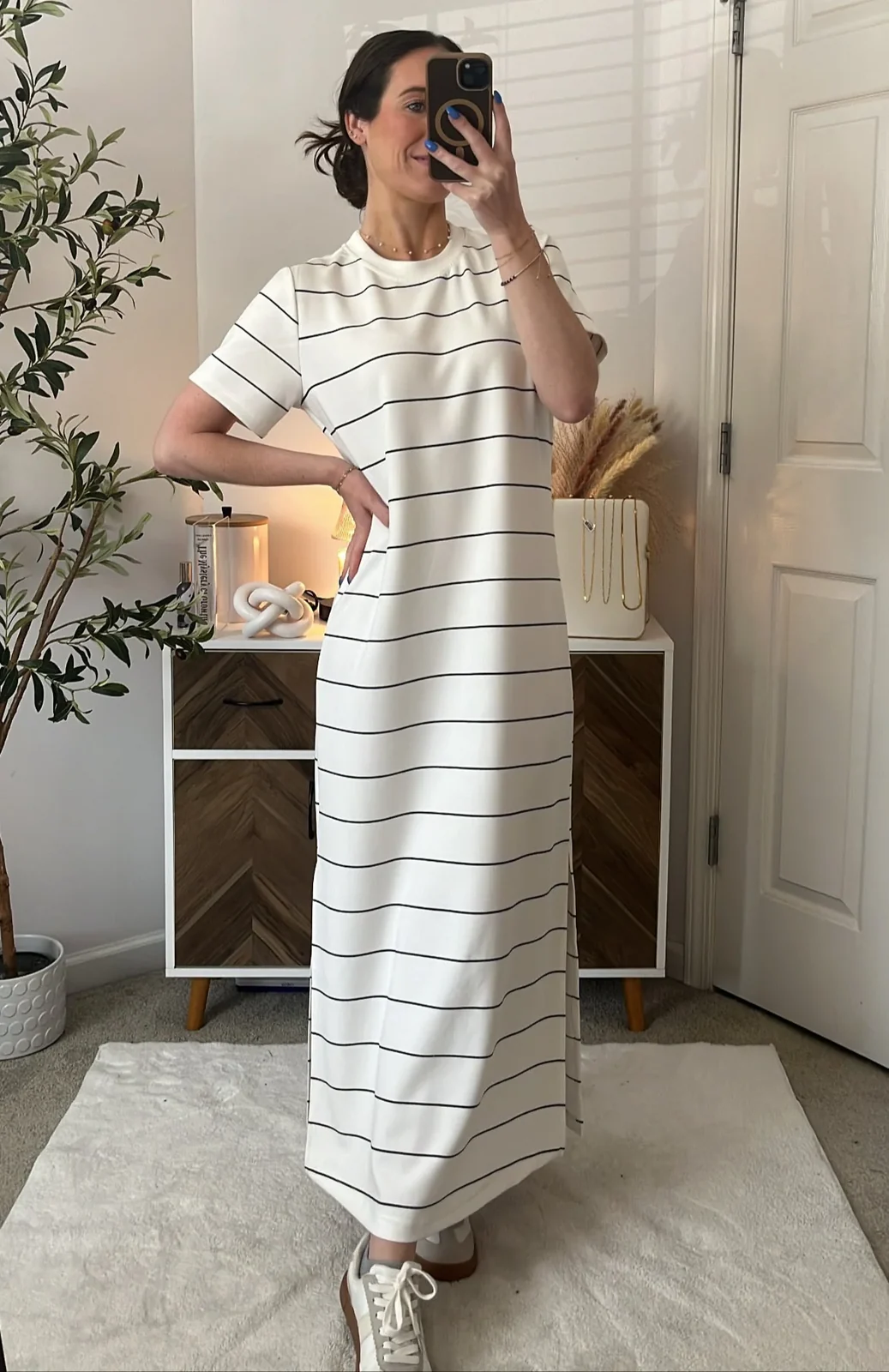
For a dress, try the cardigan open first, then close it if the garment has a front closure. That quick comparison shows how much of the dress shape remains visible. The Roam Free Striped Scuba Dress is described as relaxed fit, with a crew neck and high side slit. When considering a layer over it, check the dress’s length and slit placement on the garment itself, then make sure the cardigan does not obscure the details you want to keep in view.
Use the closure as a styling choice
An open cardigan leaves the base outfit visible and creates two vertical edges down the front. It can be an easy option when a top or dress already has a clear shape, or when you want to adjust your warmth without fastening anything. A closed cardigan becomes more prominent in the outfit: its buttons, neckline, and hem now frame the center of the body. Try fastening just one or two buttons, if the design allows, to compare that shape with wearing it fully open.
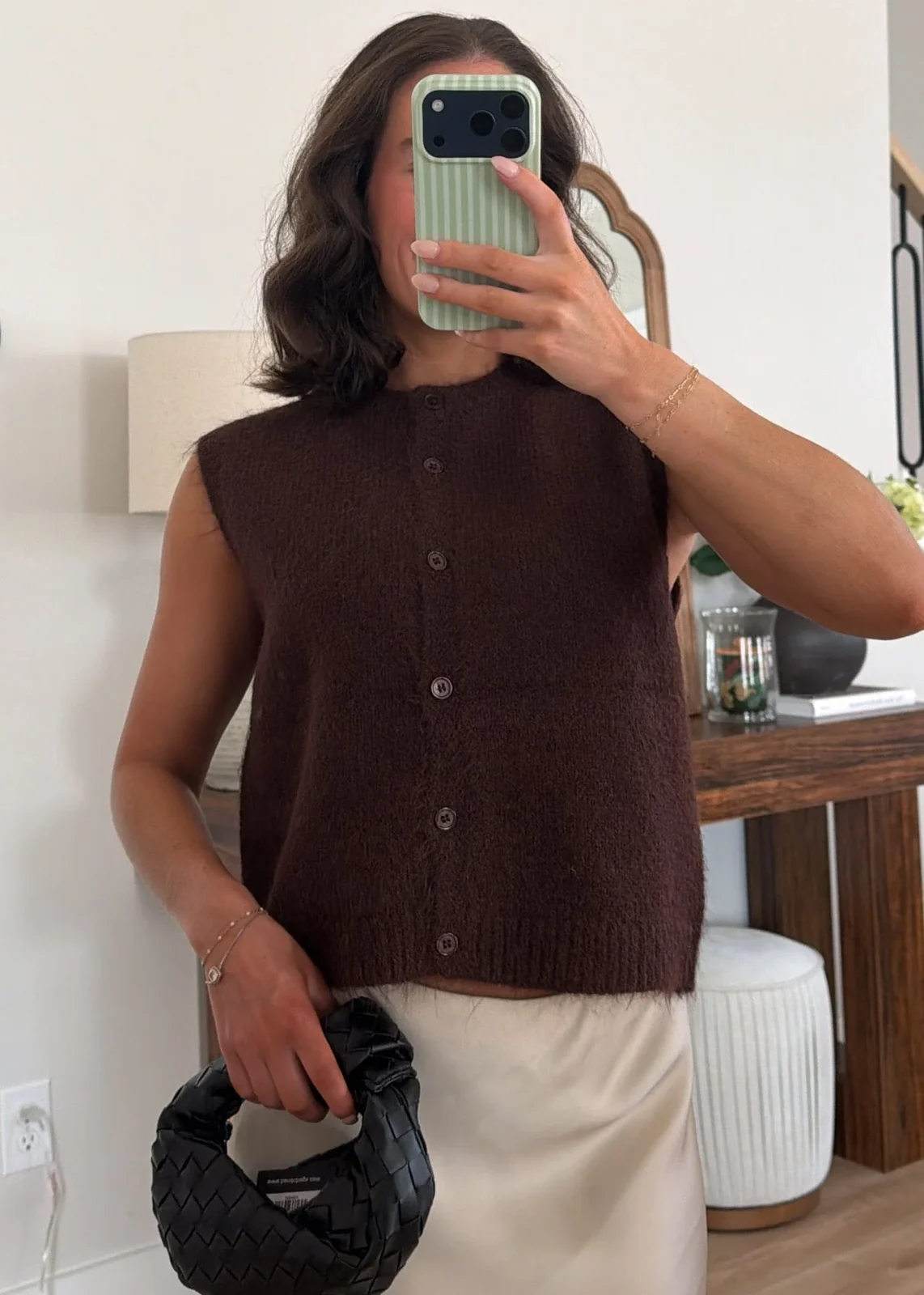
Button placement matters more than a general instruction to “define the waist.” Check where the fastening sits on you and whether the fabric below it hangs smoothly over the base. The Chocolate Dreams Sweater Vest is described as button down, so its closure can be part of the outfit’s visible structure. It is a vest rather than a cardigan with sleeves; use it as a related example of how a button front can add a deliberate layer while keeping the arms free.
Choose weight for comfort and movement
Layering works best when the combined clothes feel comfortable in the conditions you expect. Consider how warm the base outfit already is, whether you will be moving between indoor and outdoor spaces, and if the extra layer will fit comfortably under a coat. A very substantial knit over a thick shirt can feel cumbersome through the arms and shoulders. A lighter layer may be easier to leave on indoors, but could offer less warmth. The product details can help you assess the fabric and construction; the actual feel and fit still deserve a check when you try a garment on.
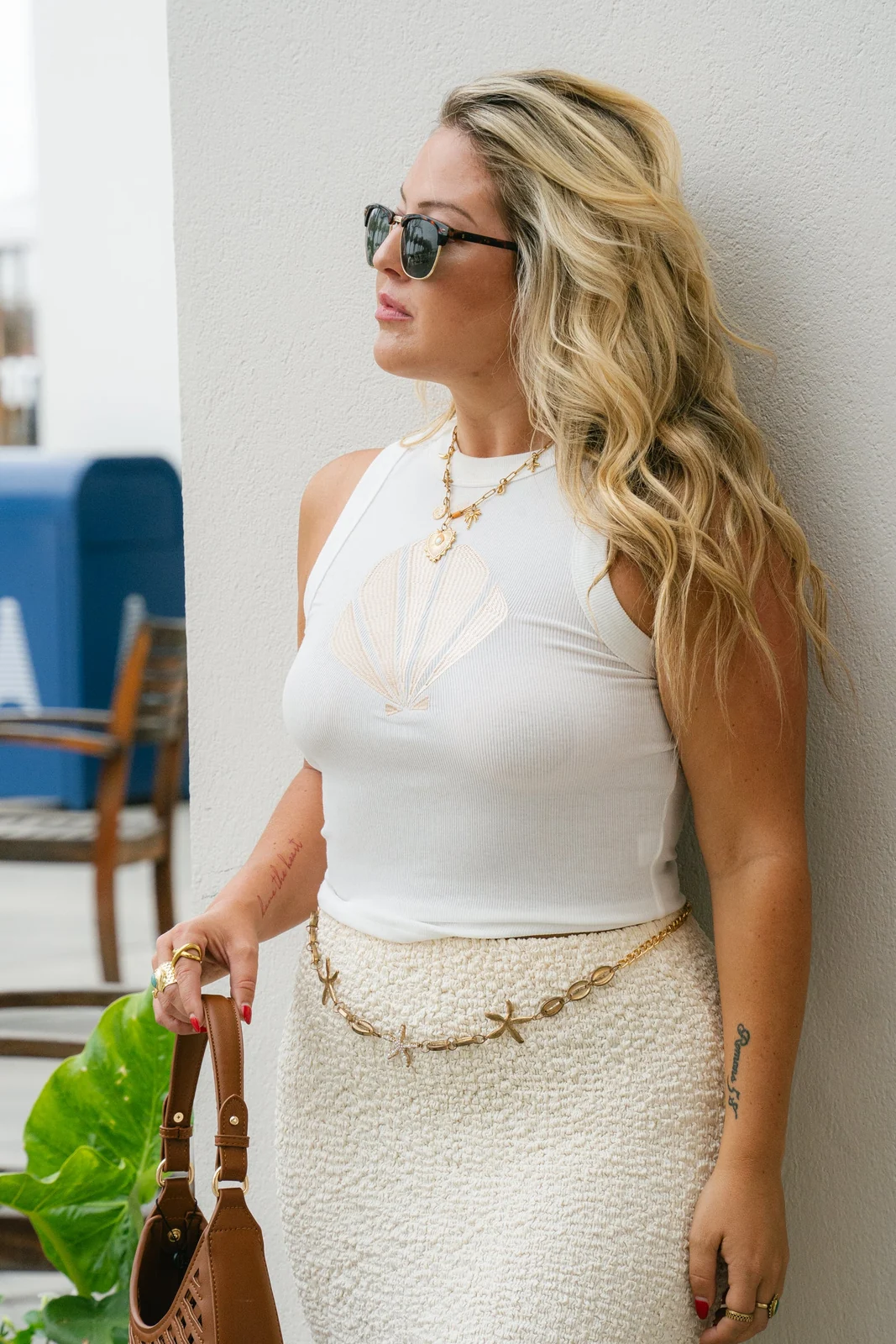
Pay attention to sleeve room and the way the front hangs when you move. Reach forward, sit down, and let your arms rest naturally. If the base garment pulls or bunches beneath the layer, try a roomier combination or a different type of top. The Solstice Shell Embroidery Tank is described as a tank that can be layered or worn alone. A sleeveless base can leave more room for a knit layer, though the best combination depends on the fit of both garments.
Check neckline, texture, and visual balance
A cardigan’s neckline and front shape affect what remains visible above it. A low or open front can leave room for a crew neckline, while a higher neckline may overlap it. Look in a mirror from the front and side: does the base neckline sit neatly, and does the cardigan fall without twisting? Texture also changes the impression. When both layers have prominent texture or detail, one can make the other harder to see. Let one piece lead, and use the second as a quieter frame.
For an outfit with embroidery or stripes, avoid covering the most distinctive area by habit. Try the layer open, then shift its position and check whether the detail still reads clearly. The point is not to match every texture or neckline exactly. It is to notice what the eye sees first and make that choice on purpose. If you are comparing options, browse the knitwear collection with the base garment in mind, rather than choosing a layer in isolation.
Make a quick try-on decision
Before committing to a combination, use a short practical check. Confirm that the cardigan’s length works with the base hem, the closure creates the shape you want, and the weight suits the room or weather. Then move around: reach, sit, and walk a few steps. Watch for fabric bunching at the waist, pulling across the shoulders, or a hem that keeps catching on the base layer. Those small signs can tell you more than a still mirror view.
When assessing a specific garment, rely on its listed features and sizing information rather than guessing from a photograph. Fit descriptions can guide your starting point, but they do not replace checking how the garment sits on you. Follow the garment care label as the final authority for care; a fiber description alone is not a care instruction. A useful layer should work with more than one base outfit, feel comfortable in motion, and make sense for the conditions you actually dress for. If it does those things, it is earning its place.