
Good clothing care starts with a small pause before washing, folding, or fixing anything: check the garment’s label and follow its instructions. Fibers and construction vary, even among clothes that look similar, so a familiar routine may not suit every piece. Thoughtful habits can help you make better care decisions without assuming any garment will last forever.
Start with the care label
Look for the care label before choosing a wash method, water temperature, drying approach, or ironing setting. Read the full instructions, including symbols, and check whether they distinguish between washing, bleaching, drying, and pressing. If a label is missing, unclear, or difficult to interpret, avoid guessing when the garment is especially important to you; consult a reputable textile-care professional or the retailer for guidance.
Do not use a fiber name as a substitute for the label. A garment’s construction, finish, lining, trims, and combination of materials can affect how it should be handled. For instance, the Delta Oversized Sweater is described as 76% acrylic, 20% polyester, and 4% spandex, but those percentages alone do not establish its washing or drying instructions. Check the actual garment label first. When shopping, review the available product details and consider whether the listed care information fits the routine you can realistically maintain.
Make washing a considered choice
Before starting a load, decide whether a garment needs washing or whether airing it out and checking for a small spot is enough. Follow the label either way; not every item can be treated with the same method. When washing is permitted, sort thoughtfully by color and care requirements, close fasteners that could snag, and turn suitable garments inside out. Use a cycle and detergent appropriate to the label rather than defaulting to the most intensive settings.
Give clothing enough room to move through the wash, and avoid combining delicate pieces with items that have rough hardware or heavy construction. A mesh laundry bag can add a layer of separation for garments whose labels allow machine washing, but it does not replace the instructions. If a mark remains, resist repeated scrubbing or applying an untested stain treatment. Check the care label’s limits and test any permitted treatment in an inconspicuous spot when appropriate. When uncertain, ask a textile-care professional before proceeding.
Dry and press with care
Drying and pressing deserve the same label-first attention as washing. Some labels allow a tumble dryer; others call for a different approach. Do not assume that a garment can safely take heat because a similar-looking item did. If the label permits machine drying, use its stated guidance and remove clothing when the cycle is complete. For items that should be air-dried, follow the label’s directions and choose a clean, suitable place where the garment can dry without being crushed or pulled out of shape.
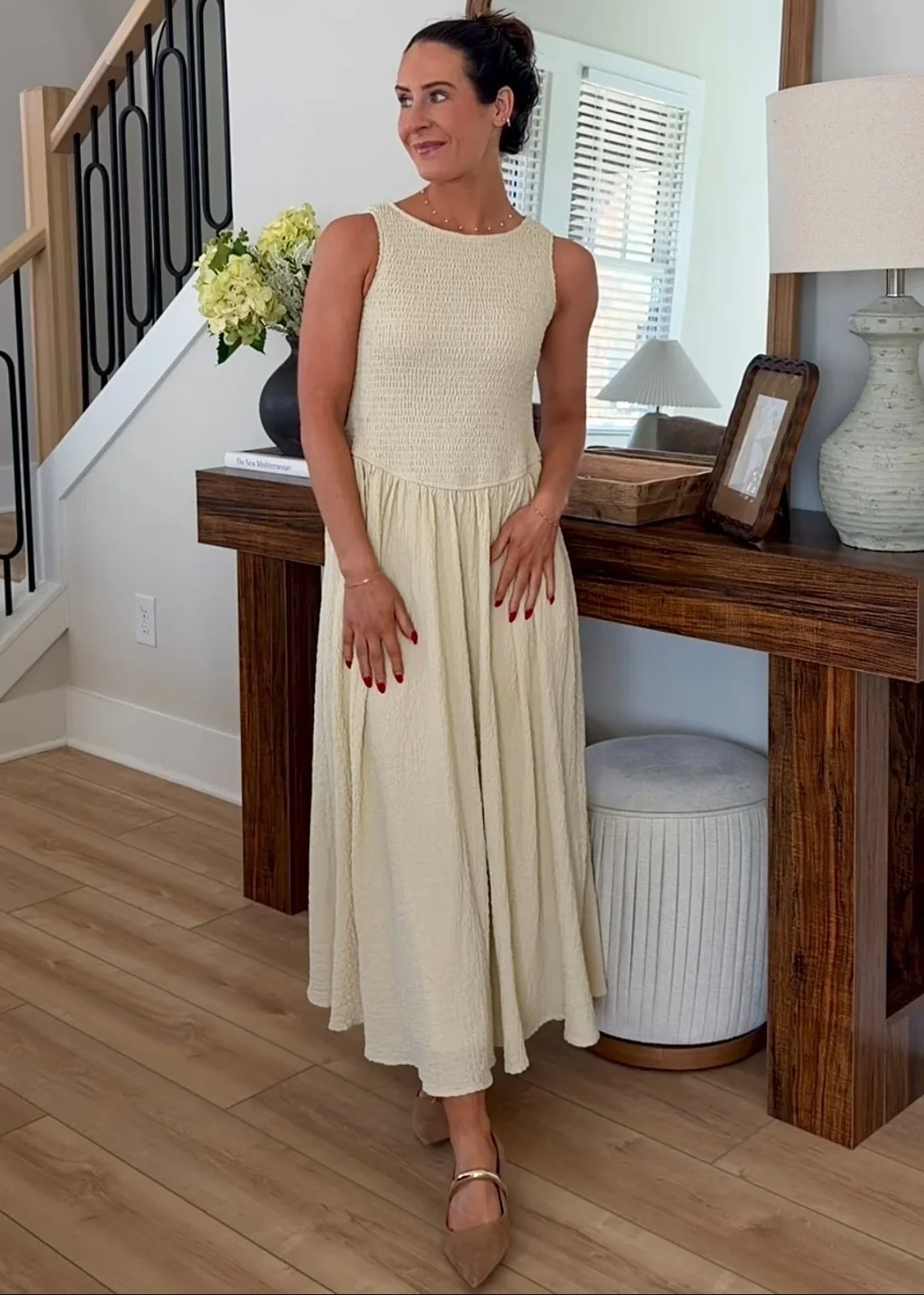
Before ironing or steaming, check the permitted temperature and whether the label allows that method. Use a clean pressing surface, and avoid pressing directly over details unless the care instructions say it is appropriate. If the directions are unclear, get advice instead of testing heat on a visible area. The Summer Breeze Smocked Midi Dress is described as having a smocked bodice and a double-lined construction. Those product details do not tell you how to wash, dry, or press it, so rely on its care label for those decisions.
Store clothes to suit the garment
Put clothing away clean and fully dry, following its label and the garment’s shape. Choose a storage method that does not strain shoulders, waistbands, fasteners, or delicate details. A hanger can be convenient for some garments, while folding may suit others; do not treat one method as right for every piece. Avoid packing a closet so tightly that clothing is difficult to remove without pulling at neighboring items.
For folded clothes, use a clean, dry shelf or drawer and stack in a way that lets you reach the bottom pieces without dragging them across a pile. Keep stored garments away from damp areas and direct, prolonged sunlight. Before putting away seasonal clothing, check for stains, loose seams, and missing buttons, then address what you can. If you store an item in a container, make sure it is clean and dry before closing it. Check stored pieces occasionally so a small issue does not go unnoticed for a long stretch.
Make repairs before they become bigger decisions
A loose button, a small seam opening, or a snag can be a prompt to pause and assess the garment. If you are comfortable with basic sewing, use a suitable needle and thread and work carefully; avoid pulling a snag through the fabric, since that may distort the surrounding area. For an unfamiliar fabric, complicated construction, or repair near a visible detail, a tailor or textile-care professional can help you weigh the options.
Check care instructions before washing a garment that has been repaired, and make sure any repair is secure enough for the planned use. A repair is not automatically worthwhile for every item: consider the garment’s condition, how often you wear it, and whether the work feels manageable. When comparing pieces, product details can help you understand features, but they do not replace inspecting a garment or reading its care label. You can browse the knitwear collection with those practical questions in mind.
Build a routine that fits your wardrobe
Care works best when it is easy to repeat. Keep a small sewing kit where you can find it, and set aside a moment to check pockets, fasteners, and visible marks before laundry day. Group garments by the instructions on their labels rather than by a single rule for the whole closet. If a piece needs special handling, keep its care directions accessible so you are not relying on memory the next time it needs attention.
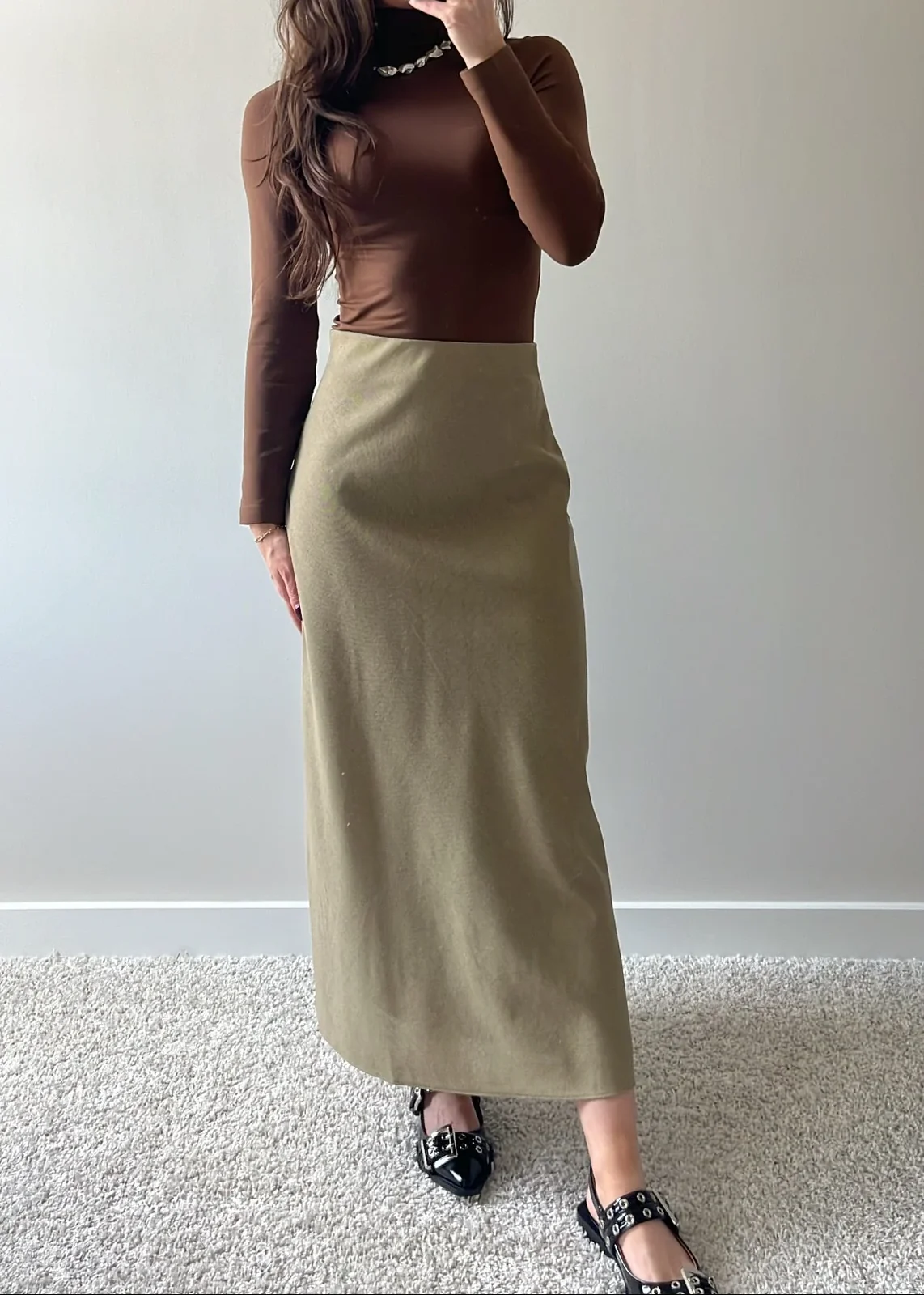
When evaluating a new garment, look at its listed materials and construction, then seek its care instructions before deciding how it fits your routine. The Olive Tree Skirt is described as 70% viscose and 30% linen, with a hidden side zipper; those facts still do not determine its cleaning method. Check the garment label for that. The bottoms collection offers another place to review garment details while keeping care requirements in view. No routine can prevent every change, but informed choices can help you treat each piece appropriately.