Wide-leg bottoms bring ease and movement to an outfit, but their generous shape can make getting dressed feel less straightforward. The answer is not a rule that every top must be fitted or tucked in. Instead, look at three practical details: where the top ends, how its neckline frames the upper body, and how much visual weight it adds. Small adjustments in these areas can help an outfit feel intentional while leaving room for different proportions and preferences. The goal is balance, not symmetry: a relaxed top can work beautifully when its length or neckline gives the whole look a clear point of focus.
1. Let top length clarify the proportions
Start by noticing where your top ends in relation to the waistband and the widest part of your bottoms. A top that finishes around the waist or upper hip can make the waistline easier to see and keep the outfit from reading as one long, loose shape. That does not mean you need a cropped top. A regular-length shirt can often be tucked in, partially tucked, or gently bloused to create a similar visual break. If you prefer extra coverage, try a top that ends above the widest point of the hip rather than right across it; that placement can avoid adding another horizontal line where the fabric is already fullest.
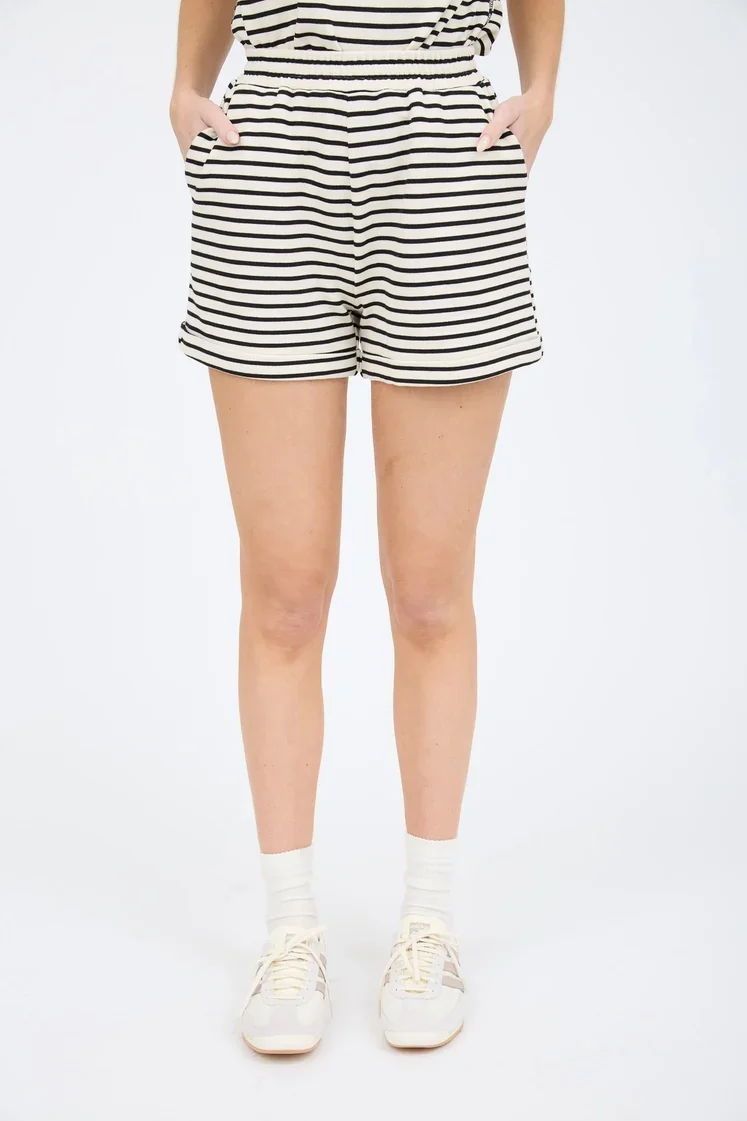
Longer tops are useful, too. They can create a relaxed, continuous line, especially when the fabric falls smoothly rather than catching at the hips. Check the full-length view in a mirror, and try a different tuck or hem placement before deciding a pairing feels off. With elastic-waist shorts such as the Sandswept Stripes Shorts, a light tuck can show where the shorts sit without making the outfit feel formal. The right length depends on your comfort and the rise of the bottoms, so treat these placements as options—not requirements.
2. Use the neckline as a visual counterpoint
Necklines help direct attention toward the upper body and can offset the broad, open shape of wide legs. A crew neckline provides a simple, contained frame, which can be especially useful when the outfit already includes a strong stripe, print, or substantial fabric below. A V-neck or open collar creates a longer line through the chest, while a boat neckline brings more width to the shoulders. None is automatically better; consider whether you want the top half to feel quiet, elongated, or more defined.
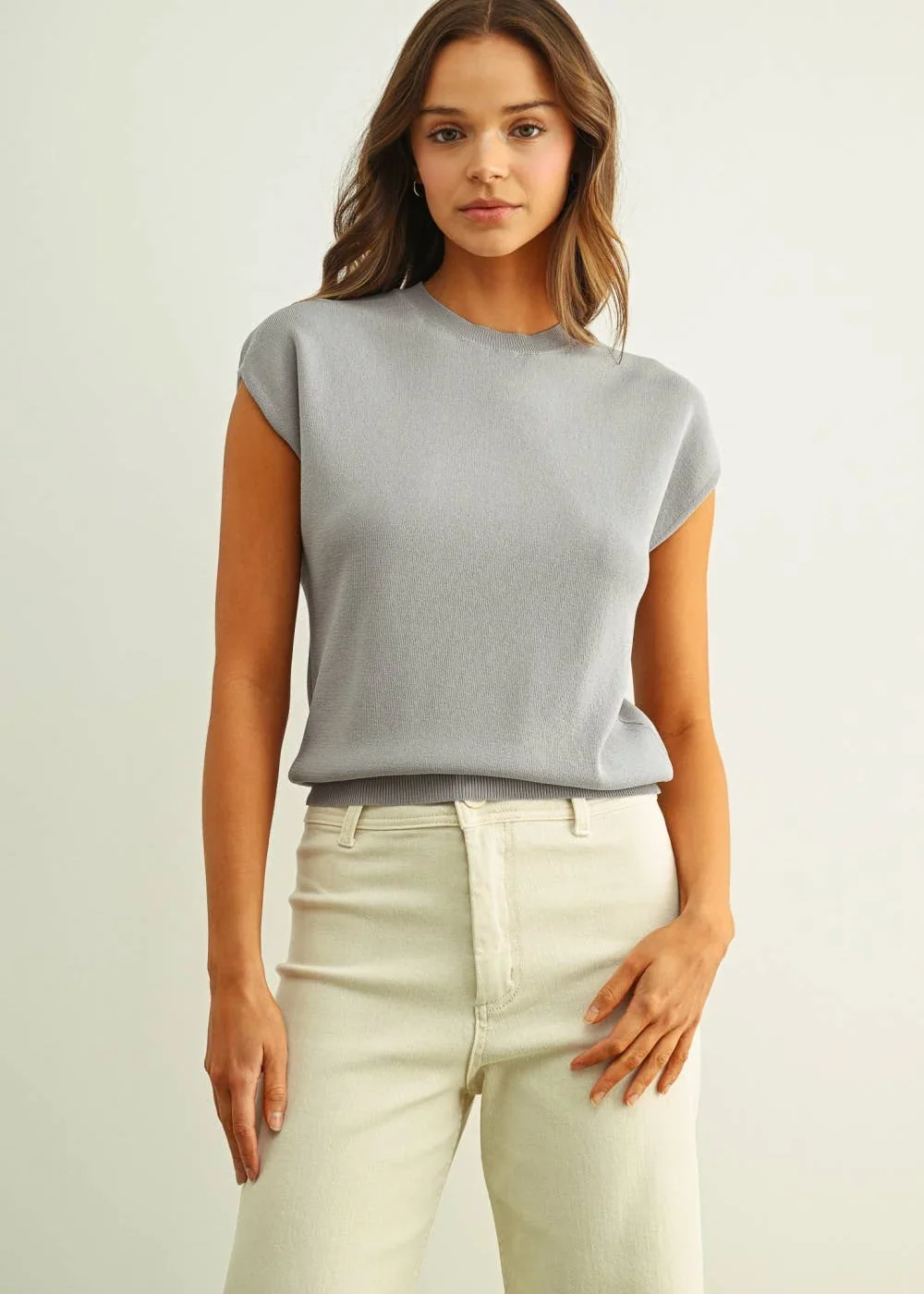
Try the same bottoms with two different necklines and notice how the overall proportions change. If the lower half feels visually expansive, a clean neckline and a relatively simple upper layer may offer enough contrast. If your top is especially plain, an open or shaped neckline can give the outfit a focal point without relying on extra detail. The Grey Clouds Top has a classic crew neckline and relaxed cap sleeves, according to its product details, so it offers one example of a straightforward upper-body shape. Check the listed details and fit information when considering any piece, then judge it against your own wardrobe.
3. Balance visual weight, not just width
Two garments can have similar measurements but feel very different together because of their fabric, color, texture, and structure. A fluid, lightweight top often sits easily with wide-leg bottoms that also move, while a chunkier knit or a crisp, substantial shirt brings more visual weight to the top half. Either approach can work. What matters is whether one area looks unexpectedly dominant or whether the outfit feels grounded from shoulder to hem.
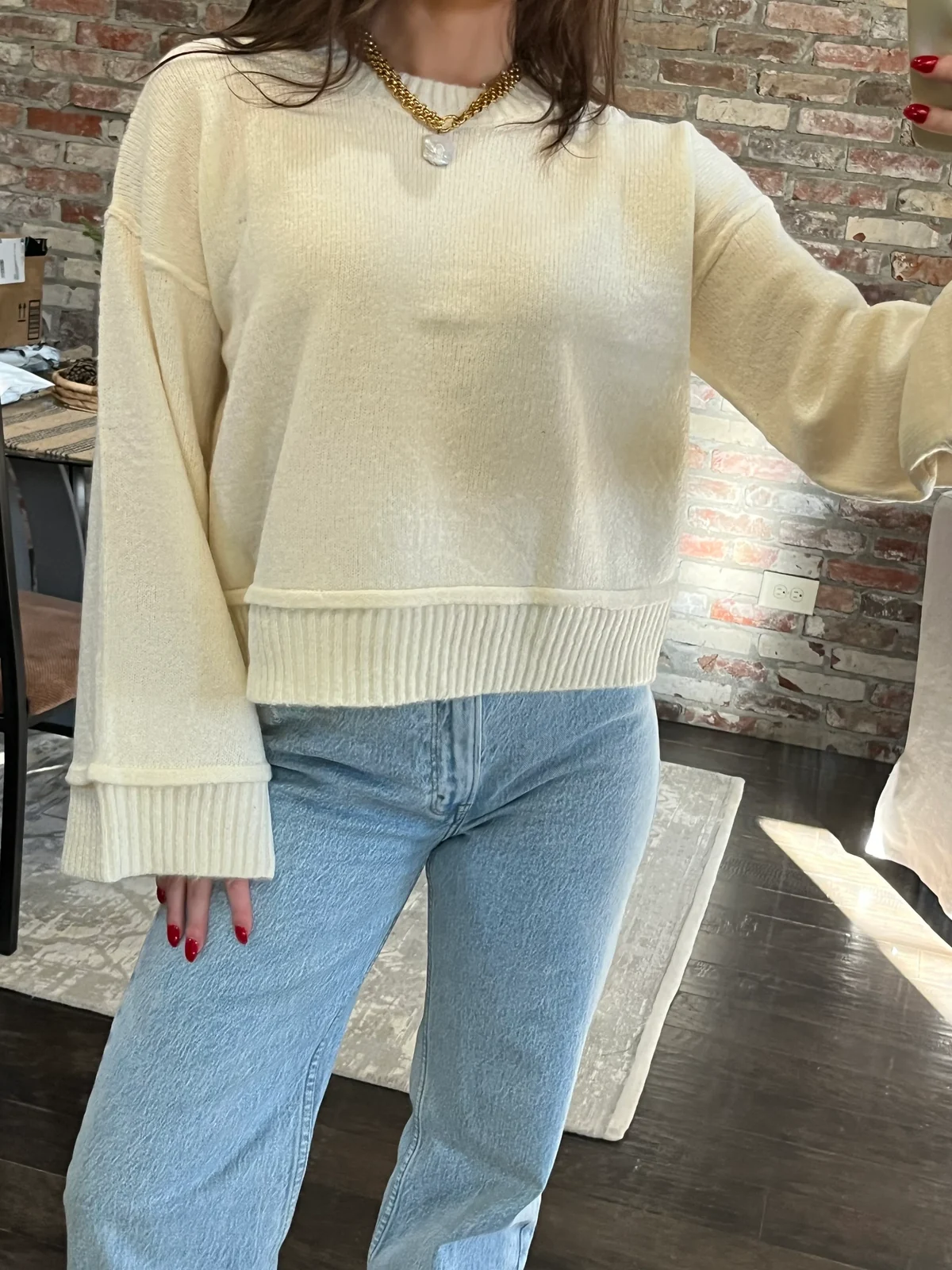
Consider color as part of that balance. Similar shades from top to bottom can create a longer, quieter impression; a strong contrast makes the break between pieces more noticeable. A lighter top with dark, wide bottoms may draw attention upward, while a deeper or more textured top can hold its own beside a broad silhouette. For example, the Delta Oversized Sweater is described as an oversized sweater with drop shoulders and wide sleeves. Those details add presence up top, so you might pair it with bottoms that fall cleanly and avoid adding several more bulky layers at once. Use the product listing to check the garment’s details before choosing a pairing.
Think about the outfit as a whole
A balanced outfit is not a mathematical formula. It is a combination of shapes that feels comfortable when you stand, sit, and move. If your bottoms are loose through the leg and your top is loose as well, try adding definition at the waist or choosing a neckline that opens up the upper half. If your top is fitted, the wider leg already provides contrast; there may be no need to add another shape or detail. Think of each garment as contributing something: softness, structure, movement, coverage, or a clear line.
Use the mirror as a practical tool rather than a judge. Look at the outfit from the front and side, then walk a few steps. Does the hem of the top catch or bunch? Does the waistband sit where you want it? Is the outfit comfortable without constant adjusting? Those answers can tell you more than a general rule about what “should” balance wide legs. If a look feels close but not quite right, change just one variable—top length, neckline, or layer—so you can see what actually helps.
Adapt the formula to the occasion
For a casual day, a soft tee or knit with a partial tuck can give wide-leg bottoms definition without looking overly arranged. For a tidier setting, choose a top with a cleaner neckline and a hem that stays in place, then keep the rest of the outfit simple. In cooler weather, a sweater or light outer layer changes the visual weight; check whether its hem ends near the waistband, hip, or below the seat, and decide which line works with your bottoms. A long layer can create continuity, while a shorter one may make the waist easier to see.
When you are planning several outfits, make notes about the combinations you reach for: a particular rise, a top length, or a neckline that feels comfortable all day. Browsing the bottoms collection can help you compare shapes, but the product details matter more than a label such as “wide leg.” Check the listed measurements or fit notes when provided, and consider how a piece works with tops you already wear. That keeps the decision grounded in your real wardrobe instead of a styling rule made for someone else.
Make one small adjustment at a time
If an outfit feels unbalanced, resist the urge to replace every piece. First, try changing the top’s hem position. If that does not help, test a different neckline or adjust the visual weight by removing a layer. You might also compare a smooth, simple top with one that has more texture or structure. Making one change at a time helps you understand what is affecting the proportions, and it makes getting dressed easier the next time you reach for those bottoms.
Keep your own comfort in the decision. A tuck is useful only if you like how it feels; a fitted top is not a requirement, and a long layer can be exactly right when you want coverage. The most reliable combination is one you can move in and wear without fuss. Look at top length, neckline, and visual weight as three adjustable tools—not rules about body shape. With a little experimentation, wide-leg bottoms can work with a range of tops and feel like a natural part of everyday dressing.