An outfit can contain pieces you love and still feel a little unsettled. Often, the issue is not color or pattern but where the hems land in relation to one another. A top may cover the waistband, a jacket may stop at an awkward point, or sleeves may bunch beneath a layer. Looking at lengths together can help you make small, useful adjustments without chasing a single ideal proportion. Start with the garment you want to wear, then consider where its hem, waist, and sleeve endings meet. The goal is not to make every line match. It is to create a clear visual order that also lets you move comfortably.
Start with the outfit’s main hem
Choose one garment to lead the outfit: perhaps a dress, a skirt, or the top you most want to wear. Its hem becomes a reference point for the other lengths. Notice whether it ends near the waist, hip, mid-thigh, knee, or lower; then ask whether the next layer ends in a way that supports or interrupts that line. Two pieces ending at exactly the same spot can create a strong horizontal break. That can be intentional, but if the outfit feels visually crowded, shifting one hem up or down may help.
Try the pieces on together and look in a full-length mirror, rather than judging each item on a hanger. Check the front, sides, and back, since a curved hem or a longer back can change the overall impression. If you are comparing options, keep the base garment the same and switch only the layer. This makes it easier to see whether the change in length, rather than another styling variable, improves the balance.
Let rise and top length work as a pair
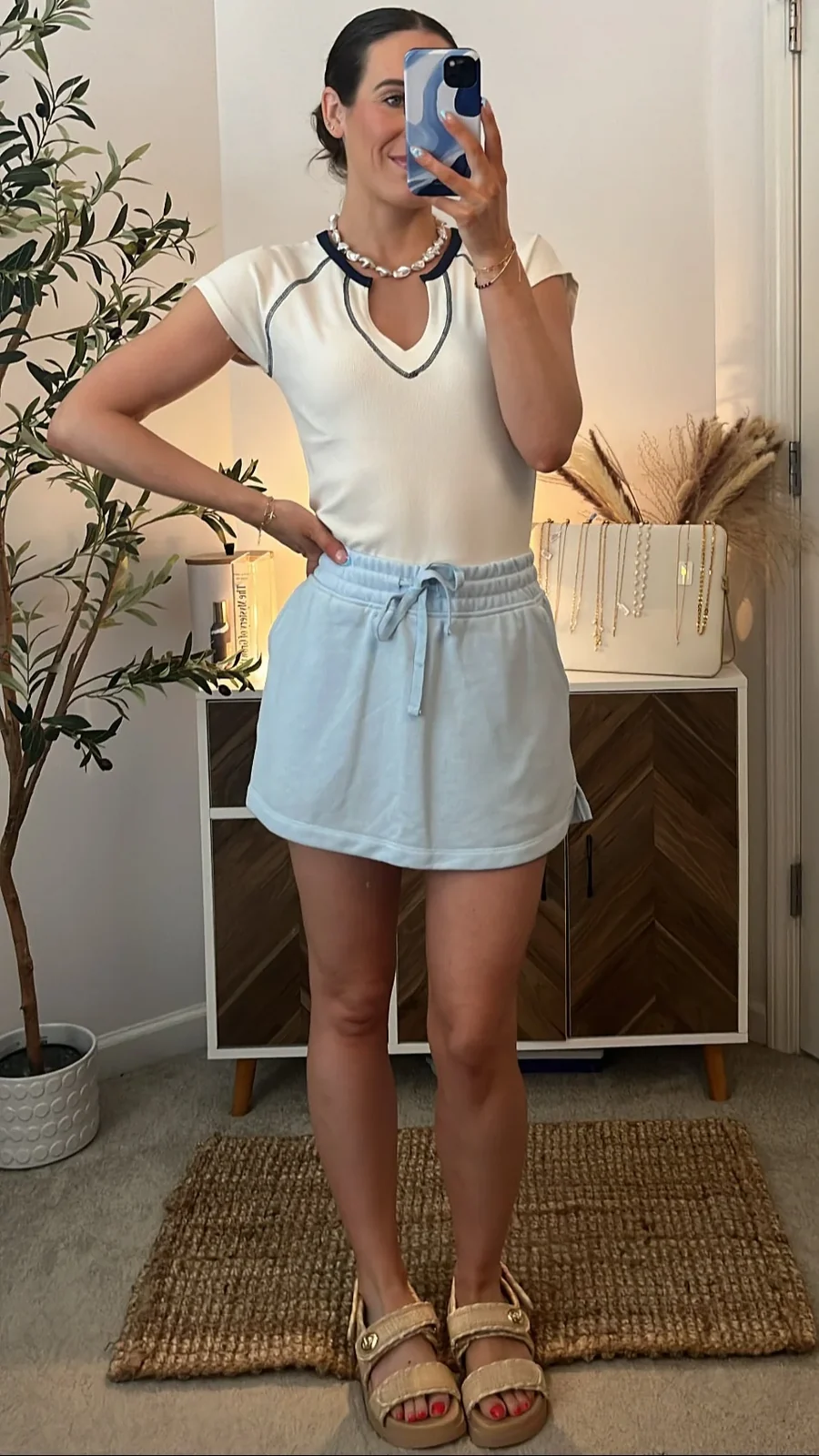
Rise affects where a bottom sits on your body, so it changes how much of a top appears above the waistband. A shorter top and a higher-sitting bottom may leave more waist visible; a longer top can cover the waistband or extend over the hip. Neither combination is automatically better. Consider how much coverage feels comfortable when you sit, reach, and walk, then decide whether you want the waistband visible or the top to skim over it.
With an elastic waistband or adjustable drawstring, check the fit where you naturally plan to wear it instead of relying on a fixed idea of where it should sit. The Mediterranean Sky French Terry Skort has an elastic waistband and adjustable drawstring; its product details also note that it fits slightly small and suggest sizing up for more room. Those specifics can help you assess comfort, but the finished proportion depends on how it sits on you. Explore other options in the bottoms collection with the same try-on question in mind.
Use sleeve endings to keep layers easy
Sleeves add another set of lines, especially when one garment sits over another. If a base layer’s cuffs extend well beyond the outer sleeve, the contrast can look deliberate when the edges are neat and comfortable. If fabric bunches or twists, adjust the layer or choose a different pairing. When sleeves are close in length, a small visible edge can be enough to show both pieces; there is no need to expose a large section simply to prove that layering happened.
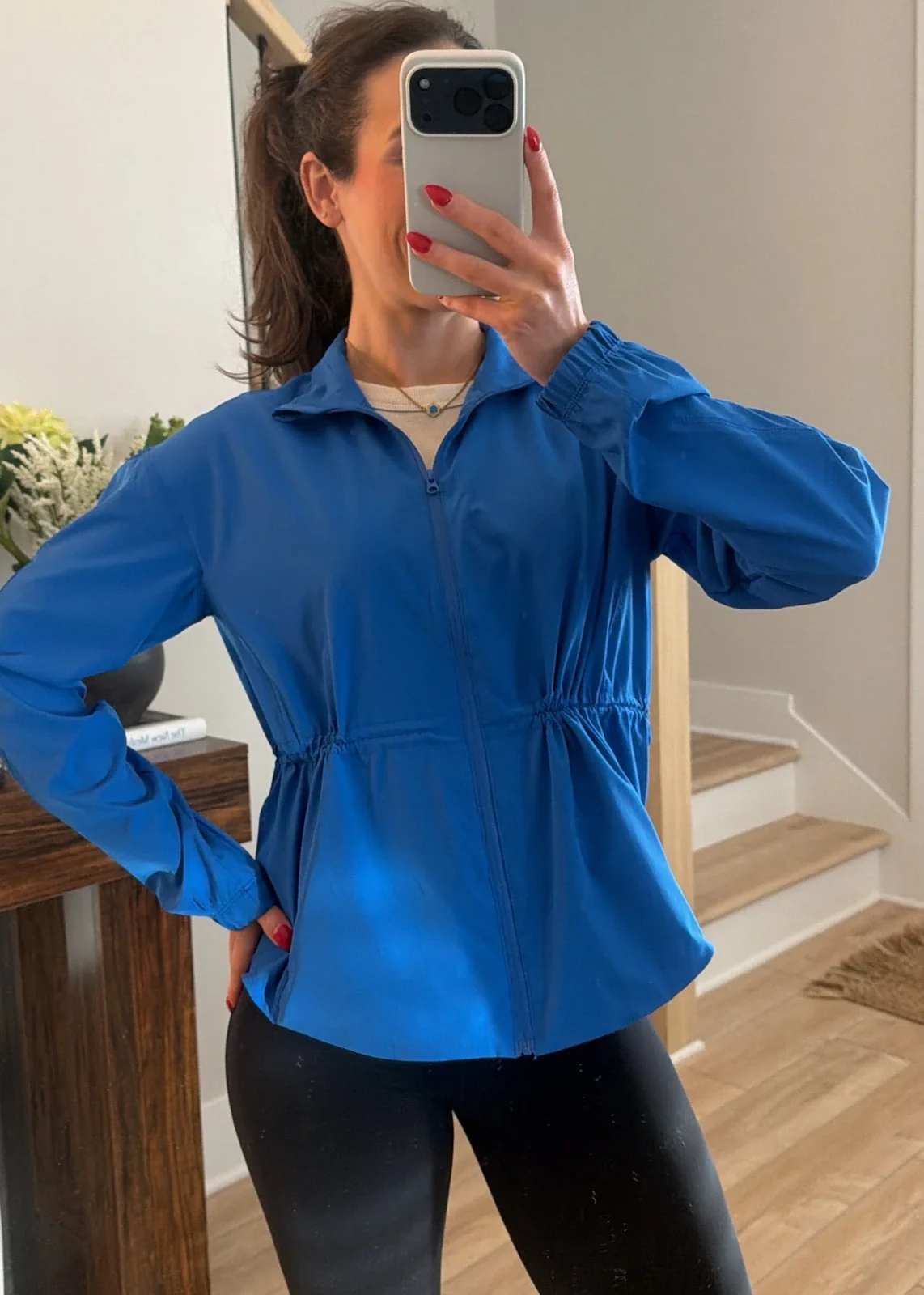
Check what happens when your arms bend and reach forward. A sleeve that looks smooth while standing may ride up or pull once you move. If the outer layer has a relaxed fit, it may be easier to accommodate a tee beneath it, but check the actual garment details rather than assuming every relaxed piece behaves alike. For instance, the Align Zip-Up Jacket is described as fitting true to size or slightly oversized, with an elastic band and curved hemline. Try it over the intended base layer and notice both cuff placement and ease through the arms.
Choose layer lengths with movement in mind
A layer’s hem can clarify an outfit or divide it into competing sections. A jacket that ends above a longer top reveals the top’s hem; one that reaches lower may cover it and create a cleaner outline. Look for a visible difference in length when you want distinct layers, or let the outer piece cover the base layer when you prefer fewer breaks. The best choice depends on the garments and on whether you want the outfit to feel relaxed, streamlined, or more structured.
Move around before deciding. Sit down, lift your arms, and walk a few steps. A jacket may shift above the waistband, while a long top may bunch beneath it. The Align Zip-Up Jacket has a curved hemline, so assess how that shape falls over your chosen top rather than comparing only the center front. If you are browsing outerwear, consider the length of the layer you will actually wear underneath. Leave enough room for comfortable movement, and check the fit notes for each piece.
Make oversized shapes feel intentional
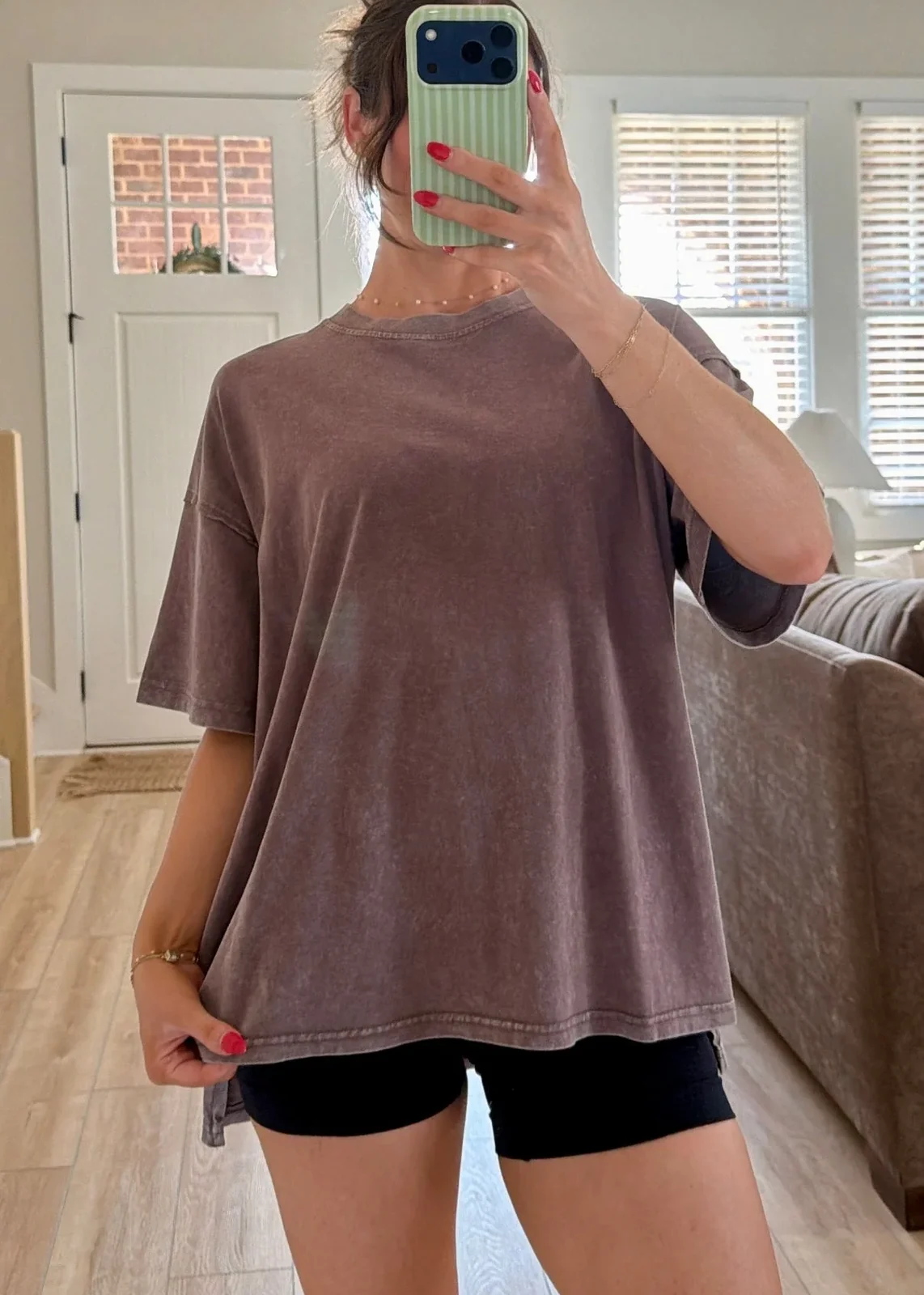
Roomy tops can feel easy to wear, but their length matters when paired with another relaxed piece. If both top and bottom have generous volume, pay attention to where the top ends and where the bottom’s waistband sits. A visible waistband, a partial tuck, or a simple sleeve adjustment can make the relationship between the pieces clearer, provided each option feels comfortable. You do not have to add a fitted item; you can instead use the hemline to create a more defined transition.
The Cozy Chaser Oversized Tee is described as an oversized, relaxed-fit tee. Its product details identify the fit as oversized, so consider how its hem falls with the bottom you plan to wear. Try it untucked first, then compare another styling choice if the proportions feel unclear. Focus on the actual length on your frame: the model’s size alone cannot tell you where the hem will land on you. Tops with different lengths can be compared in the tops collection.
Use a quick fitting-room check
When an outfit feels off, change one length relationship at a time. First, check the main hem and waistband. Next, look at whether a layer covers or reveals the top beneath it. Finally, inspect the sleeve ends and move your arms. This sequence helps identify the source of the imbalance without turning the try-on into a long list of rules. A small change—such as letting a hem show, choosing a shorter layer, or adjusting where a waistband sits—may be enough.
Keep comfort alongside appearance in the decision. If you are tugging at a hem or pulling sleeves into place, the combination may not suit the way you plan to wear it. Read each product’s fit and feature details before choosing a size, and remember that listed model sizing is a reference, not a promise of identical results. For care, the garment care label is the final authority. Once the lengths look clear from several angles and still feel easy in motion, the outfit is doing its job.