A small wardrobe does not need a strict palette or a row of identical basics. It needs colors that can meet each other easily. When most pieces share a few familiar tones, getting dressed becomes less like solving a puzzle: a top works with more than one bottom, and a layer can connect pieces you already own.
Start with soft neutrals, use denim as a dependable middle, and choose one accent color you genuinely enjoy wearing. Then look for opportunities to repeat a tone. These simple habits create variety without requiring a large closet or a perfectly coordinated set of clothes.
Begin with colors you already reach for
Before choosing a palette, notice what you wear on ordinary days. Which tops and bottoms are easiest to combine? Are your neutrals mostly warm, like cream and tan, or cooler, like gray and crisp white? Your existing favorites are a more useful starting point than a color scheme that looks appealing on a chart but feels unfamiliar on you.
Choose two or three base colors from that real-life rotation. They do not have to match exactly; they just need to sit comfortably together. For example, cream, charcoal, and denim can form one workable group. So can soft gray, navy, and a muted brown. The point is to make several combinations possible, not to restrict every outfit to the same formula.
Let soft neutrals do the quiet work
Neutrals are useful because they often give a more noticeable color somewhere to land. A simple top in a quiet shade can work with different bottoms, while a neutral layer can soften a stronger shirt or patterned piece. If a stark white feels too bright, try cream or a softer off-white. If black feels heavy for daytime outfits, charcoal or a deep navy may give you a similar grounding effect.
When shopping, compare a possible new piece with the clothes you own rather than judging it alone. Ask whether it works with at least two bottoms and one layer already in your closet. That quick check can help you distinguish a versatile neutral from a color that will need several new companions. For pieces that fit this foundational role, browse the tops collection and check each item’s details for its color and fit.
Use denim as a reliable middle
Denim can bridge soft neutrals and brighter shades, which makes it a practical base for a small wardrobe. A neutral top with denim is straightforward; a colored top with denim can feel balanced without needing another matching piece. If you own denim in more than one wash, treat each wash as its own shade and see which colors look most natural beside it.
Try a repeatable outfit test: lay one top beside your denim, then add a second top in a different color. If both combinations feel wearable, that denim is doing useful work. The same idea applies to other familiar bottoms. The aim is not to find one universal pairing, but to identify a few combinations you can reach for without much thought.
Choose one accent color at a time
An accent color gives a neutral-heavy wardrobe personality, but it does not need to appear in every outfit. Pick a shade you already like wearing and introduce it through one piece at a time. A muted green, rust, blue, or soft pink can each bring a different mood; the best choice is the one that sits comfortably beside your base colors and feels like you.
For a low-effort combination, wear the accent with two familiar tones rather than asking it to coordinate with several other strong colors. For instance, a colored top could meet denim and a neutral layer. If you are unsure about a new shade, compare it in daylight with your usual neutrals. Consider whether you like the contrast and whether the piece can work in more than one outfit. A single useful accent is often more valuable than several colors that each require their own matching set.
Repeat a tone to make an outfit feel connected
Repeating a color is a simple way to make separate pieces feel intentional. The repeated tone does not have to be an exact match. A dark blue top and a lighter denim wash can echo one another; a soft gray layer might connect to a fine stripe. Look for a shared impression rather than trying to reproduce a color precisely.
Try repeating a tone in two places, then stop and see how the outfit feels. Too many matching elements can make a simple outfit feel overly planned, while one small echo can give it cohesion. This approach also helps when a pattern is part of the outfit: choose one color in the pattern and repeat it in a solid piece, or keep everything else neutral so the pattern has room to stand out.
Use stripes as a built-in color guide
A striped garment already brings colors together, so it can serve as a starting point instead of a challenge. Choose a solid piece that picks up one of the stripe colors, or pair the stripes with denim and let the pattern provide the interest. If you prefer a quieter look, keep the rest of the outfit in a neutral that is already part of your palette.
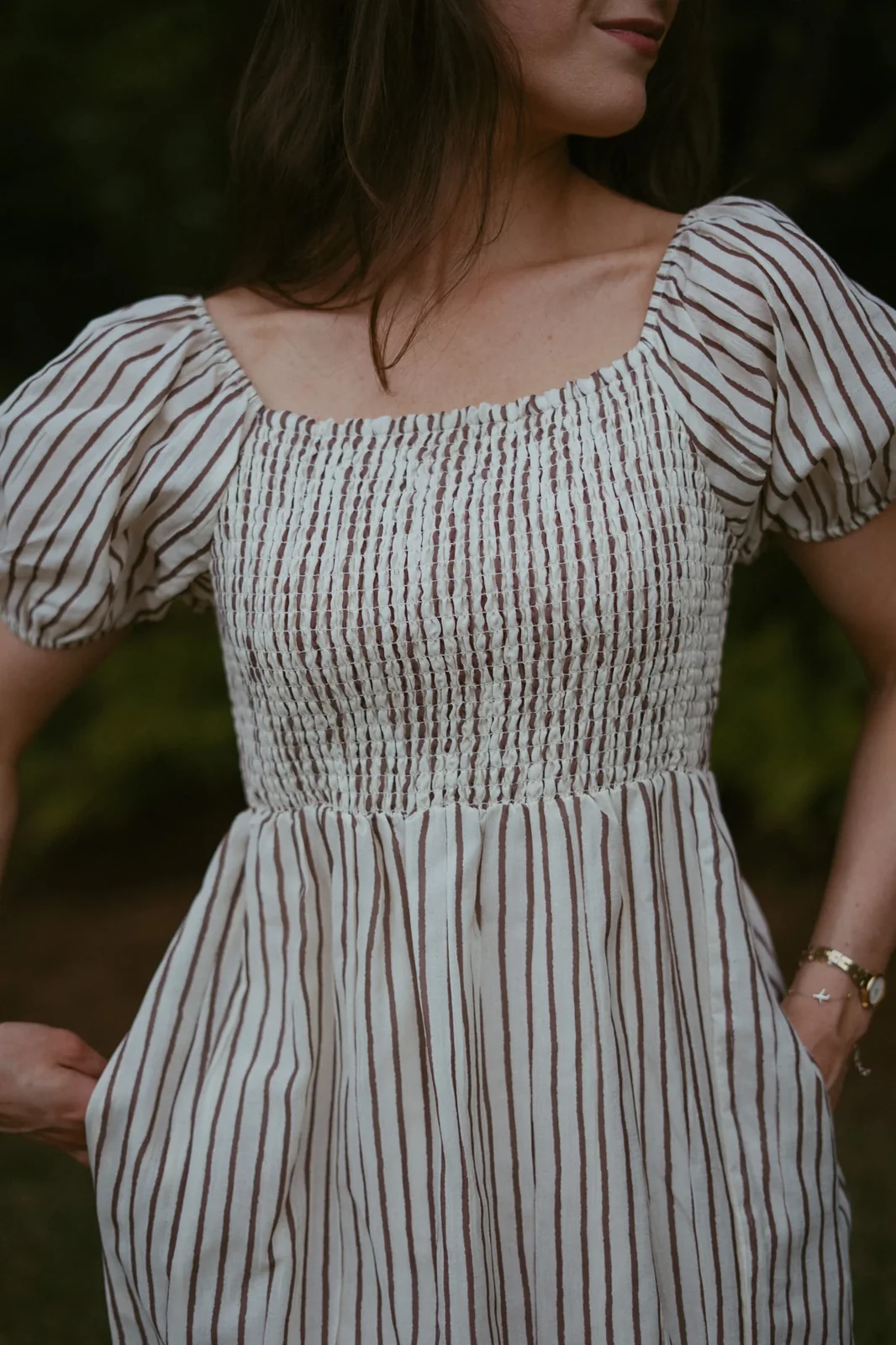
The Pienza Stripe Dress has a smocked chest detail, a side slit, double lining, and side pockets. Those are the listed features; check the product details for the available color information before planning a particular pairing. For a striped dress in general, a simple layer in a compatible solid can make the outfit feel pulled together without competing with the pattern.
Build useful combinations around real pieces
Think in outfits, not isolated colors. If you are considering a new piece, picture at least three combinations: one with denim, one with a neutral bottom, and one with a layer you already own. If you cannot imagine it working with anything in your closet, pause before adding it. This is not a rule against statement pieces; it is a way to choose them with a clear sense of how often you might wear them.
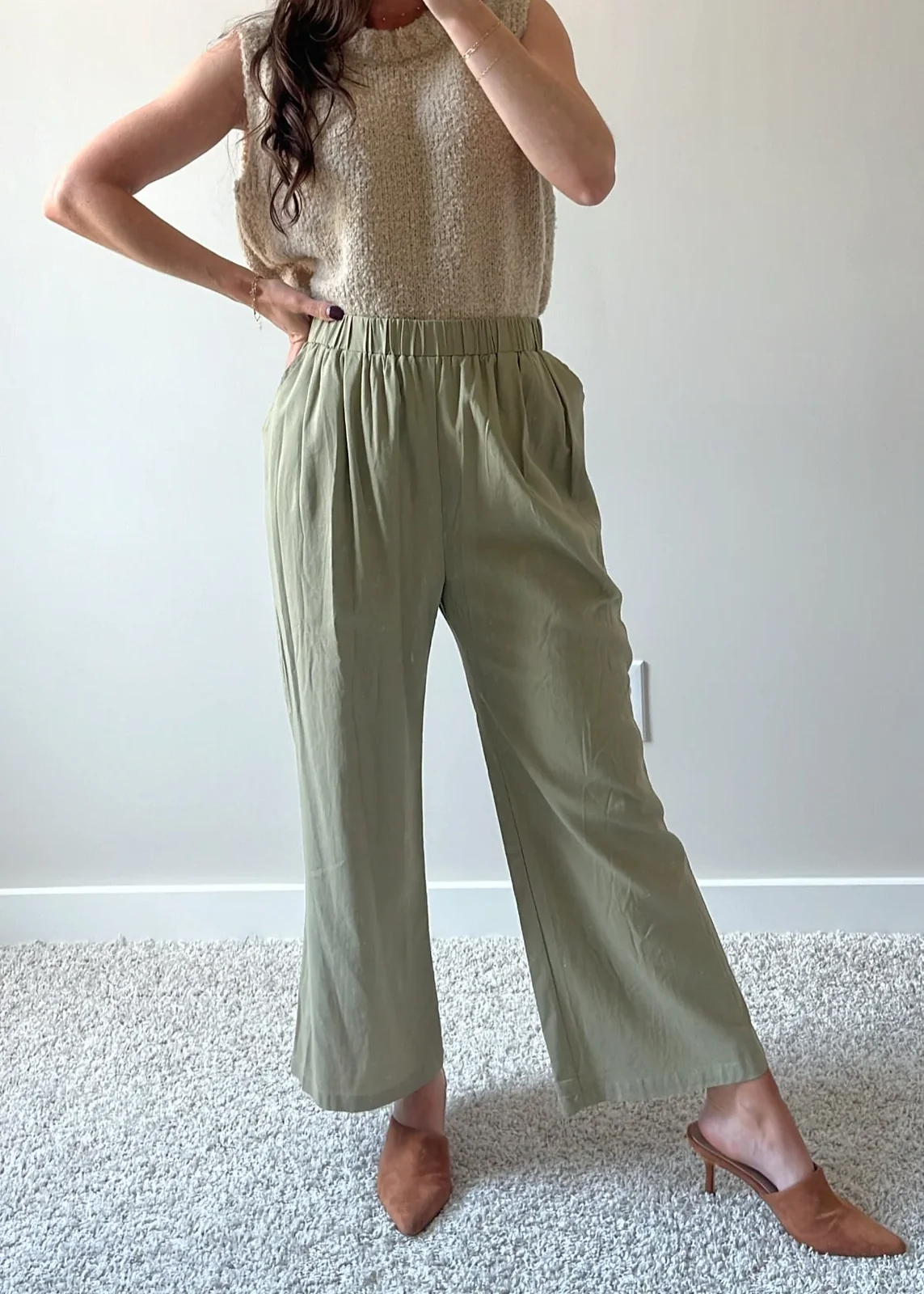
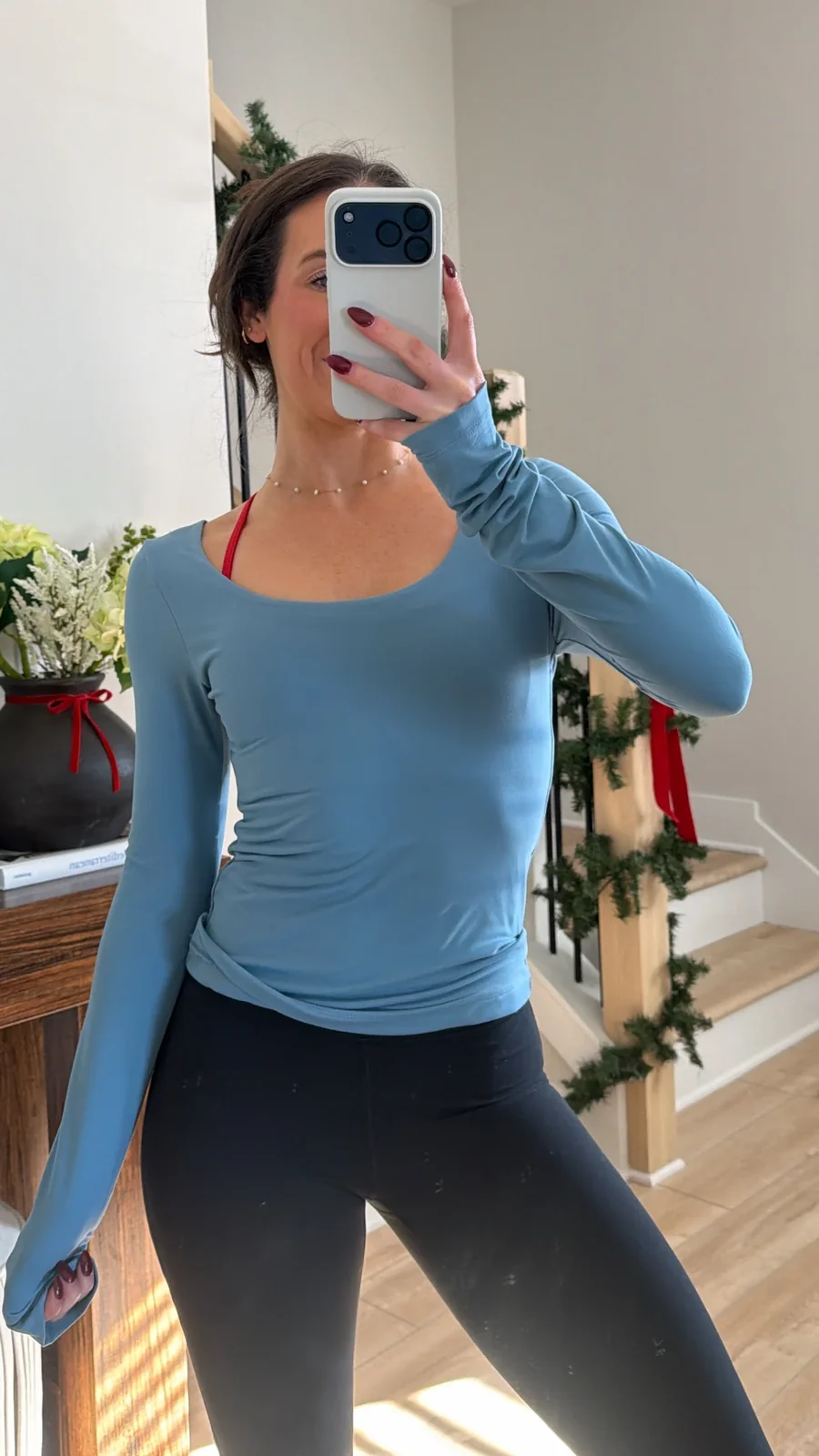
The Second Skin Long Sleeve Top is described as a form-fitting layer with a scoop neckline, four-way stretch, and recycled performance fabric. Its description suggests layering and off-duty styling; check its product page for color options and sizing details. For a more relaxed bottom option, the Olive You Capri Pants are described as lightweight, breathable pants with an elastic waistband and side pockets. The product listing gives the fit as true to size. You can explore other options in bottoms and compare their listed details with the pieces you already wear.
Make a small palette flexible, not strict
A practical palette is a guide, not a dress code. If an unexpected color catches your eye, see whether it works with two or three existing pieces before deciding it falls outside your wardrobe. Some shades can act as neutrals even if they are not traditionally labeled that way. The real test is how readily they combine with your clothes and how comfortable you feel wearing them.
Keep notes if that helps: a short list of reliable combinations, or a quick photo of outfits you like. When reviewing product details, use the garment’s own description for color, fit, materials, and features rather than assuming from a name or photograph. For care, the garment care label is always the final authority. With a few dependable neutrals, denim, one personal accent, and a little repetition, a small wardrobe can still offer plenty of ways to get dressed.