Relaxed clothing can feel comfortable without looking shapeless. The difference often comes from small decisions about where a hem lands, whether the waist is visible, and how much visual weight sits at the bottom of an outfit. You do not need to switch to tighter pieces to create definition. Instead, work with the volume you already like: tuck or fold a hem, show a clear line between top and bottom, or adjust the lengths so each piece has room to read. These ideas are useful for everyday outfits and easy to adapt to different body shapes, layers, and plans.
Start With One Clear Point of Definition
When every part of an outfit hangs loosely, the eye may not find a clear place to pause. Choose one point of definition rather than trying to shape everything at once. That might be a visible waistband, a tucked front hem, or a jacket layer that ends above the hip. The rest of the outfit can remain easy and relaxed.
A front tuck is a useful first experiment: gather a small amount of fabric at the center front and tuck it into a waistband, leaving the sides and back loose. If the fabric is bulky, try a smaller fold or tuck just one side. For a top that does not tuck neatly, pushing the hem slightly upward can create a similar break, provided it stays comfortable as you move.
Check the outfit from the front and side. The goal is not a perfectly sculpted outline; it is simply to show where one piece ends and another begins. If the tuck bunches, shifts, or feels restrictive, undo it and try a different point of definition.
Use the Waistline Without Relying on Tightness
A waistband can provide structure even when the clothes above and below it have room. Try pairing a relaxed top with a bottom that has a visible waistline, then leave enough of the top untucked to preserve ease. A drawstring or elastic waistband can be a practical visual cue, but it does not mean you have to cinch it sharply. Set it where it feels comfortable and let the fabric fall naturally.
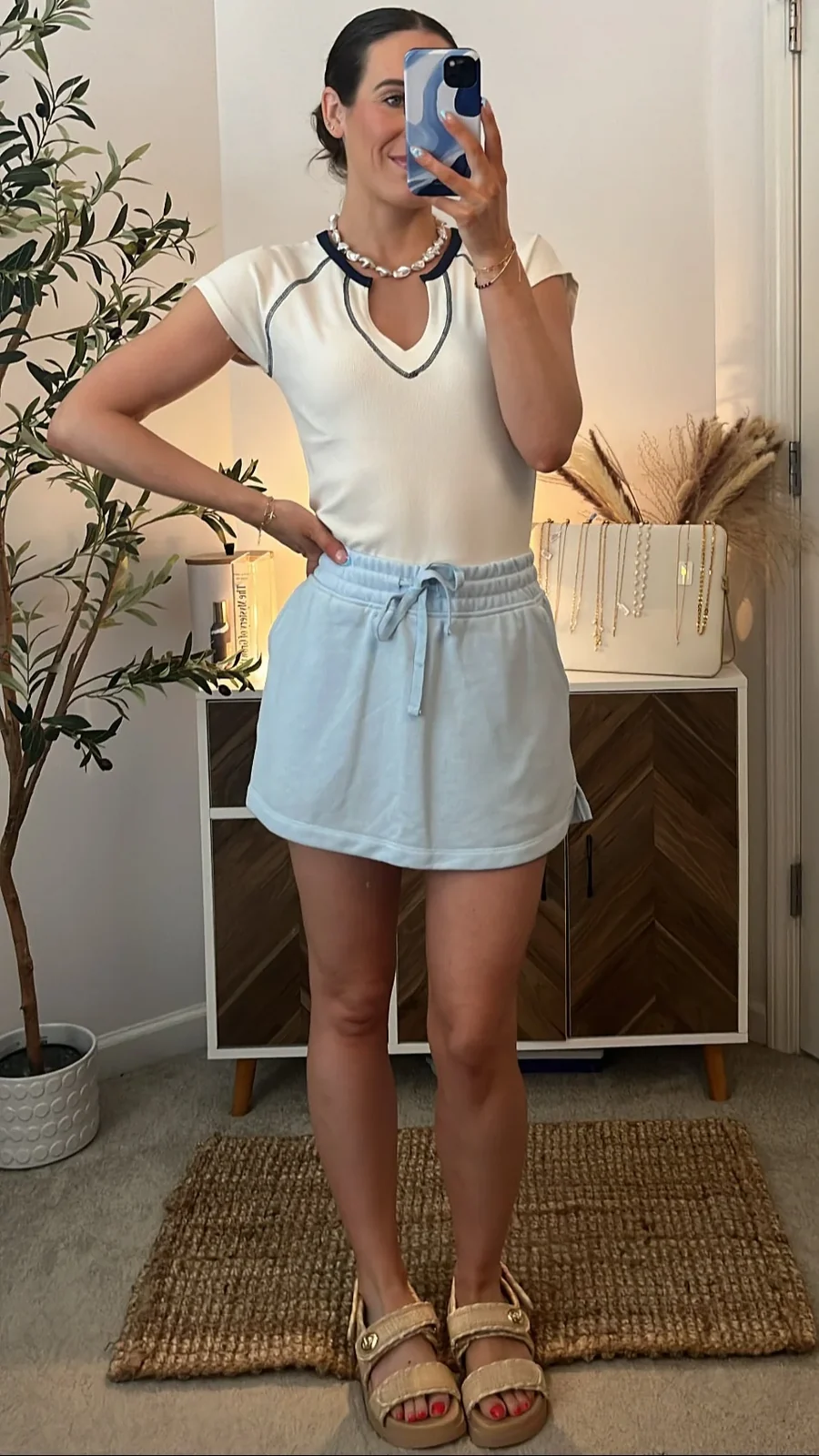
For a casual outfit, the Mediterranean Sky French Terry Skort has an elastic waistband and adjustable drawstring, according to its product details. You could make that waistline visible with a short top or a partial tuck. The description notes that the skort fits slightly small and suggests sizing up for more room; check the full sizing information when deciding what feels right for you.
If you are browsing other options, the bottoms collection is a useful place to compare waistlines and lengths. Let comfort guide the fit, then use the top hem to make the proportion intentional.
Adjust Hems to Change the Proportion
Where a top ends can change the impression of an entire outfit. A long, loose top worn over a similarly long bottom may blur the waist and create one continuous column of fabric. Try a partial tuck, a shorter layer, or a slight sleeve push to reveal more of the outfit underneath. These small changes create boundaries without requiring a fitted silhouette.
Length is personal, so use a mirror rather than a fixed rule. Notice whether the hem cuts across the widest part of your hip, lands near the waistband, or reaches lower on the thigh. A change of only a few inches can make the layers feel more balanced. If you are wearing a longer top, showing the bottom’s waistband or a section of its front can help clarify the shape.
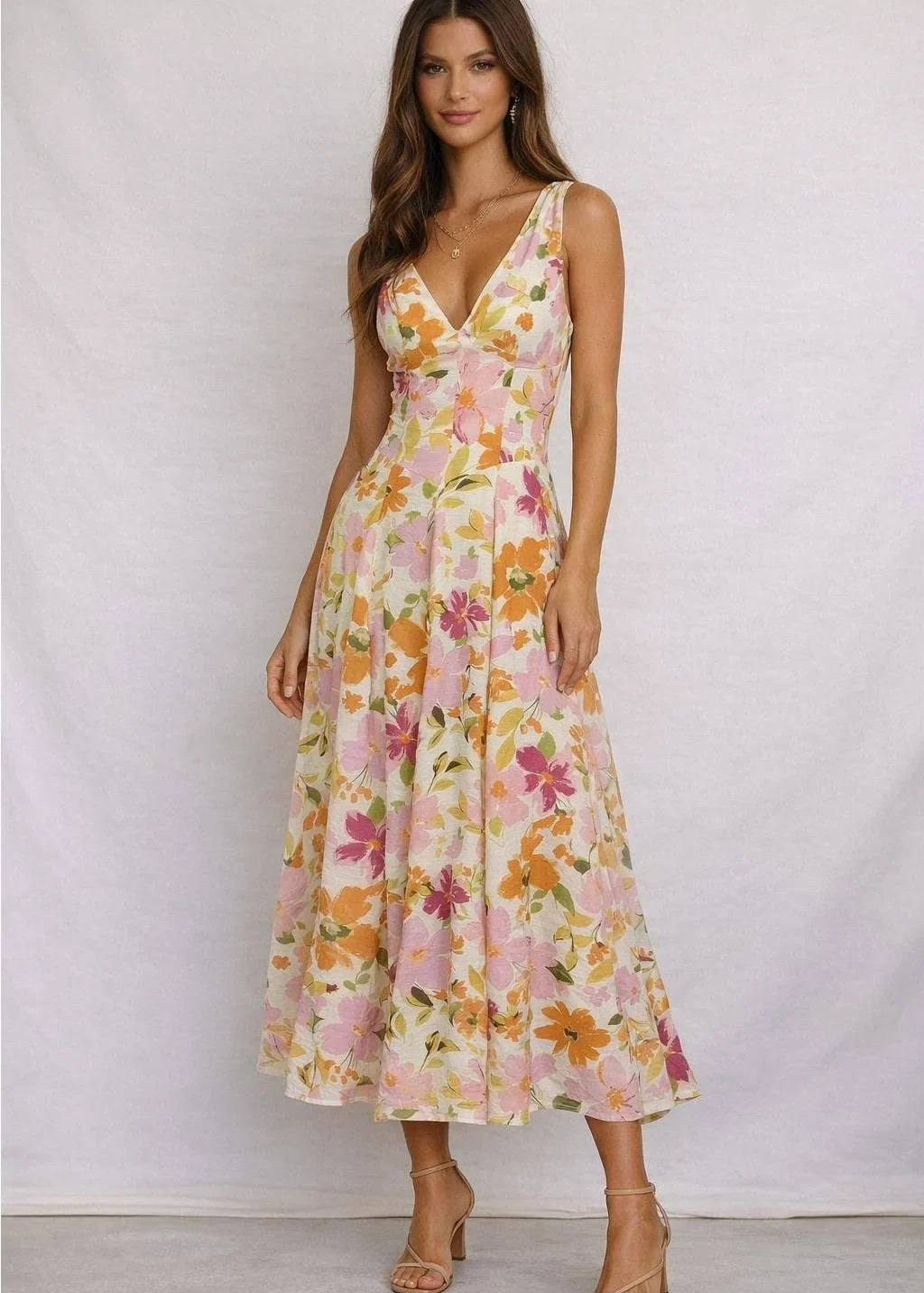
For a dress, definition can come from the garment’s own proportions instead of a tuck. The Sunset Blossom Midi Dress is described as a midi dress with a fitted bodice and an airy background; those details offer a built-in contrast between the bodice and skirt. Check its full product information for additional fit details, and choose layers that do not hide the lines you want to keep visible.
Balance Volume With a Simple Layer
Layers can add a useful outline, but piling several loose pieces together may obscure it. Start with one relaxed base layer and add a single piece that changes the proportions: perhaps a shorter vest over a longer top, or a light outer layer left open to frame the center of the outfit. An open front creates two vertical lines that can make the underlying outfit easier to read.
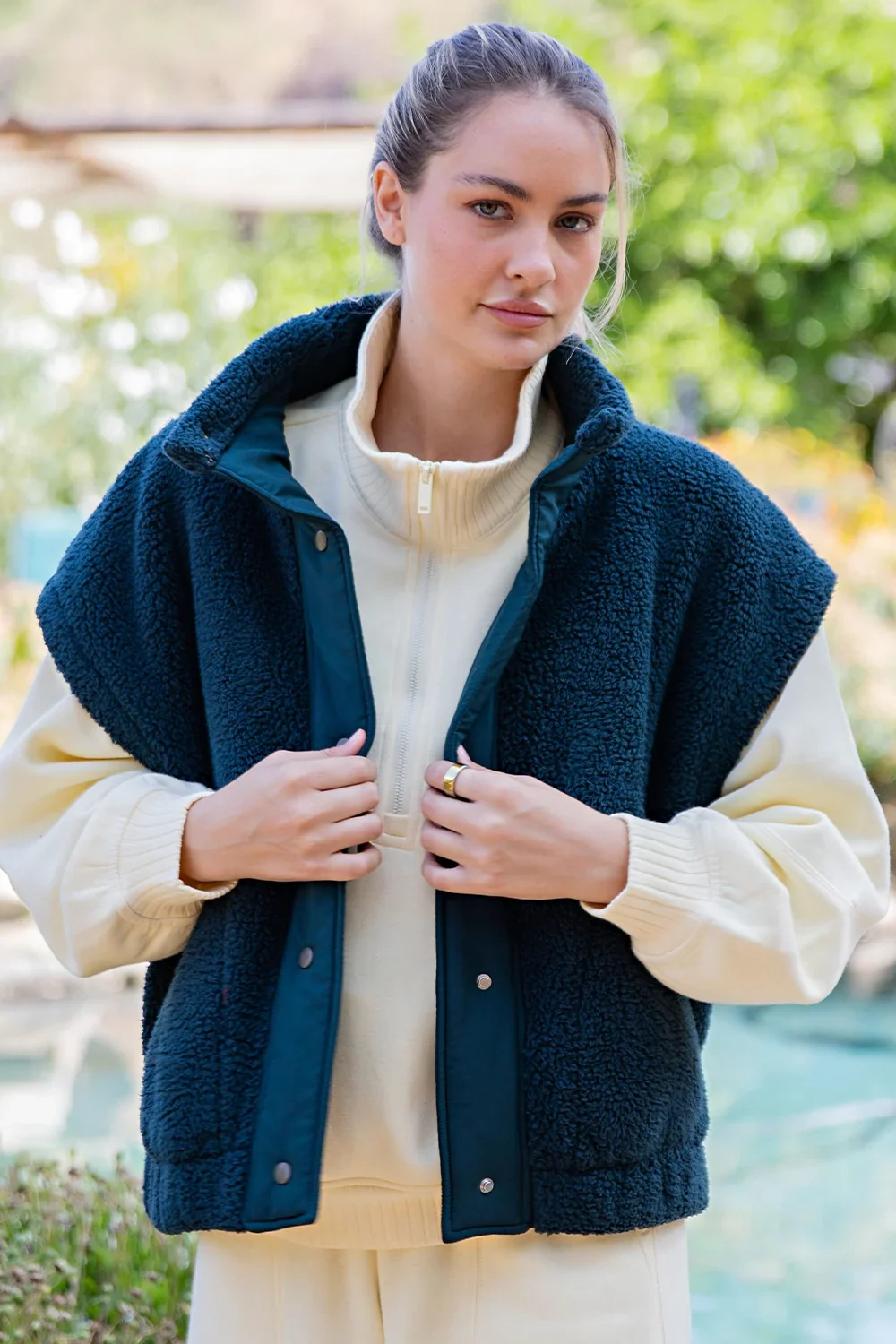
The Nordic Trail Vest is described as relaxed and oversized, with a sleeveless shape, wide armholes, and a snap-button front. If you wear it over another relaxed piece, consider leaving the snaps open so the layer frames rather than covers the outfit. Its product details say it fits slightly oversized, so review the sizing information and the garment measurements, if provided, before choosing a size.
More layering ideas are available in the vest details. When trying any layer, check the arm openings and hem placement as you move. A layer that bunches at the waist or covers every visible line may work better worn open, over a shorter base, or not at all that day.
Think About Shoe Weight and the Outfit’s Finish
Footwear changes how the bottom of an outfit reads. A delicate-looking shoe can make a long, roomy outfit feel lighter, while a more substantial shape can give a wide hem or long layer a visual anchor. Neither approach is automatically better; consider whether you want the outfit to feel airy, grounded, or somewhere between the two. The shape of the toe, sole, and upper all affect that impression.
Use a full-length mirror and compare the outfit with different footwear you already own. Notice whether the hem falls cleanly, catches, or hides the shoe entirely. A cropped trouser may show more of the shoe and create a distinct break; a longer hem can make the line feel more continuous. For a skirt or dress, observe how the hem moves when you walk rather than judging only while standing still.
Keep the rest of the outfit steady while you test footwear. If you also change the top length and add a layer, it becomes harder to tell what improved the balance. One adjustment at a time makes the result easier to understand and repeat.
Make the Outfit Work in Motion
Definition should hold up beyond a mirror check. Sit, reach, walk, and bend in the outfit. A tuck that looks neat while standing may pull out when you move; a layer may ride up; a hem may catch on another piece. These are useful observations, not reasons to abandon relaxed clothing. Adjust the tuck, change the length, or remove the layer until the outfit feels natural through ordinary movement.
Before heading out, check that the visible waistline is comfortable and that the layers have enough room. If the garment has specific fit notes, use them alongside how it feels on your body. Product details can help you understand the stated fabric and fit, but they cannot replace trying a piece or checking the measurements available to you.
Care is a separate part of making clothes work for everyday wear: the garment care label is the final authority. For styling, keep the method simple. Choose one visible line, decide where you want each hem to land, and let the remaining volume stay relaxed. That gives an outfit direction without asking it to fit tightly.