Linen can feel appealing for its relaxed look and warm-weather ease, but the word alone does not tell you how a garment will fit, feel, or need to be cared for. A linen blend may behave differently from a piece made entirely of linen, and details such as lining, cut, and construction matter too. Before choosing an outfit, read the listed fibers, check the fit notes, and consider how you plan to wear and care for the garment. Those steps make it easier to decide whether a piece suits your routine—not just whether you like its look.
Start with the fiber details
Look for the material information in the product details or on the garment label. If linen is listed alongside another fiber, note the full composition rather than treating the piece as simply “linen.” Fiber content gives you useful context, but it does not answer every question about texture, weight, drape, or comfort. Those qualities can vary with the fabric and the way a garment is constructed.
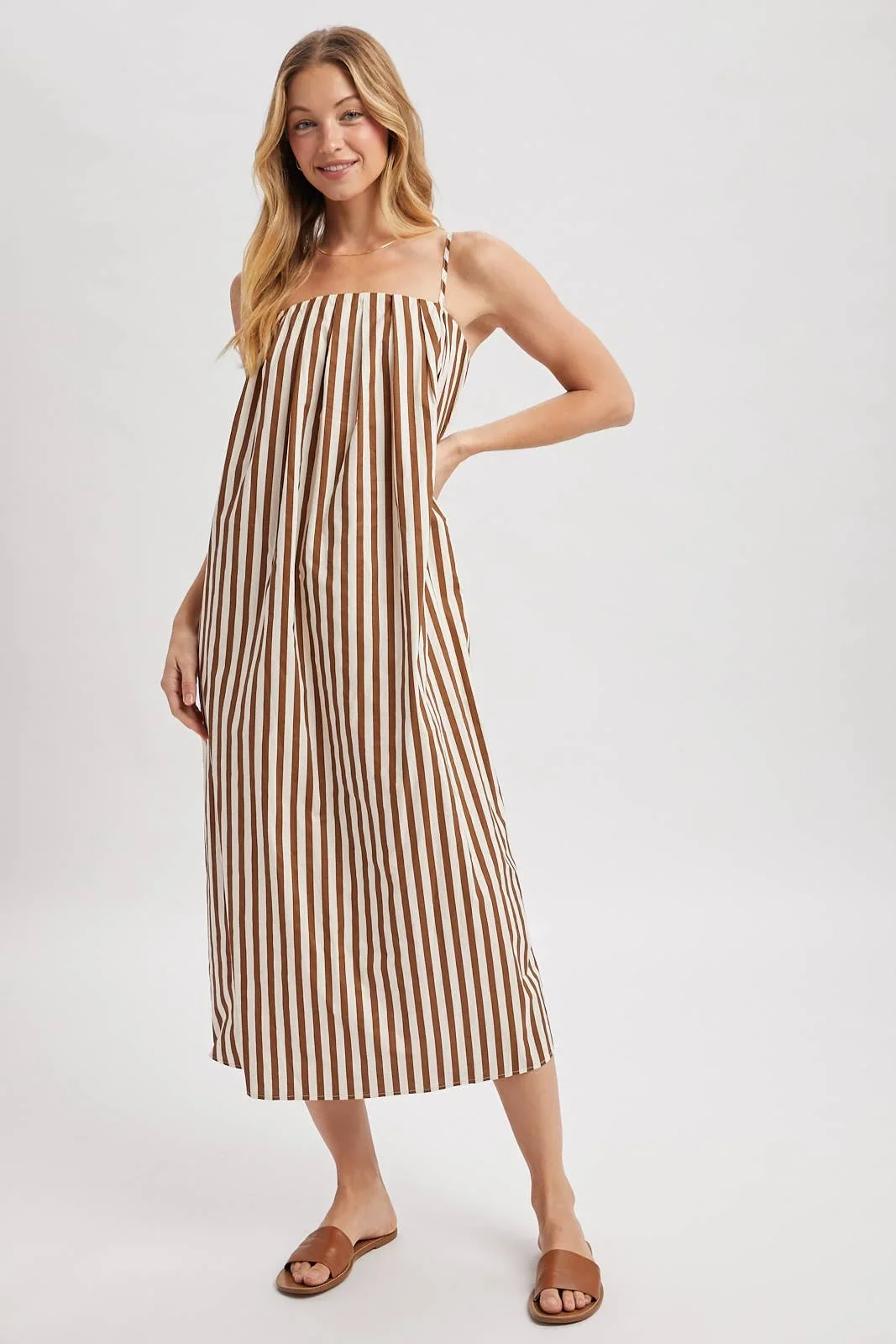
It also helps to distinguish a linen garment from a piece that only has a similar visual feel. A striped cotton dress, for example, may suit the same relaxed outfit idea, but it is not linen. The Sandbar Stripe Midi Dress is listed as 100% cotton, with adjustable straps, a square neck, and side pockets. Those details are more useful than assuming a fabric from a breezy silhouette or neutral stripe.
When a product description does not list a detail you care about, check the garment information or ask before deciding. Avoid inferring fiber content from a photograph, color, or styling description. A clear distinction between linen, a linen blend, and another fabric helps set realistic expectations for both wearing and care.
Think about feel and structure, not just fiber
Fiber content is one part of the choice. A garment’s shape, lining, and finish can change how it sits and moves. Consider whether you want a crisp outline, a loose drape, a close fit, or more coverage. Read any construction details that are provided, and use available photos to assess the overall silhouette without treating them as proof of an unlisted feature.
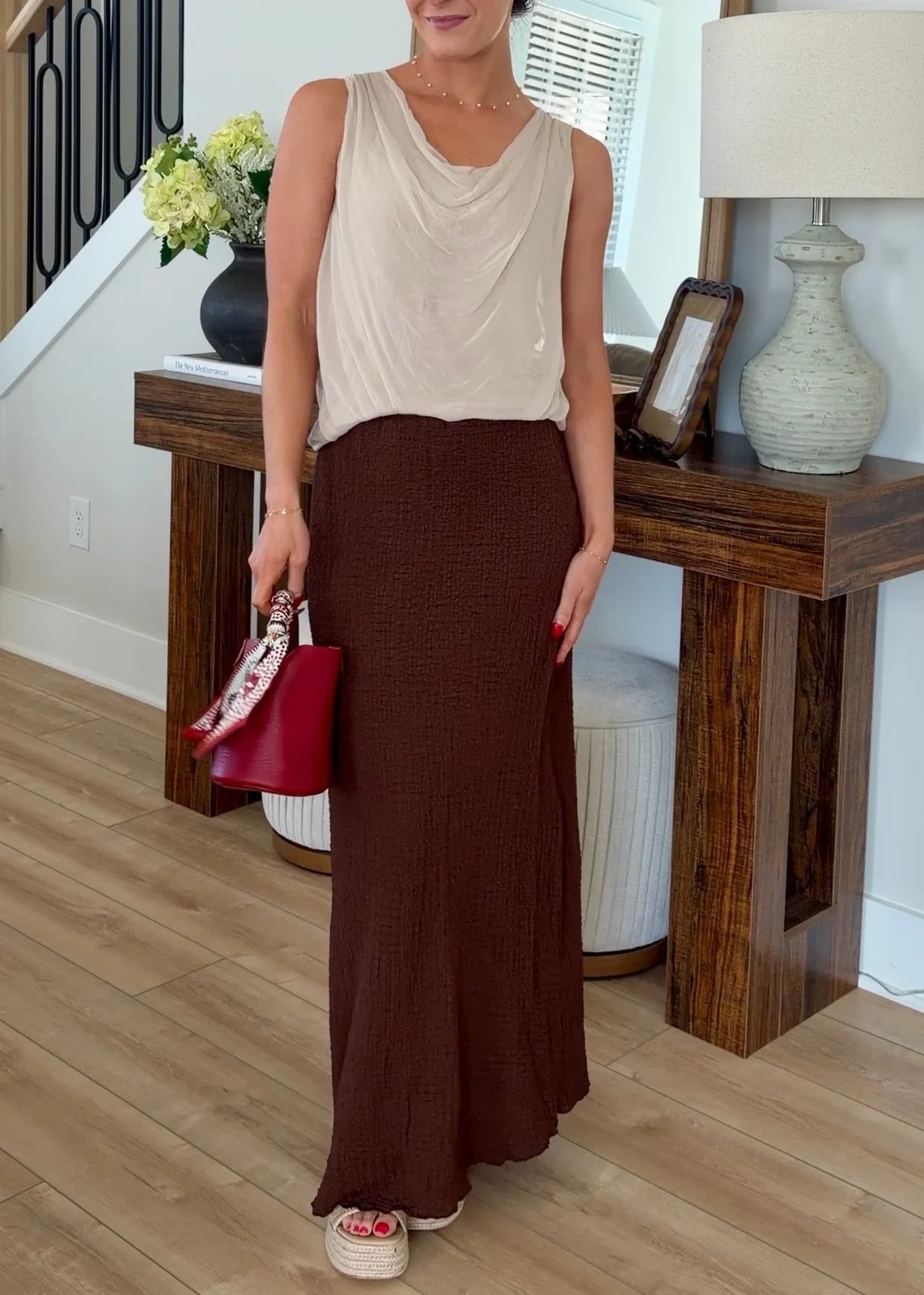
For a useful comparison, the Cocoa Coast Maxi Skirt is described as a textured maxi skirt with an elastic waistband and double lining. Its listed material is 97% polyester and 3% spandex, not linen. That example shows why it is worth checking both the material line and construction notes: a flowing outline does not identify a fiber, and a lined garment offers different information from one whose lining is not specified.
Try to identify the practical question behind your preference. If you want a piece that layers easily, look at the cut and any stated details about coverage. If you want a relaxed outfit, consider the silhouette and how it pairs with clothing you already wear. Fiber information narrows the picture; it does not replace the rest of the description.
Use fit notes as a starting point
Size labels are only one part of fit. Product notes may say whether a garment fits true to size, identify adjustable elements, or describe where a waistband sits. Read those details alongside the listed measurements, if available, and compare them with a garment you already find comfortable. For more on using cut and proportion rather than relying on a letter or number alone, see why fit is more useful than a size label.
For linen-oriented clothing, think about the amount of ease you prefer. A roomy shirt or dress may suit a relaxed outfit, while a more defined cut can create a neater outline. Neither approach is automatically better. What matters is whether the garment’s stated fit and shape match the way you want to wear it. Look for concrete notes such as adjustable straps or an elastic waistband instead of assuming a garment will adapt in a particular way.
The Sandbar Stripe Midi Dress is described as fitting true to size and has adjustable straps. Those are product-specific details, not a general rule for dresses or linen clothing. When a listing gives a fit note, use it as a helpful starting point; if the description leaves a question unanswered, do not fill in the gap by guessing from the model’s size alone.
Build an outfit around the garment’s role
Decide where a piece fits into your day before planning the rest of an outfit. A linen shirt might be a light layer, while a dress can serve as a one-piece starting point. For a simple approach, keep the silhouette in mind: pair a relaxed top with a more defined bottom, or let a flowing piece remain the focus. These are styling options, not rules about what linen must look like.
A neutral stripe can also provide a straightforward reference for building an outfit. The cotton Sandbar Stripe Midi Dress is described with a relaxed silhouette and can be styled as a one-piece. Its material is cotton, so it is an example of checking details rather than a linen recommendation. Browse the dresses collection when you want to compare different one-piece shapes and read each listing for its own fabric and fit information.
For separates, think about how a top and bottom balance in length and volume. A fitted top with a flowing skirt can create contrast; a looser top may call for a more defined waist or a cleaner line elsewhere. The Cocoa Coast Maxi Skirt is described as having an elastic waistband and a flowing silhouette, but its material is a polyester-spandex blend. Use such listing details to understand that specific garment, and check the fiber information on any linen piece you are considering.
Make care decisions from the label
Do not choose a wash method based on the word “linen” alone. Care instructions depend on the garment, its construction, and any other materials used. The garment care label is the final authority. Read it before washing, drying, ironing, or storing a piece, and follow the instructions provided for that particular item.
If you are comparing options, look for care information before purchase when it is available. If a listing does not explain care, that absence is not permission to assume a particular method. Check the physical label when you have the garment, and contact the retailer if you need clarification. This is especially useful for blends or garments with additional construction details, since the fiber line alone may not describe every care consideration.
Wrinkles are often part of the visual conversation around linen, but your own preference should guide the choice. Some people like a relaxed, lived-in appearance; others prefer a smoother finish. Check the garment’s care label before using heat or any wrinkle treatment, and avoid applying a general linen routine to a piece whose care instructions say otherwise.
Choose for your real wardrobe
A good purchase decision is specific. Ask whether the piece works with clothing you already own, whether its fit notes match your preferences, and whether its care instructions are practical for you. If you want to compare fabrics across categories, read each item’s material line rather than assuming similar shapes use similar fibers. The bottoms collection offers a place to compare separate silhouettes, while each individual listing should be your source for its own composition and fit details.
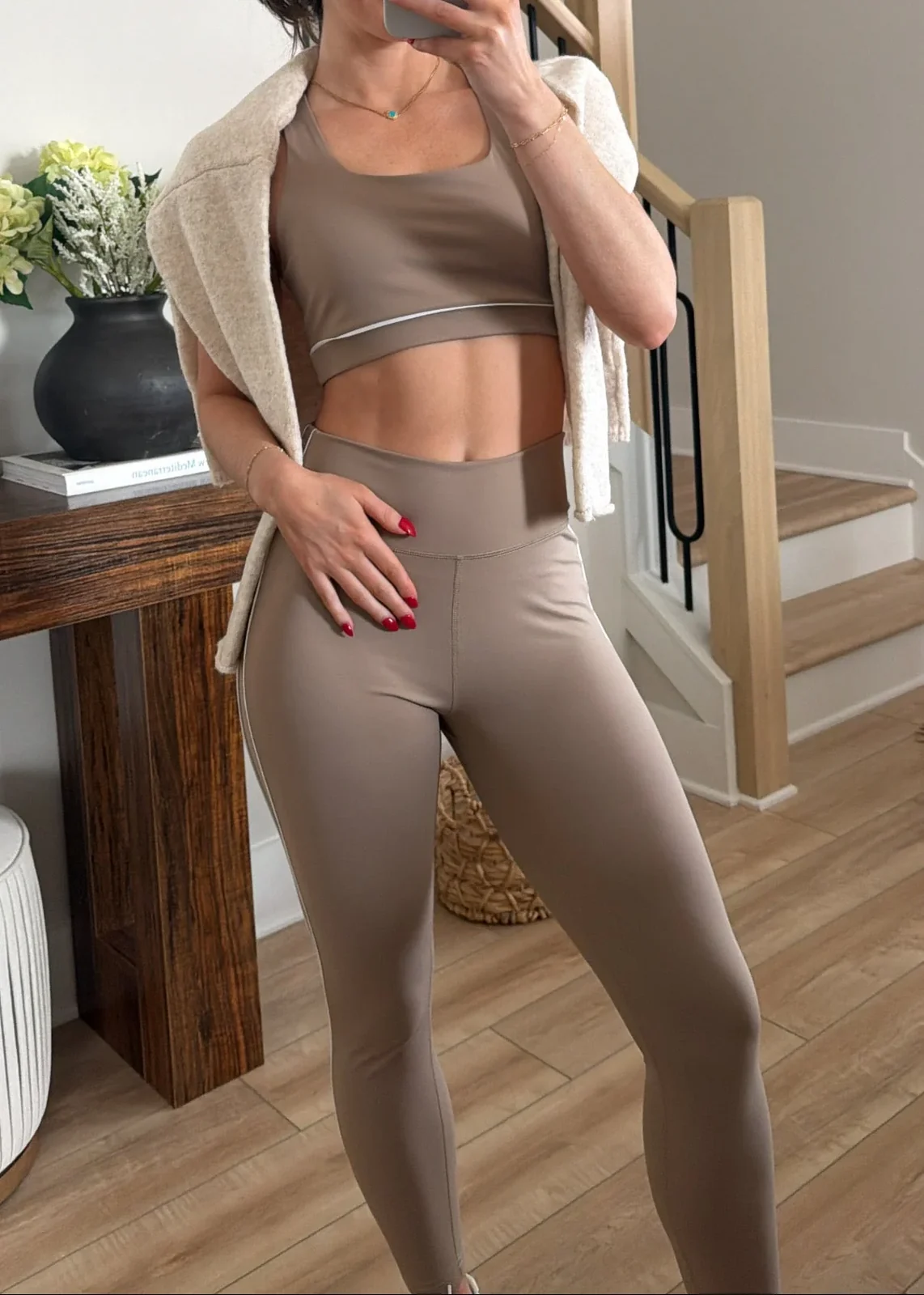
Not every outfit built around a light, relaxed look needs linen. The Core Two Piece Athleisure Set, for instance, is listed as 75% nylon and 25% spandex, with a padded criss-cross back sports bra and leisure leggings. It is a different fabric category, useful as a reminder to read the details rather than group garments by mood alone. See the Core Two Piece Athleisure Set listing for its stated features and composition.
When comparing linen and linen blends, focus on what you can verify: the full fiber listing, the stated fit, construction notes, and the garment care label. Then consider how the piece fits your preferred silhouette and daily routine. That practical check is more dependable than relying on a fabric name, a styling image, or an assumption about how a garment will feel after you bring it home.