Getting dressed can feel harder when every outfit seems to require a brand-new idea. A repeatable outfit formula offers a simpler starting point: choose a top, a bottom, and a layer that work together, then keep that structure while making a small change or two. The result is not a uniform you have to wear exactly the same way each time. It is a dependable combination that helps you use what is already in your closet with less guesswork.
The most useful formula is personal. It should suit the kinds of days you actually have, feel comfortable when you move, and rely on pieces you enjoy wearing. Think of it as a framework rather than a rulebook: once the foundation works, you can adjust color, texture, proportion, or the layer without rebuilding the whole outfit.
Start with the days you dress for
Before choosing clothes, think about the situations your outfits need to cover. Are you usually dressing for a casual workday, errands, a relaxed lunch, or a mix of plans? A formula should match your real routine. If most of your week calls for ease, a complicated combination that needs constant adjusting will probably stay in the closet.
Consider practical questions as well as appearance. Do you want a defined waist, or do you prefer a looser line? Do you reach for skirts, trousers, or both? Are you often moving between indoor and outdoor settings? These answers help you choose a base that feels natural rather than simply copying a styling idea that works for somebody else.
Look at outfits you have worn more than once and felt good in. Notice what they share: perhaps a fitted top with a flowing bottom, or a simple base with a light layer. You do not need to identify a perfect outfit. You are looking for a repeatable relationship between pieces.
Choose a reliable top-and-bottom base
Begin with two pieces you can imagine wearing together on an ordinary day. A useful base has enough contrast or balance to feel intentional. For example, a close-fitting top can pair with a more relaxed bottom, while a roomier top may work best with a slimmer silhouette. These are starting points, not rules; the important test is whether the proportions feel comfortable to you.
Fabric and movement matter, too. Sit, walk, and reach in the pieces if you can. Check whether the waistband stays comfortable and whether the top remains where you want it. A combination that looks good standing still but needs frequent adjustment may not be the easiest one to repeat.
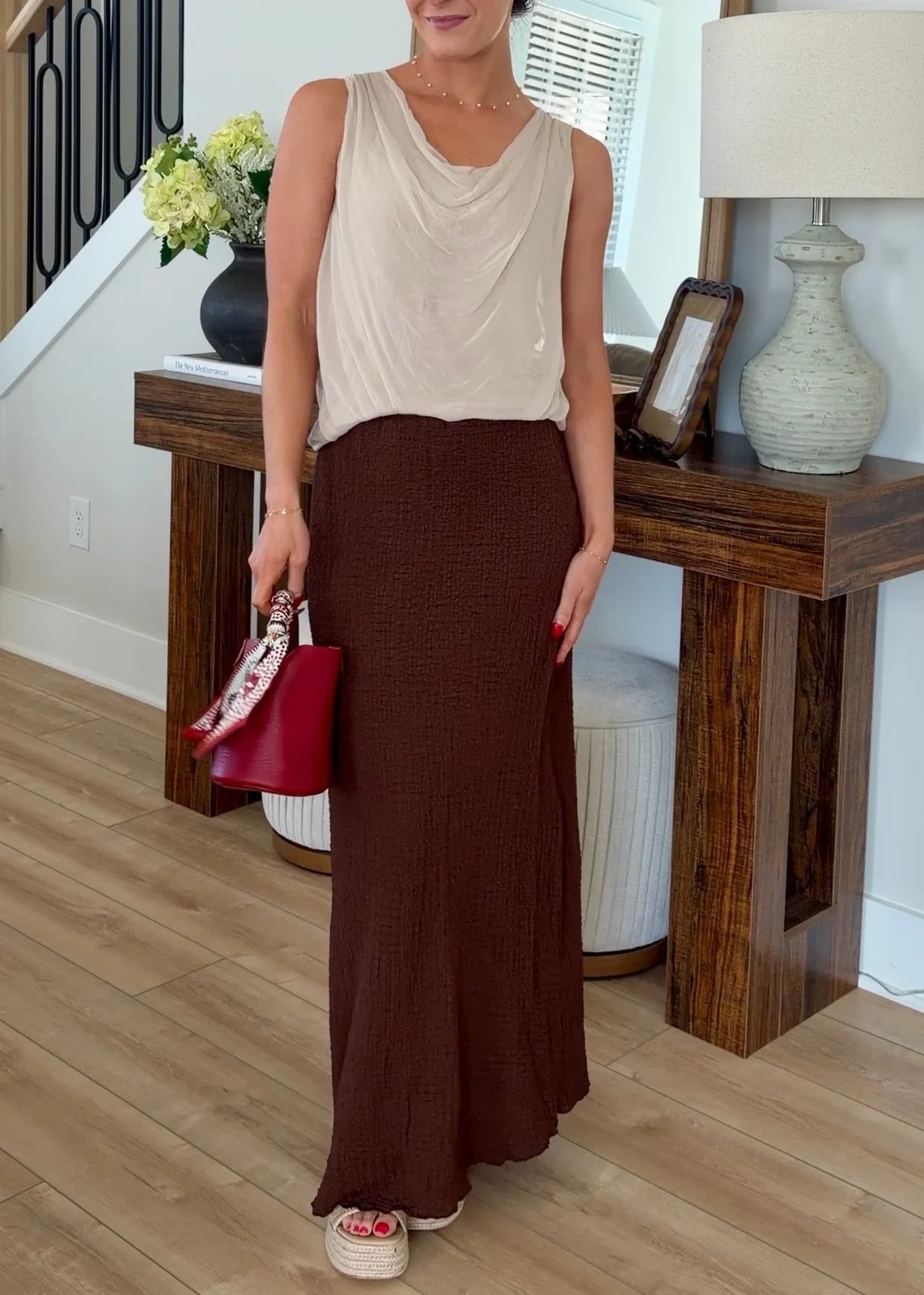
For a simple example, a fitted tank and a long skirt create a clear top-and-bottom foundation. The Leisure Tank is described as having a buttery-soft feel and a seamless look, with 84% micro polyfiber and 16% spandex. The Cocoa Coast Maxi Skirt has a rich brown color, a subtle textured finish, an elastic waistband, and a flowing silhouette. Check each product’s details for sizing and fit information, and consider how the pieces feel together rather than assuming one combination will suit everyone.
Add a layer that earns its place
The third part of the formula is a layer. It gives the outfit another useful option when the temperature shifts or when you want a different overall impression. A layer can also change the visual balance: a cropped or waist-length shape may emphasize the top-and-bottom division, while a longer layer can create a more continuous line. Check the actual garment length and compare it with the pieces you plan to wear beneath it.
Choose a layer that works with more than one version of your base. If it only goes with a single top or bottom, it may be less useful as part of a repeatable formula. Color is one way to make a layer flexible: a neutral can recede into the outfit, while a saturated shade can become the feature. Neither approach is automatically better. Think about what you already wear and what feels like you.
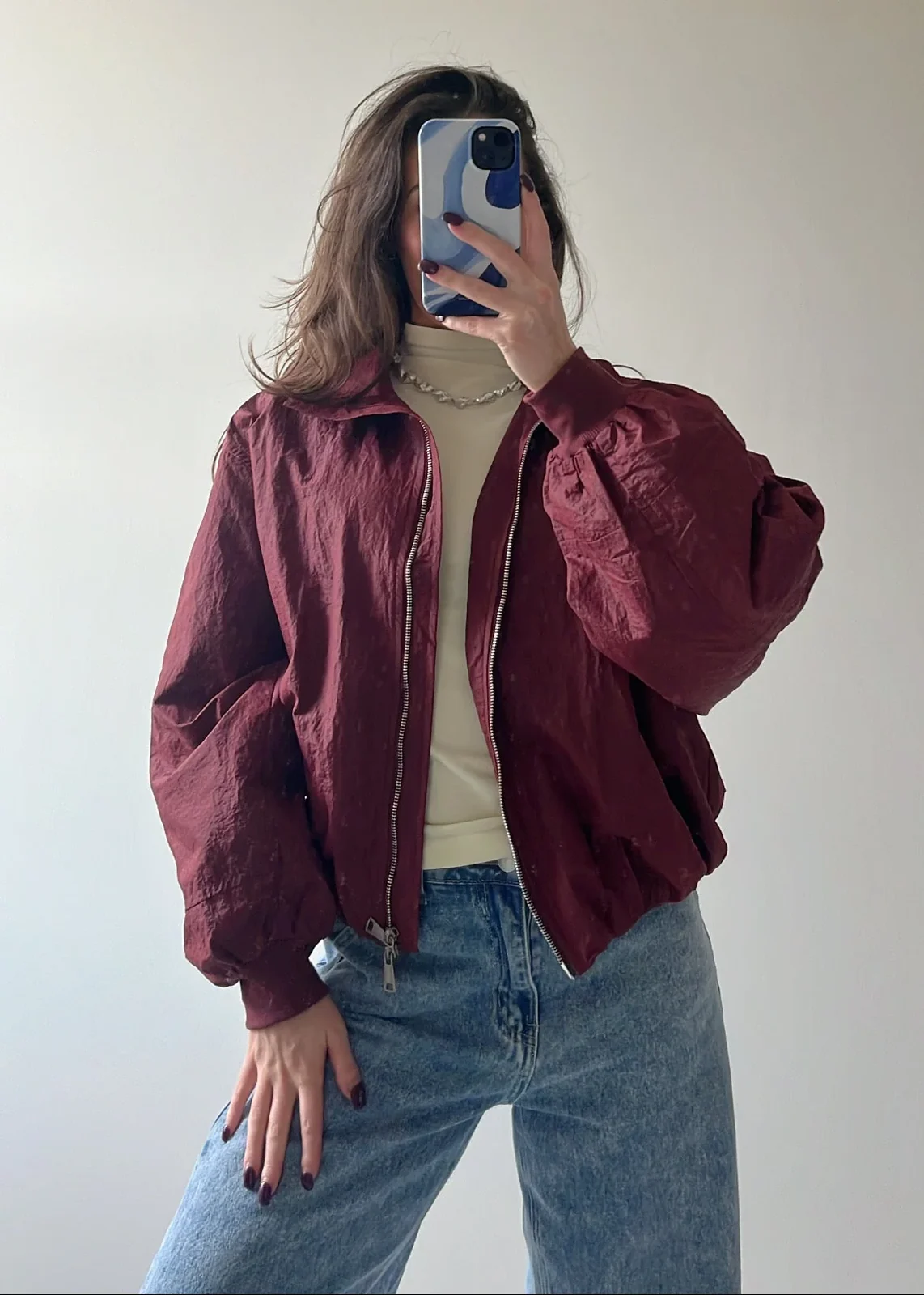
The lightweight, 100% nylon Vino Rosso Jacket is described as a zip-up style in a wine-inspired color. It offers one example of a layer that can shift a straightforward base. For a broader look at options, browse the outerwear collection, then check individual descriptions for details such as fabric, construction, and fit.
Keep the formula steady and vary one detail
Once you have a base and a layer that work, resist the urge to change everything at once. Keep the same top, bottom, and general silhouette, then change one element. Try a different color top with the same skirt and jacket, or keep the top and skirt while switching to another layer already in your closet. This makes it easier to see which choices create a useful variation.
You can also vary a quality rather than a whole garment category. Keep the basic shape but choose a smoother or more textured fabric. Repeat the same colors in a different balance, such as a lighter top with a darker bottom. Or wear the layer open or zipped, if its design allows, and notice how that changes the outfit. Make only changes that suit the garment and its stated features.
When you find a variation you like, remember what made it work. Was it the contrast between the top and bottom, the amount of color, or the way the layer changed the proportions? A quick note can make the next outfit easier to assemble. You do not need a formal wardrobe log; a few words in your phone or a photo for your own reference can be enough.
Use a short try-on test
Before deciding that a formula is dependable, test it in motion. Try the pieces together, then sit down, walk around, and reach forward. Check whether the top stays comfortable under the layer, whether the bottom moves as you want it to, and whether the combined lengths feel balanced from the front and side. These practical checks are more informative than judging the outfit from one mirror angle.
If something feels off, change one part at a time. A different top length might help the proportions; a different layer might feel easier over the base. If the pieces compete, try simplifying the color mix or letting one texture stand out. Do not assume the solution is to buy something new. A small adjustment in how you combine existing clothes may be all the outfit needs.
Product descriptions can help you decide what to try, but they cannot replace your own fit check. Review the stated materials, features, and sizing details before choosing a garment. For care, the garment care label is the final authority; do not infer washing or drying instructions from a fiber name alone.
Make the formula easy to repeat
Keep the pieces in your regular rotation accessible and think in combinations, not isolated items. When you put away laundry or plan what to wear, notice which tops work with which bottoms and which layers can join both pairings. If you are refining your options, browsing the bottoms collection by the kinds of silhouettes you already wear can help you compare possible foundations. The goal is to make more of your closet work together, not to assemble a large set of nearly identical outfits.
A repeatable formula also benefits from a clear stopping point. You do not need a variation for every possible occasion. Two or three dependable versions may be enough: the simplest combination, one with a different color or texture, and one with a layer that changes the feel. When plans shift, adjust the outfit for the day rather than treating the formula as something you must follow exactly.
Over time, the combinations that work will become easier to recognize. Keep the top-bottom-layer structure that feels comfortable, then change one or two elements when you want a fresh result. That small method brings more intention to everyday dressing without turning getting dressed into another project.