When an outfit feels a little flat, adding another print is not always the answer. Often, the more useful first step is to look at the surfaces already in play. A knit beside a smooth fabric, denim against a soft drape, or a crisp layer over a fluid one can give simple clothes dimension without making the outfit busy.
Texture is not limited to fabric you can identify by touch. It also includes how a garment catches light, holds its shape, or moves when you walk. Start with those differences, then decide whether a pattern has a purpose. This approach makes getting dressed more flexible: you can work with familiar pieces, adjust for the day, and keep the overall look grounded.
Notice what each fabric is doing
Before choosing a second or third piece, take a moment to read the outfit as a whole. Is one garment structured while another falls softly? Does one surface look matte and another smooth? Is a layer substantial enough to create a clear outline, or does everything hang in a similar way? These contrasts are the building blocks of texture mixing.
You do not need a dramatic difference. A fine-looking knit with denim can be enough; so can a smooth top with a softly draped bottom. What matters is that the garments are not all performing the same job. When every piece is equally fluid, the outfit may lack definition. When everything is stiff or bulky, it can feel overworked. A little contrast helps each piece register.
Consider the whole outfit in natural light if you can. A fabric that seems plain indoors may have a subtle sheen outside, while a dark denim can read almost like a neutral. Look at the visual effect, not just the label on the garment.
Pair a soft surface with a defined one
A dependable starting point is one soft or textured layer alongside one piece with a clearer outline. Denim often brings visual structure; a knit can bring dimension. If both pieces are relaxed, pay attention to their proportions: a shorter layer over a longer line, or a more defined top above a looser bottom, can make the combination feel intentional.
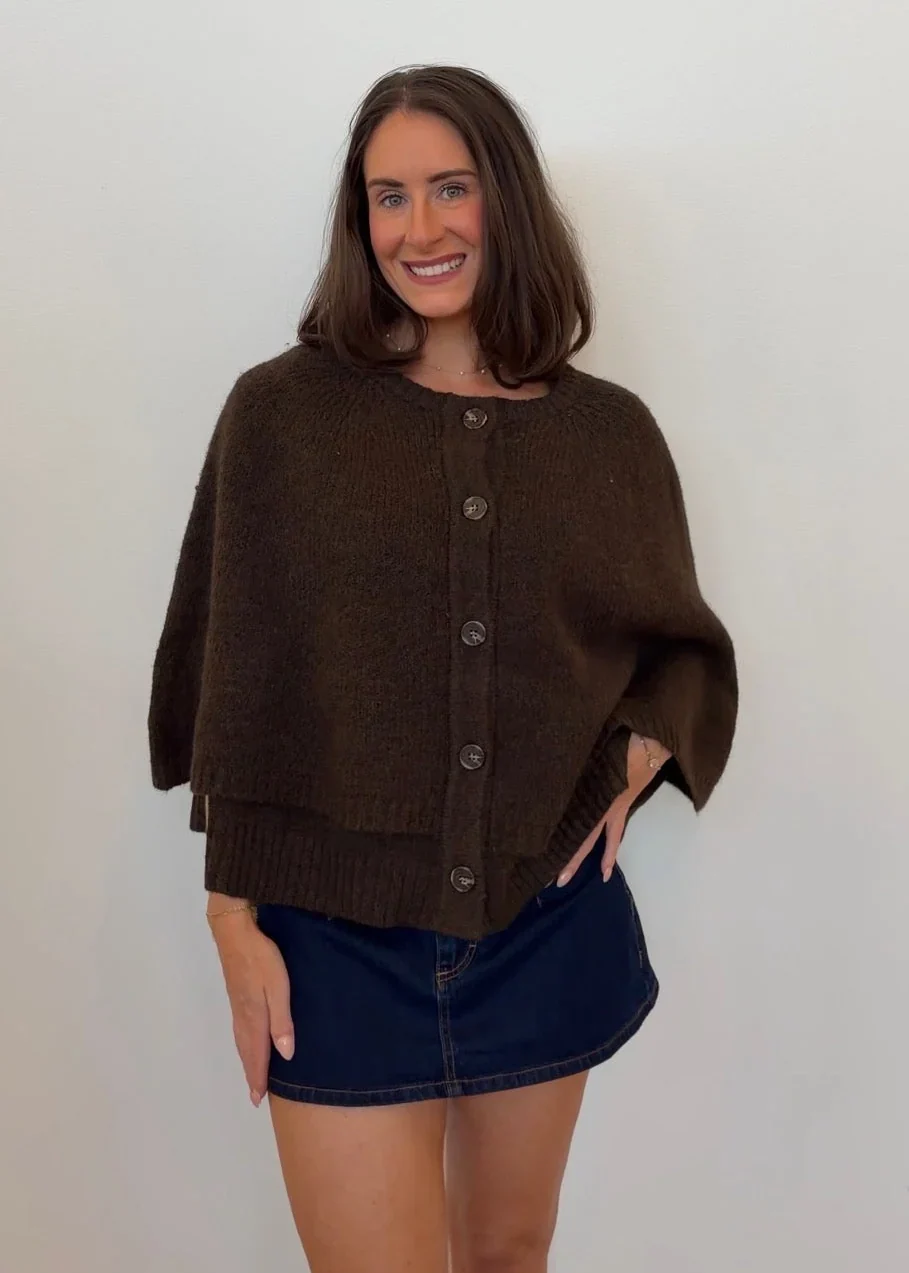
For a knit layer, decide what role you want it to play before building around it. The Un Cafè Poncho Top is listed in the knitwear collection, but the available product details do not specify its material, fit, or care. Check its current listing for those specifics, then consider which pieces in your closet offer a contrasting surface or shape. You can also browse knitwear when looking for another layer to compare with smoother or more structured clothing.
Keep the palette simple while you test the pairing. Two or three related colors let surface contrast do the work. If the outfit feels too quiet, change one element at a time rather than adding several new details at once.
Use smooth fabric to give texture room
Texture mixing works best when every garment does not compete for attention. A smooth piece can act as a visual pause beside a more dimensional knit or a fabric with a noticeable drape. It does not have to be plain or formal; the point is to give the eye a quieter area between stronger surfaces.
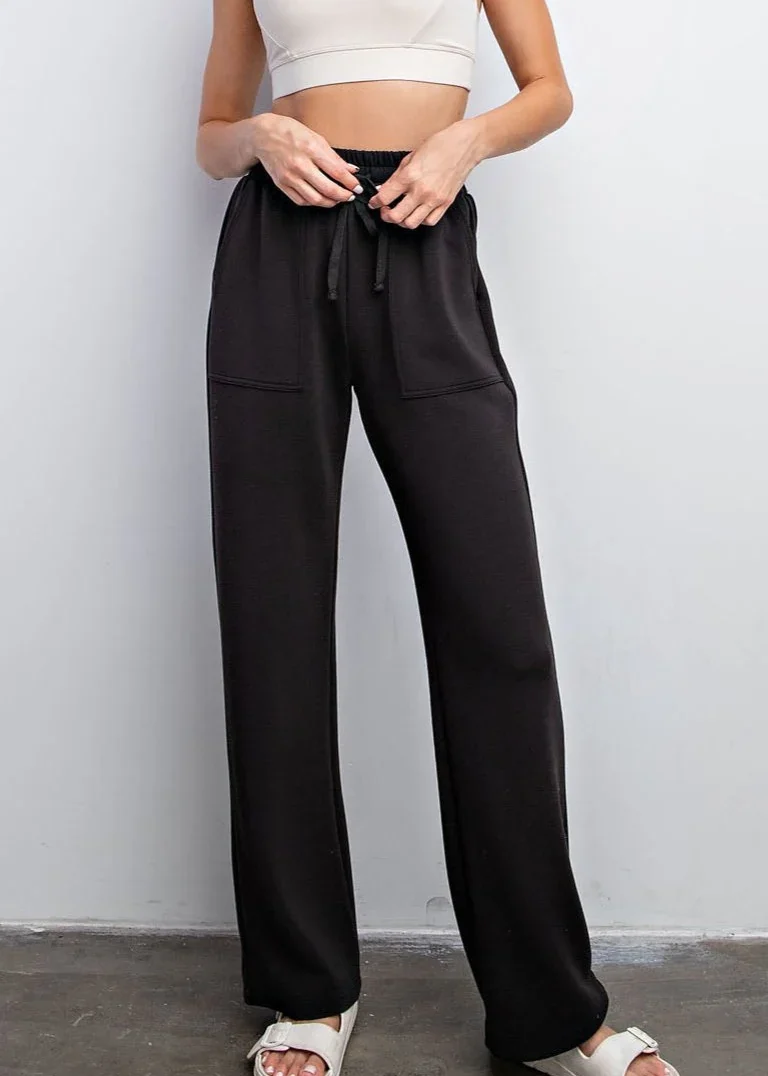
The Roam Free Scuba Pants are described as having butter-smooth, cooling fabric, a straight leg, side pockets, and an elastic waistband with a drawstring. Their listed composition is 48% modal, 45% polyester, and 7% spandex. That smooth quality can be a useful counterpoint to a textured top. For a specific outfit, compare the colors and proportions you own, and check the Roam Free Scuba Pants details for product information. The bottoms collection offers another place to consider how a lower half might balance a textured layer.
If you already have a smooth garment you like, use it as an anchor. Add a single tactile or visually substantial piece, then stop and assess. This keeps the outfit from turning into a collection of unrelated contrasts.
Let drape create movement
Texture is also about motion. A garment that falls softly changes shape as you move, while a more defined piece tends to keep its outline. Combining the two can make an outfit feel considered even when the colors are quiet. Try thinking in terms of rhythm: one piece moves, another steadies it.
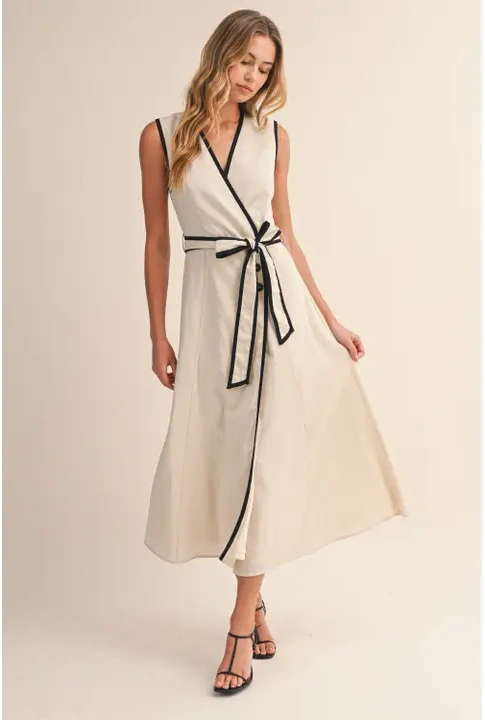
The Taormina Wrap Midi Dress is described as a wrap silhouette with a cross-body tie, removable waist tie, double lining, and a 70% cotton, 30% linen composition. It is listed as fitting slightly oversized, with the model wearing a size Small. Those details give you specific points to assess when considering the dress: its wrap shape, how the tie sits, and the way its fabric falls. For any sizing decision, review the current product information rather than assuming your usual size will fit the same way. See the Taormina Wrap Midi Dress details for the listed information, and browse dresses if you want to compare other silhouettes.
When wearing a fluid piece, another garment can provide definition without requiring a strong print. The goal is not to control every fold, but to create a clear overall line and let the drape remain part of the look.
Keep proportion in the conversation
Two different textures can still feel mismatched if their proportions pull in opposite directions. If a top is roomy, consider whether a straighter or more defined lower half would bring balance. If the bottom has generous volume, a closer-fitting or shorter layer may help show where the outfit begins and ends. These are starting points, not rules; the useful question is whether the silhouette looks deliberate from the front and side.
Pay attention to where hems land. A top and bottom that end at nearly the same point can divide the body into a strong horizontal line. That may be exactly the effect you want, but if it feels abrupt, try a small adjustment: tuck or half-tuck a top if its construction allows, change the layer underneath, or choose a different length. Texture does not have to carry the whole outfit when proportion is doing some of the work.
For a quick check, stand back from a mirror rather than inspecting each fabric up close. The broad shapes should read clearly first; the surface differences are a second layer of interest.
Bring pattern in only after the textures work
Once the outfit feels balanced in texture and proportion, a pattern is easier to judge. Ask whether it adds something the outfit actually needs. A small-scale print might introduce detail; a larger pattern may become the main focus. Either can work, but the pattern should relate to the rest of the clothing through color, scale, or visual weight.
If you are new to mixing patterns, keep one print prominent and let the other garments stay relatively quiet. Avoid adding a pattern simply because the outfit seems unfinished. Often, changing the contrast between a knit and a smooth piece, or between structure and drape, solves that problem with less effort.
It can help to try the outfit both ways: first without the print, then with it. If the patterned piece makes the combination feel crowded, remove one competing texture or return to a simpler color pairing. There is no need to make every element noticeable at once.
A simple dressing-room test
When you are unsure, lay out the pieces or try them on in this order: choose a main garment, add one surface contrast, check the silhouette, and then decide whether a pattern belongs. This sequence is quick enough for an ordinary morning and gives you a clear reason for each choice.
Ask yourself three practical questions: Can I see a difference between the surfaces? Does the outfit have a clear shape? Is there one element drawing most of my attention? If the answer to the first two is yes and the last answer feels manageable, the combination is likely doing enough. If not, edit rather than add. A simpler outfit can feel complete when the fabrics have different jobs.
When checking any garment’s material, fit, or care instructions, use the product details for that specific piece. The garment care label is the final authority for care. That small habit keeps the styling decision grounded in what is actually known about the clothes, while leaving plenty of room to experiment with texture.