Waist placement can change how a garment feels and how its proportions read, even when the rest of the silhouette is simple. A waistband may sit near your natural waist, rest lower on the torso, or adjust with elastic or a tie. None of these choices is automatically more comfortable or more flattering. The useful question is where you want the garment to sit, how you want it to move, and whether you like the balance it creates with the rest of your outfit.
Instead of treating a label such as “high-waisted” as a complete fit guide, use it as a starting point. Consider your torso, the rise and length of the garment, and what you’ll be doing while wearing it. A few practical checks can help you choose a waist placement that feels like yours.
Start with where you want the waist to sit
Your natural waist is often described as the narrowest part of the torso, but clothing does not have to land exactly there to fit well. A natural-waist placement may feel defined and familiar; a higher placement can give more coverage above the waistband, while a lower placement can create a longer-looking upper body. These are visual effects, not rules about which body or outfit “should” wear a particular rise.
Think about where you prefer a waistband to touch when you sit, bend, and walk. If a firm band at one height tends to distract you, another placement may feel easier. When trying on a garment, notice whether the waist stays where you expect without pulling, rolling, or requiring repeated adjustment. Comfort is a useful fit measure, not a detail to ignore for the sake of a silhouette.
Natural waists and the balance of an outfit
A waistband near the natural waist can make the waistline clear, especially when a top is tucked in or ends close to the band. It can also affect how much of the torso and legs appear in proportion. If you like a defined waist, try pairing that placement with a top that lets the band show. If you prefer a quieter outline, a top worn over the band can soften the transition.
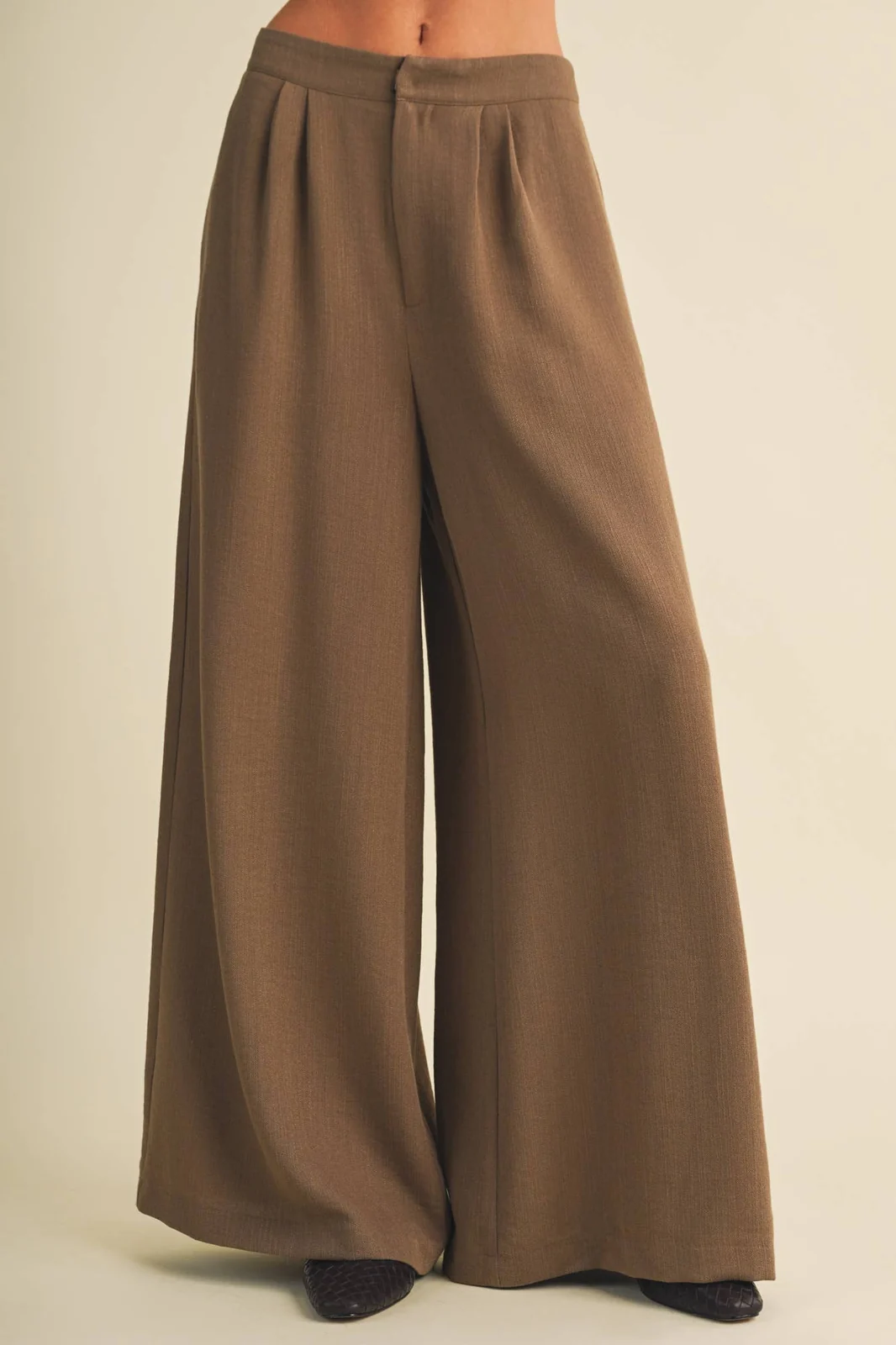
Rise and leg shape work together. A high waist with a wide leg, for example, creates a different balance from a high waist with a narrow leg. The Lugano Palazzo Trousers have a high-waisted cut, subtle pleating, and a wide-leg fit. Those details can help you picture the overall shape, but they do not determine how the trousers will sit on your particular torso. Check the garment details and try the waistband at the height you intend to wear it.
Elastic waists: flexibility without guesswork
Elastic can allow a waistband to adjust as you move, but it does not make every fit question disappear. Consider how much give the garment appears to offer, whether the band feels comfortable when seated, and whether it stays in place during normal movement. A waistband that stretches should still feel secure rather than tight, and its fit can depend on the garment’s cut as well as the elastic.
If product details mention elastic, look for any additional information about construction, sizing, or fit instead of assuming how the band will feel. Some garments combine elastic with another adjustment, such as a tie, while others may rely on elastic alone. When details are limited, use the listed sizing guidance and ask about the fit before deciding. For more on one part of that equation, read the rompers and jumpsuits collection descriptions closely: a one-piece garment’s waist and torso fit can both matter.
Tie waists: adjustable, but not infinitely so
A tie can let you adjust the appearance or snugness of a waist, depending on how the garment is constructed. It may help create a more defined shape or allow a looser feel. But a tie cannot change every dimension of a garment: the torso length, hip room, and overall cut still matter. Check whether the tie is described as decorative, functional, or part of an adjustable waistband before relying on it for fit.
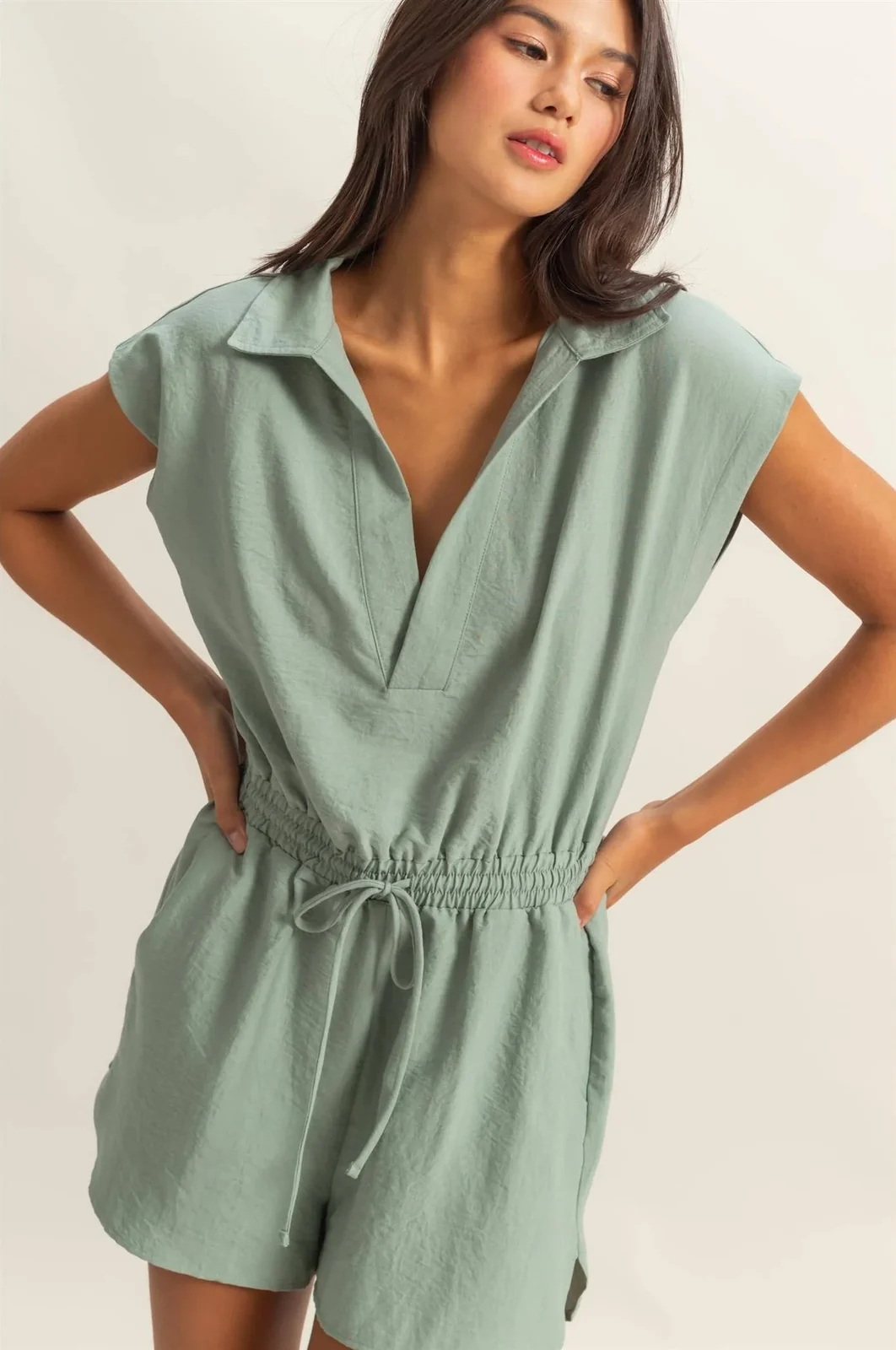
The Coastal Drift Romper is described as having a tie-front elastic waistband, side pockets, and a V-neck and collar neckline. Its fit notes say it fits true to size and suggest sizing up for a looser fit. That gives a practical starting point, while your preference for a closer or roomier feel can guide the choice. See the Coastal Drift Romper details and consider both waist comfort and how a one-piece feels through the torso.
Drop waists and a lower point of definition
A drop waist places the garment’s defining seam or fitted area below the natural waist. That shifts where the eye reads the garment as shaped, and it can make the upper body look longer or the lower portion appear fuller. The effect varies with the garment’s length, fabric, and volume. A drop waist can feel relaxed and distinctive, but the seam should still sit comfortably and allow you to move freely.
When you are considering a drop-waist style, check where the seam falls on your body rather than judging from a product photo alone. Look for garment measurements or fit notes when available, and compare them with a piece you already find comfortable. If the seam lands in a spot that feels awkward when seated or makes the skirt or lower portion catch as you walk, that is useful information. You do not have to choose a particular placement just because it is associated with a certain trend.
One-piece garments need a torso check
With a dress or romper, waist placement is connected to the fit above and below it. A waist seam that seems right in a separate skirt or pair of trousers may feel different when the garment also has to fit across the shoulders, bust, and torso. Before choosing a size, consider whether the product information gives a fit note, model size, or measurements. Use those facts as reference points, not as a promise that the same size will fit every wearer the same way.
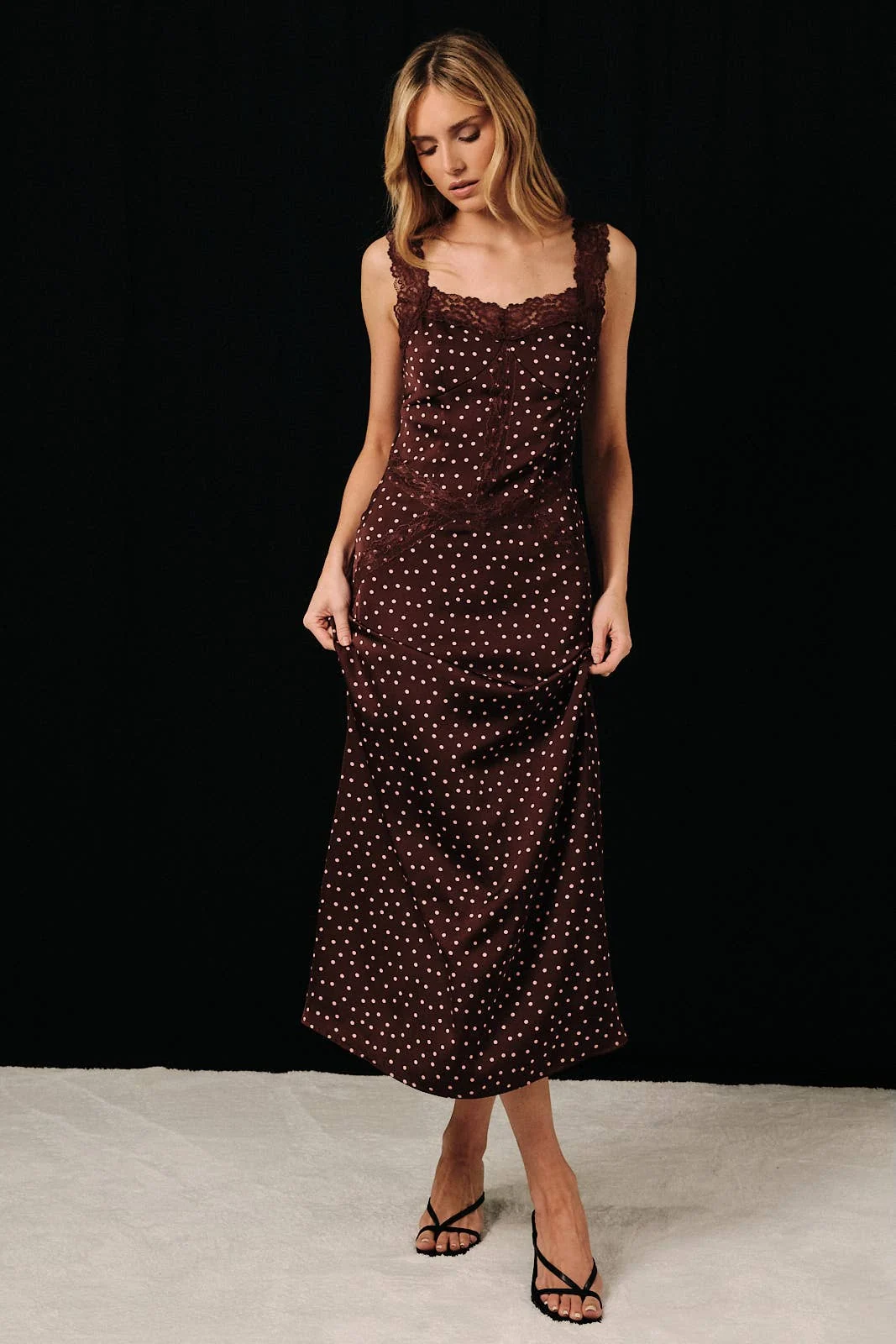
The Portofino Polka Dot Dress is described as having stretchy lace straps and a flowy silhouette, with a note that it fits true to size; the model is wearing a size Small. Its description does not specify a waist placement, so check the product photos and details rather than assuming where the dress will define the waist. You can review the Portofino Polka Dot Dress when comparing the listed information with your own fit preferences. Browse the dresses collection for other silhouettes, checking each garment’s details individually.
Use movement as your fitting room test
A mirror gives you one view, but movement reveals whether a waist placement works throughout the day. Try sitting, standing, reaching, and taking a few steps. Notice whether the band digs in, the garment shifts, or the fabric pulls across the waist. If you are trying on a one-piece, check that you can move comfortably through the torso as well as at the waist. A comfortable fit should not depend on holding one pose.
It can help to decide what matters most before comparing options. Maybe you want a waistband that stays put, a tie you can adjust, or a lower waistline with a relaxed feel. Naming that preference makes product descriptions easier to interpret. For bottoms, the bottoms collection is a place to compare available cuts and read their individual fit notes. When a detail you need is not listed, check with the boutique rather than guessing.
Choose the proportion you want to wear
Waist placement is a personal balance of comfort, movement, and the outline you enjoy. Natural, elastic, tie, and drop waists each offer a different way for a garment to meet the body, but none tells the whole fit story on its own. Pair the waist detail with the garment’s rise, length, and overall shape, then pay attention to how it feels in ordinary movement.
There is no single placement you need to make work. Use product descriptions for specific facts, compare measurements when they are provided, and trust your own comfort in the garment. If the waist sits where you want it and lets you move without fuss, you have a practical answer—not just a proportion that looks good in a still image.