
A fiber percentage can offer a useful clue about how a garment may feel and move. It cannot tell you exactly how a neckline will sit, where a hem will fall, or whether the overall shape will feel comfortable on your body. For a more useful fit decision, read stretch content alongside the garment’s listed features, sizing notes, and measurements when available.
That distinction matters whether you are choosing a close-fitting tank, a sweater dress, or relaxed sleepwear. Stretch is one part of a garment’s behavior, not a complete description of fit. Here is how to use it without expecting it to answer questions the product details do not address.
What stretch content can suggest
When a fabric includes a stretch fiber such as spandex or elastane, that is a clue that the material may have some give. The percentage tells you how much of the listed fiber blend is that component by weight; it does not translate directly into a particular size range, degree of compression, or amount of comfort. The fabric’s construction and the garment’s cut also affect how it behaves.
Ribbing, for example, describes a textured knit structure, not a fit promise. A ribbed garment may look and feel different from a smooth knit, even if both include a stretch fiber. The stretch percentage alone cannot tell you whether a piece will feel snug, drape loosely, or return to its original shape after wear. If those details are not stated, treat them as unknown rather than filling in the blanks.
What a fiber percentage cannot tell you
A label listing nylon and spandex does not provide a garment’s width, length, rise, or ease through the body. Nor does it describe how the piece will sit at the shoulders, chest, waist, or hips. Those details depend on the pattern and construction, and they may vary across styles made from similar fiber blends.
Stretch also does not tell you whether a garment will feel supportive or restrictive. People have different preferences: one person may like a close fit, while another wants more room to move. Sensitivity to pressure, how you plan to wear the garment, and the coverage you prefer all belong in the decision. Use the fiber list as context, then look for direct fit notes and product specifications.
Read fit notes as separate clues
Fit notes usually describe a general impression, not a precise measurement. “Fits true to size,” “slightly oversized,” or “slightly long” gives you a starting point, but it does not say how the garment will fit every body or how much room it has in a particular area. A model’s size is useful context when supplied, but it is not a substitute for garment measurements or your own comparison with clothing you already wear.
Look for concrete details alongside those broad notes: available sizes, stated size range, silhouette, neckline, closures, and length information. If a detail important to you is missing, avoid assuming it from the fabric blend. A clear product description can narrow your questions; it cannot answer measurements that were not provided.
Use a familiar garment as a reference
When measurements are available, compare them with a garment in your closet that fits the way you like. Lay that piece flat and measure the relevant areas using the same method shown in the product information. Compare like with like: a flat width is not the same as a body circumference, and a measurement taken unstretched may not describe the fabric’s full extension. If the listing does not specify how a measurement was taken, keep that uncertainty in mind.
For a top, consider which measurements matter most to your comfort, such as body width, length, or shoulder placement. For a dress, you might also care about the skirt shape or where the hem lands. Think about how you intend to wear it: a layer underneath changes the amount of room you may want. These comparisons are more practical than trying to infer a fit from the word “stretch” alone.
Apply the clues to specific garments
The Harvest Breeze Wide Ribbed Tank is listed as seamless, with a wide ribbed design and a material composition of 92% nylon and 8% spandex. Its stated sizing is one size fits most XS–L. That gives you useful information about its construction, fiber content, and listed range, but it does not supply garment measurements or explain how much stretch an individual wearer will find comfortable. Consider those limits if you prefer a particular amount of coverage or room.
The Roma Polo Collared Sweater Dress has a different set of clues. It is described as light sweater material with a ruffle collar, bottom flare, and button-up neckline. The listed blend is 36% acrylic, 30% nylon, 28% polyester, and 6% wool; its fit note says true to size or slightly long, and the model is wearing a small. You can review the Roma Polo Collared Sweater Dress details and compare those notes with your preferred dress length and fit. The fiber list does not specify stretch or provide a length measurement.
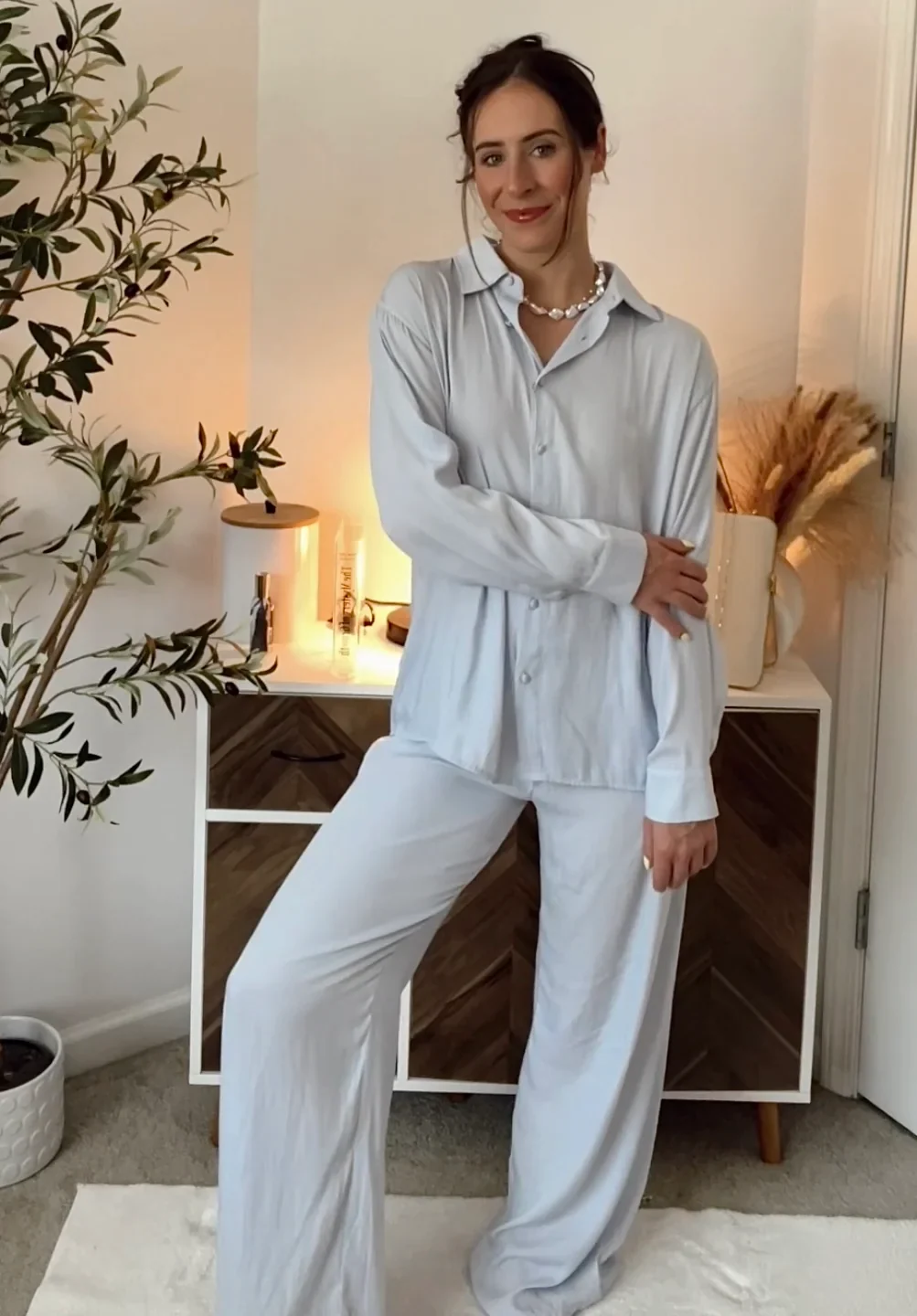
By contrast, the Serene Sleep Pajama Set is listed as 100% polyester and fits slightly oversized; the model is wearing an XS. Its description identifies a button-top pajama top and pants with side pockets. The stated fit note is more informative about overall ease than the fiber percentage, though it still does not provide garment measurements. See the Serene Sleep Pajama Set specifications when deciding whether the described oversized fit matches your preference.
Let comfort preferences guide the final choice
Before choosing a size, consider what comfortable fit means to you in that garment category. Do you like a tank to sit close to the body, or do you prefer extra ease? For a dress, is a longer hem important? For sleepwear, would you rather have room to move? These questions make the listed details more useful because they connect the specifications to your actual priorities.
Also separate ease from stretch. Ease is the room built into a garment compared with the body; stretch describes how a fabric can give. A garment may have one without offering much of the other. A loose shape can have little stretch, and a close-fitting knit can have some give. Do not assume one characteristic from the other.
If you are browsing by garment type, the tops collection can help you compare listed details across styles. Read each item’s specifications independently: similar categories do not mean identical cuts, measurements, or materials.
Check care and construction information, too
Fiber content is not a care instruction. Always treat the garment care label as the final authority, and check the product’s stated care information when deciding whether a piece suits your routine. Do not infer washing or drying directions from a fiber name alone.
For any fit question that remains, identify the missing information precisely. You may need a garment length, a flat measurement, or clarification about the fit note. If a detail is not listed, it is better to make a decision with that uncertainty in view than to treat stretch content as a substitute for the specification.
A practical way to make the call
Read the fiber blend for material context, then find the explicit fit note, size range, and construction details. Compare measurements with a garment you already like when measurements are provided. Finally, weigh those clues against your personal preferences for room, coverage, and movement. For more fabric context, you can also read sets and loungewear details alongside the product information for an individual style.
Stretch can help you ask better questions about a garment, but it cannot settle every question of fit. The most reliable choice comes from combining what the listing actually says with what you know about how you like clothes to feel.