A fiber-content line can help you ask better questions about a garment, but it cannot tell the whole story. Cotton blends may combine fibers for different qualities, yet the exact feel and performance depend on the fabric construction, garment design, fit, and care instructions. Treat the label as a useful starting point rather than a promise about how a piece will feel on your body.
When you shop, read the listed material alongside the product description and the garment care label. Check what the fabric is made of, how it is constructed, and whether the shape suits the way you plan to wear it. Those details offer a more grounded picture of everyday comfort than a fiber name alone.
Start with what fiber content can—and cannot—say
Cotton is a natural fiber, and a cotton blend combines cotton with one or more other fibers. The proportions matter: a fabric with a high cotton percentage is not the same as one with a small amount of cotton. But percentages do not translate neatly into a single feeling. Two fabrics with similar fiber content can feel different because they are knitted or woven differently, finished differently, or made at different weights.
Blended fibers can change a fabric’s hand, drape, stretch, or recovery, depending on the fibers and construction involved. That is a reason to look closely, not to assume a particular result. A small amount of stretch fiber, for example, may be included in a fabric, but the content line alone does not tell you how much stretch the finished garment has or how it will fit.
If a listing includes a specific composition, use it as factual context. If it does not, do not fill in the blank by guessing. Look for fuller product details, or make your decision based on what is clearly stated.
Read the description for construction clues
Construction details help explain how fabric becomes clothing. Terms such as ribbed, lined, fitted, or relaxed describe features that can affect how a garment sits and moves. A close-fitting cut may feel different from an easy silhouette even when the materials are similar. Neckline, straps, waist treatment, and garment length can also shape how comfortable a piece feels in ordinary use.
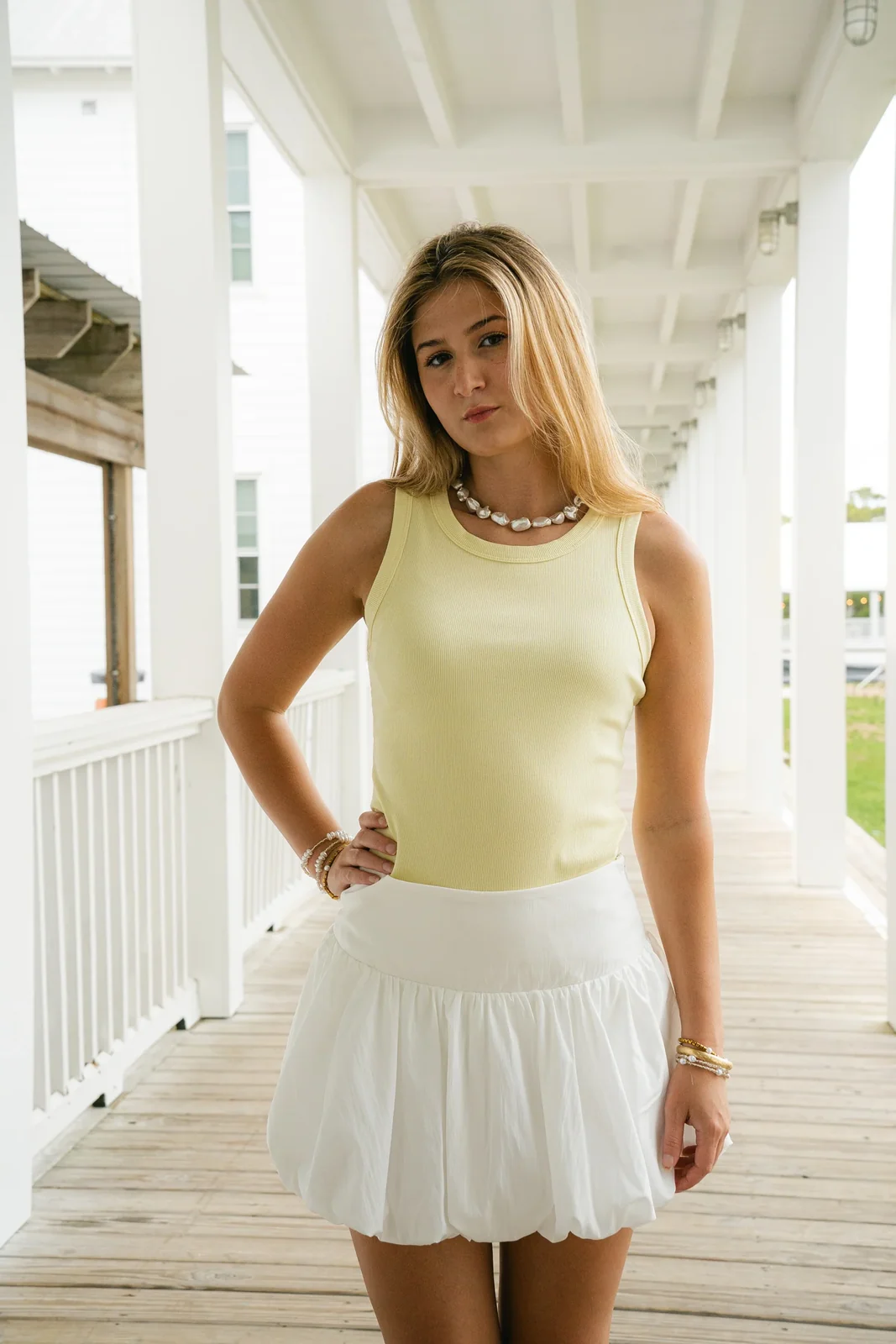
For instance, the Lemonade Love Tank is described as a rayon-spandex blend with micro ribbing, a wide racerback design, a rounded neckline, and a fitted silhouette. Its listed composition is 93% rayon and 7% spandex, and the description says it fits true to size with stretch. Those are useful details to consider together; they do not make it a cotton blend. You can browse the tops collection for other pieces and check each listing for its own material and construction notes.
That distinction matters. A familiar feature such as ribbing does not tell you the fiber content, and stretch does not automatically mean a garment will fit every body or preference the same way. Use the specific listing rather than transferring one garment’s details to another.
Use fit information as a separate clue
Fabric and fit work together, but they answer different questions. Fiber content describes the materials listed; fit notes describe the intended relationship between the garment and the body. A statement such as “fits true to size” is useful product information, but it is not a substitute for checking measurements when they are provided or considering how you prefer clothing to sit.
Think about where you want ease. For a fitted top, you may care most about the listed silhouette and whether the description mentions stretch. For a dress, you may pay closer attention to the bodice, straps, neckline, and overall length. There is no single comfort standard: some people prefer a close fit, while others want more room for movement.
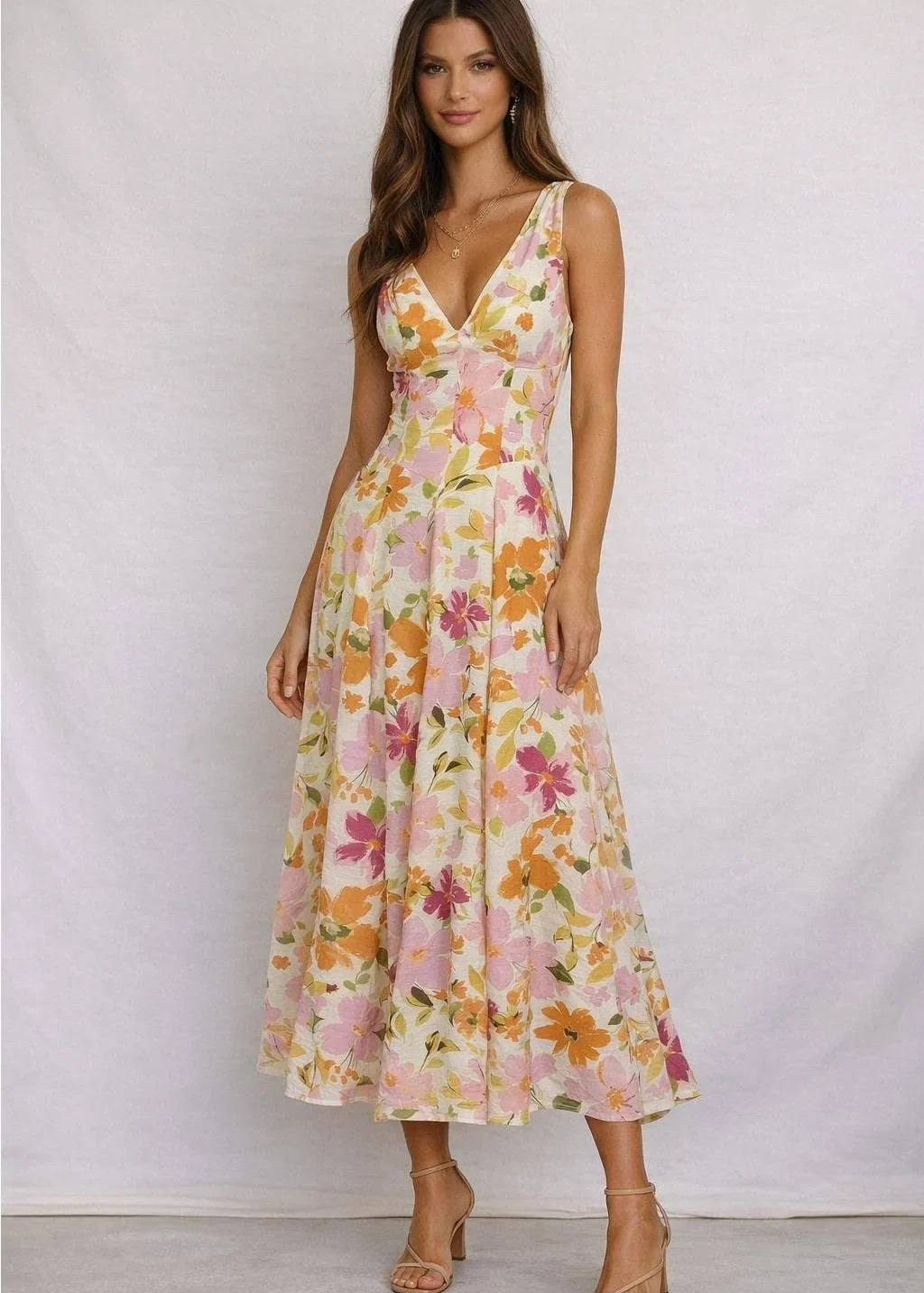
The Sunset Blossom Midi Dress is listed as 100% cotton and described as having a fitted bodice, a deep V-neckline, spaghetti straps, and a midi length. Its product details say it fits true to size. Those facts can help you picture its design, but they do not supply information that is not listed, such as the fabric’s weight or a measurement for each size. Check the listing for any additional details before making a choice.
Do not infer fabric from a garment’s purpose
Words such as lounge, active, or everyday describe how a garment might be used, not its fiber content. A coordinated set, for example, may have features relevant to comfort without the listing specifying its material. Avoid assuming that a piece is cotton, stretchy, breathable, or suited to a particular activity unless its product information supports that conclusion.
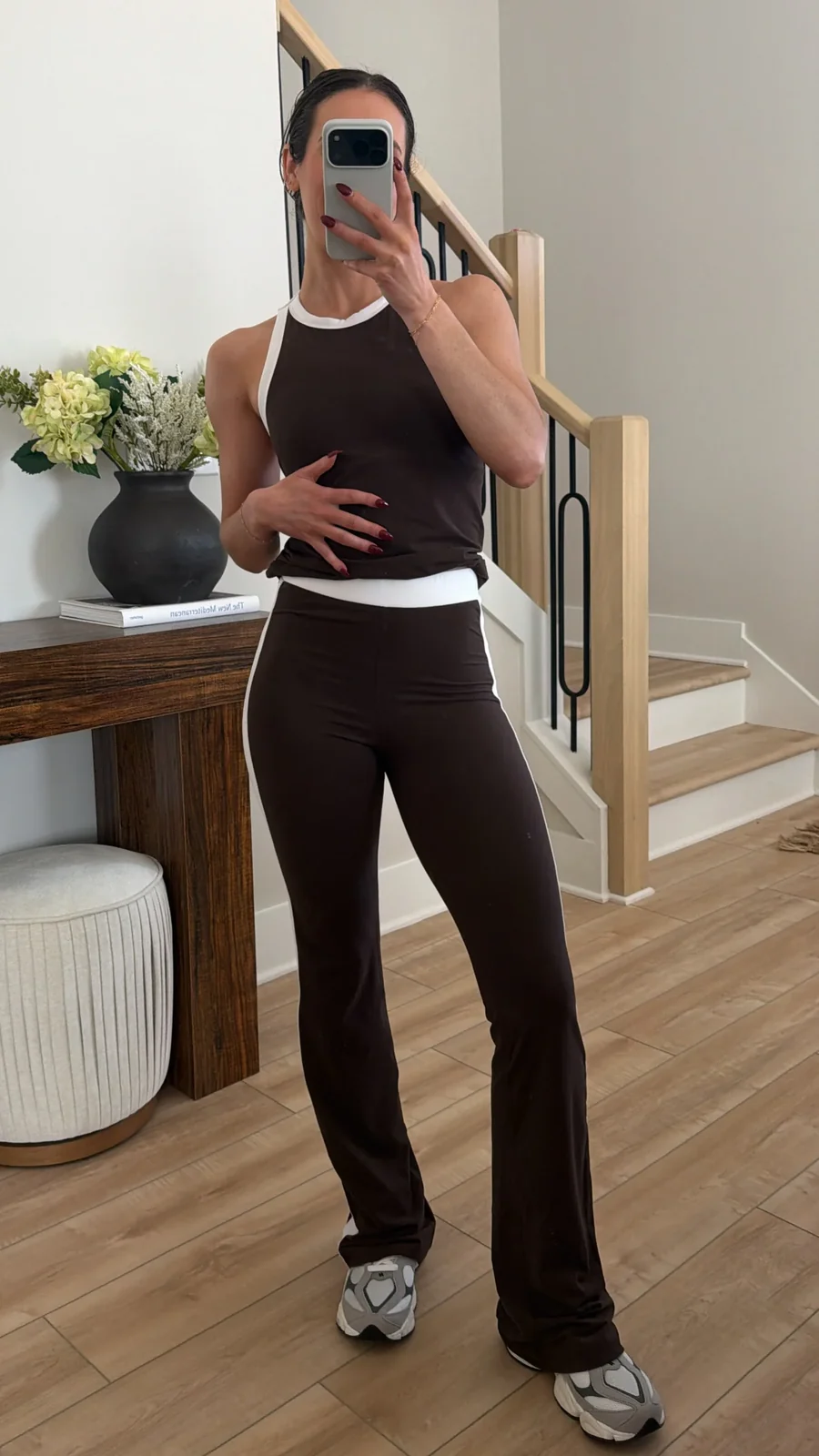
The Core Comfort Set is described as a two-piece set with a padded top, side-slit leggings, and an elastic waistband. Its material field does not provide a fiber composition in the available description. You can note those construction features, but you should check the product details for material information rather than guessing from the set’s name or suggested use. The sets and loungewear collection is another place to compare the details listed for individual pieces.
This is a practical habit for any category: read the facts provided, separate them from assumptions, and look for more information when a detail matters to you. If you want a particular fiber or need a specific fit characteristic, make sure it appears in the listing rather than relying on a category label.
Let the care label make the care call
Fiber content can offer context about a garment, but it is not a washing instruction. Do not choose a wash temperature, drying method, or ironing setting based on “cotton” or “cotton blend” alone. Fabric construction, finishes, trims, and the garment’s design may affect care needs, and those details are not always evident from the composition line.
The garment care label is the final authority. Read it before laundering, follow its instructions, and check the product listing for care details if they are provided. If a care instruction is missing or unclear, seek clarification instead of treating a general rule about one fiber as the garment’s specific direction.
Care guidance also belongs to the individual garment. Do not assume that two pieces with similar fiber percentages can be washed or dried in the same way. Keep the label with the garment, and revisit its instructions when needed.
A simple checklist before you decide
When comparing clothing, take a moment to check the details in this order:
- Fiber content: Note the listed fibers and percentages, if provided. Do not infer missing information.
- Construction: Look for details such as ribbing, lining, an elastic waistband, or a fitted silhouette.
- Fit: Read sizing notes and measurements, if available, and compare them with your preferences.
- Care: Follow the garment care label as the final authority, rather than relying on fiber content alone.
This approach keeps the decision tied to evidence. A cotton blend may be worth considering for its listed composition, but comfort is personal and depends on more than the fiber name. Product descriptions can help you understand design and fit; they should not be treated as a complete substitute for details that are not included.
Make the label part of your decision
Fiber content is useful when you want to know what a garment is made from. Construction notes and fit information help you understand how it is designed to sit, while the care label tells you how to look after it. Read those sources together, and keep uncertainty visible when the listing leaves a question unanswered.
That habit makes shopping more practical: focus on the details that matter for your day, compare like with like, and avoid assuming that a blend guarantees a particular feel or fit. A well-informed choice starts with the information available—and with knowing which questions still need an answer.