
A good road-trip outfit has to do more than look put together at the first stop. It should feel comfortable while seated, adapt when the car temperature changes, and make it easy to shift into a different look when plans call for a meal or a walk. Rather than packing a separate outfit for every mile, start with clothes that offer useful options: relaxed pieces, adjustable layers, and a change of top or bottom when you want one. A little attention to fit and garment details can make the trip easier before you leave the driveway.
Start with the hours you’ll spend seated
Driving and riding put different demands on clothing than a quick errand. A waistband that feels fine while standing may press when you sit for several hours, and a stiff layer can bunch against the seat. Before packing, try your planned outfit in a seated position. Check whether the waistband stays comfortable, the hem falls where you want it, and the top allows you to move your arms without pulling.
Think in terms of ease rather than a particular look. An elastic waistband, a relaxed cut, or a soft-feeling fabric may suit your preferences, but the product listing is the place to verify actual features and fit. If you are between sizes or unsure about a silhouette, review the stated fit notes instead of guessing. For a broader starting point, browse the bottoms collection and compare the details of each option before choosing what to wear for the drive.
Choose one outfit that can change roles
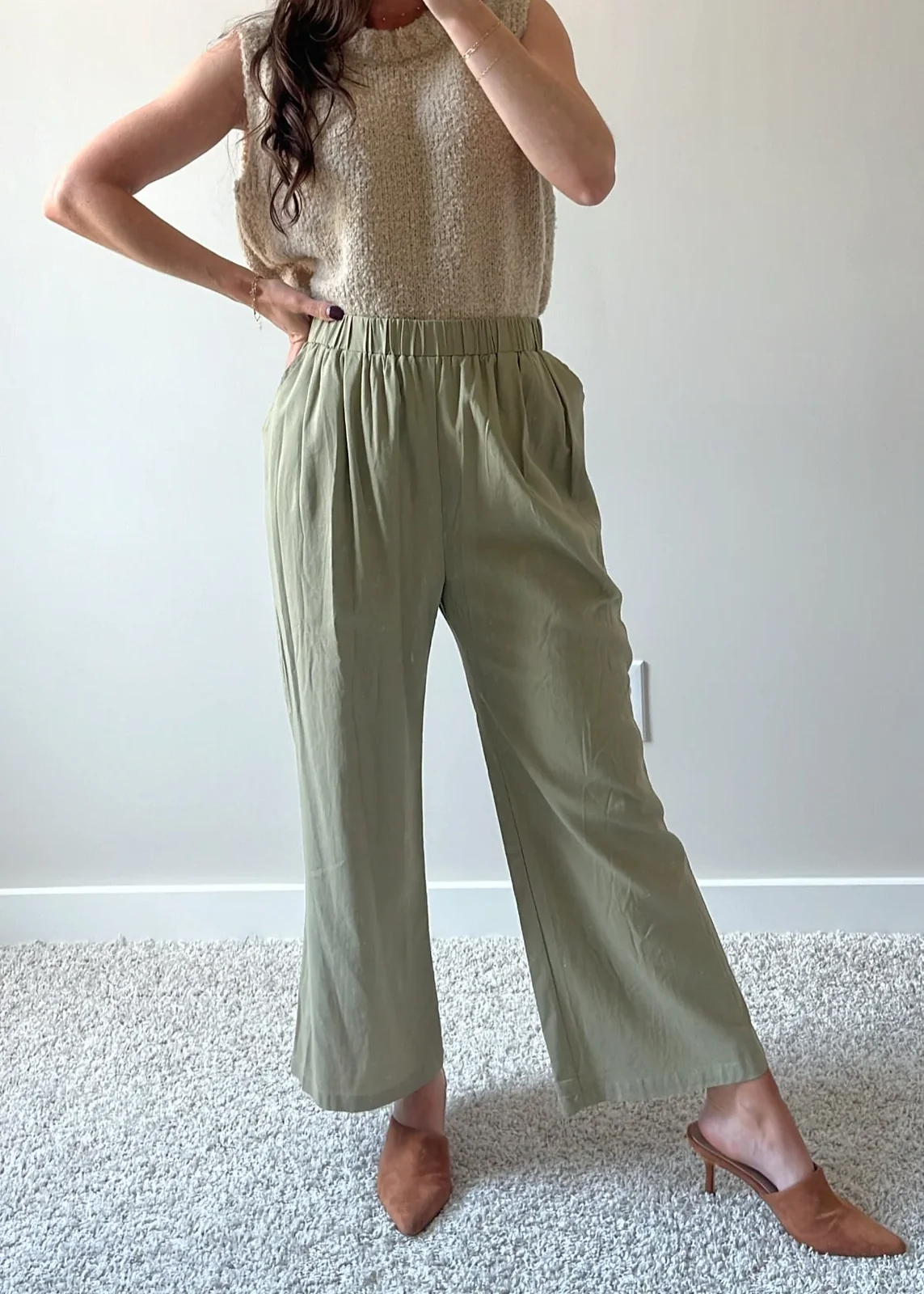
For a simple day trip, it can help to choose a base outfit that works for both the car and a casual stop. The Olive You Capri Pants have an elastic waistband, side pockets, and a lightweight, breathable description. They are made from 55% rayon and 45% linen, and the listed fit is true to size. Those details may make them worth considering for a warm-weather drive, though comfort is personal and depends on how a garment feels on you.
Pair a comfortable bottom with a top you can change without rethinking the whole outfit. A fresh shirt can make the same pants feel ready for a meal or a quick visit, while keeping your packing choices straightforward. Check the product details for the specific fit and material of any top you plan to bring. Avoid assuming that a fabric will behave a certain way based only on its name, and follow the garment care label if you need to clean or refresh it.
Use layers you can take off easily
Car temperatures can feel different from the weather outside, and a stop may bring a breeze or a cool indoor space. A layer that is easy to put on and remove gives you another option without requiring a full change. The Oat Latte Blazer is described as longline, with two front buttons; its listed material is 97% polyester and 3% spandex, and its fit is oversized. See the Oat Latte Blazer details if you are considering it as a finishing layer, and use the listed fit information to judge how it may work over your chosen top.
For travel, consider whether a layer sits comfortably when you are seated and whether you can remove it without disrupting the rest of the outfit. You might also check the garment’s length and closure details in the listing. These are practical questions, not a reason to assume every longline layer will suit every car seat or preference. The outerwear collection offers another place to compare available layer details. For care, the garment care label is the final authority.
Pack a coordinated change, not a full duplicate
A planned change can help when you want to feel fresher after a long stretch in the car. Instead of packing a second complete outfit by default, decide which piece you are most likely to want to switch: perhaps a top, a bottom, or a matching set. Keep the choice simple by selecting colors and shapes that can work with more than one item you are already bringing.
The Stars & Stripes Set is a coordinated option with a button-down top and boxer-style shorts with pockets. The set is listed as 60% polyester and 40% cotton, and its fit is described as slightly oversized. Consider the destination and weather before choosing shorts for a trip, and check the full listing for the details that matter to you. The sets and loungewear collection can help you compare coordinated choices. A set may also work as a change after the drive rather than as your seated travel outfit.
Make the outfit work at stops, too
Road trips often include a mix of sitting, standing, and short walks. Think about the actual stops on your route: a meal, a scenic pause, or time spent exploring a town may call for a different level of coverage or ease of movement. You do not need to dress for every possible activity, but you can avoid an outfit that only feels comfortable in one position. Try sitting, standing, and taking a few steps in your planned clothes before you leave.
Use product descriptions to check details rather than relying on a general impression from a photo. Note whether a waistband is elastic, whether pockets are listed, and how the fit is described. If a detail you care about is not stated, do not assume it; look for more information before deciding. A light layer can give the same base outfit another use when temperatures shift, while a change of top can make the return portion feel less like a repeat. Keep comfort personal: your own fit check matters more than a broad label such as “travel-ready.”
Plan around comfort, care, and real preferences
Before packing, make a short outfit plan for the drive, the main stop, and the return. Choose pieces you can comfortably sit in, then add one layer or change that gives you a practical alternative. If you expect warm weather, consider breathable options based on the material and construction stated in the listing. If you are sensitive to a waistband, sleeve, or particular fit, check that detail carefully and make your choice accordingly.
Finally, read each garment’s care information before the trip, especially if you expect to wear an item more than once. Fiber content alone does not tell you how a piece should be washed or handled; the garment care label is the final authority. Packing fewer, more versatile choices can make decisions easier, but there is no single formula that works for every traveler. Build around your route, your comfort preferences, and the clothing details you can confirm, then leave room for the trip to unfold.