A light outer layer earns its place when it works with the clothes you already wear and suits the moments you actually need it. Start with the product details: silhouette, fabric, closure, collar, and any stated fit guidance. Then consider what you plan to wear beneath it and where you will be going. A polished coat may suit a different routine than a short, casual layer, and neither is useful if it feels awkward over your usual outfits. A few practical checks can help you choose with more confidence.
Start with the situations you dress for
Think through a typical week rather than an imagined perfect occasion. Are you stepping outside between errands, commuting, meeting friends, or dressing for a day when temperatures may shift? The answer helps you decide whether you want a layer that looks structured, feels relaxed, or works over a wider range of outfits. Consider where you will wear it, too: a long coat may feel at home in a setting where you want a more finished look, while a compact layer can be easier in crowded spaces or when you will be moving around often.
Write down two or three outfits you would genuinely wear with the piece. If it only works with a special outfit you rarely reach for, it may not serve your everyday wardrobe as well as a layer that complements familiar separates. The goal is not to find one coat for every circumstance. It is to choose with your actual routine in mind.
Read the listed features, not just the styling
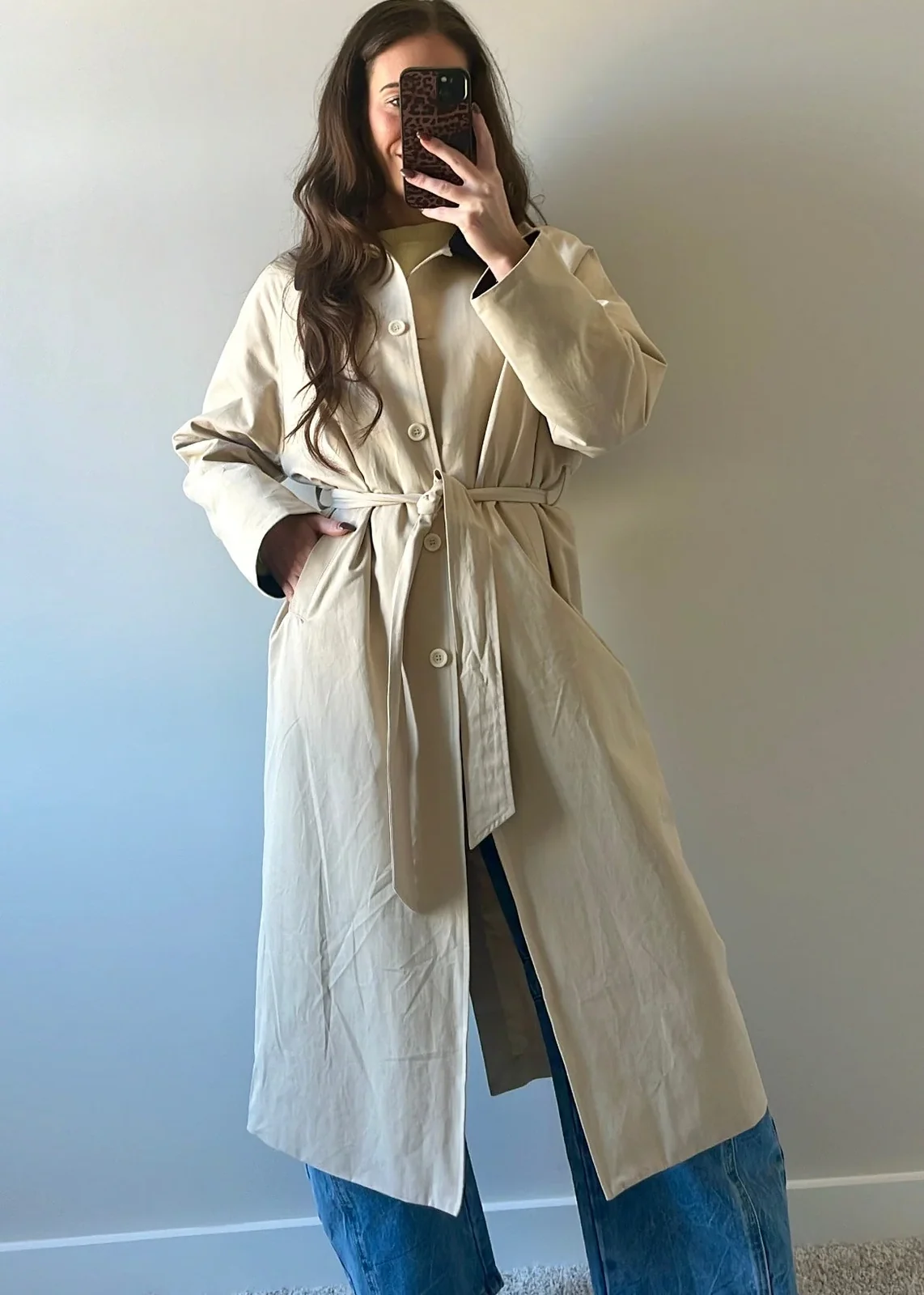
Product photographs can show proportion and color, but the written features tell you what details are specifically listed. Look for silhouette, collar, cuffs, pockets, closures, and length. These details affect how a layer looks and how you might wear it. For example, the Côte d’Azur Trench Coat is described as a longline trench with a structured collar and contrasting collar and cuffs. Its source description also lists a soft neutral base with navy accents and 100% cotton material.
That information can help you picture it with your own clothes, but it does not answer every question. If a detail matters to you—such as whether a coat has a particular closure or how its lining feels—check the listing rather than assuming. Use what is stated as your starting point, and let the features that matter most to your routine guide the comparison.
Plan for the layers underneath
A coat can fit as expected over a thin top and feel quite different over a sweater or a double-layered shirt. Before choosing a size, consider the clothes you expect to wear beneath it most often. If you can try it on, test it over a typical outfit and move your arms forward and upward. Notice whether the shoulders, sleeves, and body feel comfortable without pulling. If you are shopping from a listing, review its fit notes and model sizing, then compare those details with a garment you already own when measurements are available.
The Côte d’Azur Trench Coat is listed as fitting true to size or slightly oversized; Brooke is wearing a size Small. That is useful context, not a promise that the same size will suit every person or preferred layer. The Autumn Essentials Long Sleeve Top is described as double layered, in jersey knit, with a square neck. Thinking about those details makes it easier to picture how a top may sit beneath a coat.
Match the silhouette to your usual outfits
Length and shape influence how an outer layer works with the clothes already in your closet. A longline silhouette creates a different proportion from a cropped layer, so consider the hems you commonly wear beneath it. If you often wear dresses, imagine the coat open and closed over the dress; if separates are your default, picture it with the tops and bottoms you reach for on ordinary days. You do not need to follow a styling rule. You need to decide whether the proportions feel like something you would enjoy wearing.
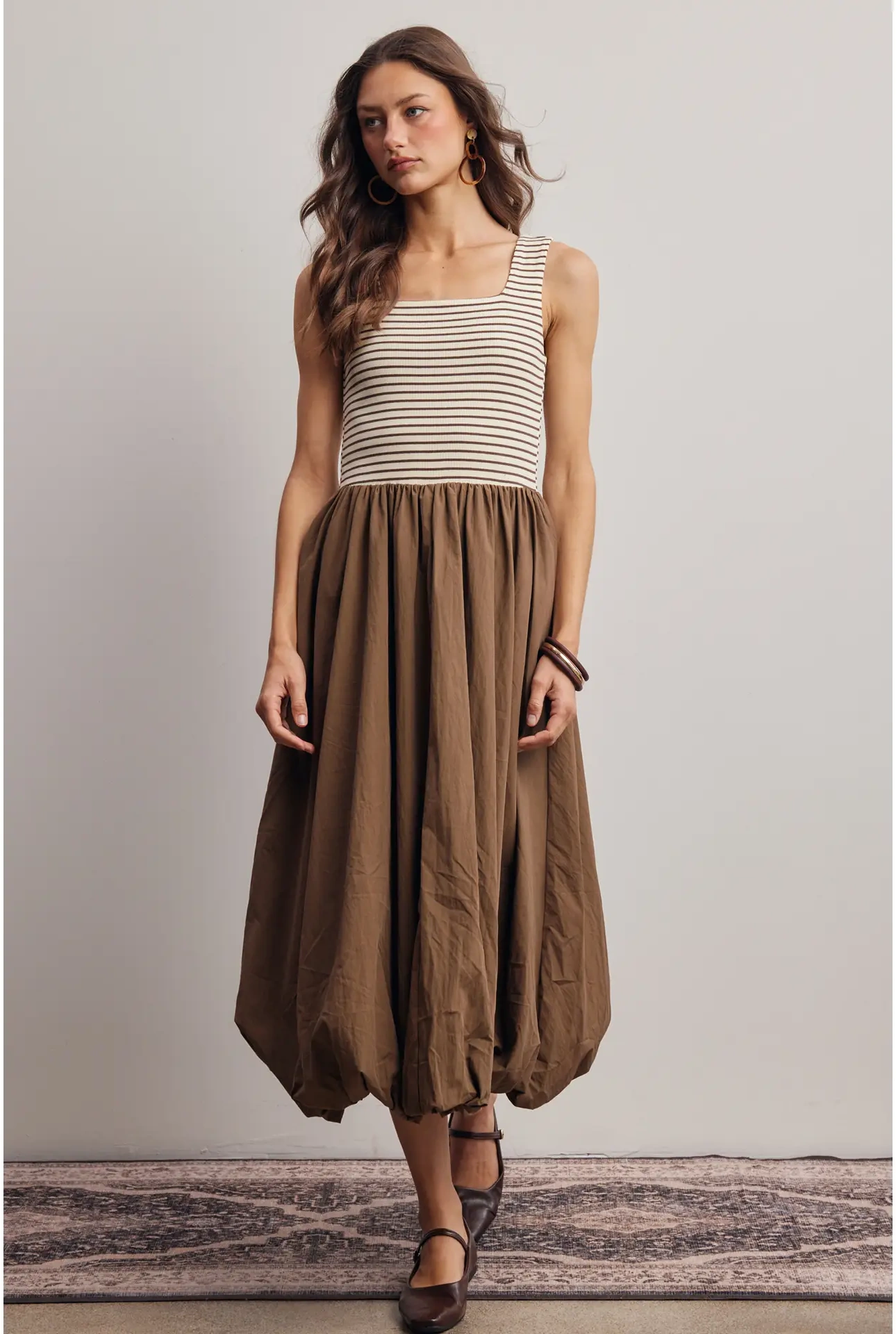
The Meadow Muse Bubble Dress is described as midi length, with a striped bodice and gathered bubble-style skirt. Those listed features offer a concrete outfit to consider alongside a longer outer layer. For more options to compare, browse the dresses collection and think about the lengths and shapes you wear most. Your own wardrobe is the best reference point.
Choose for comfort through a real day
Appearance matters, but a layer that interrupts your day may stay on its hanger. Think about how you move, how long you will wear it, and whether you need to put it on or take it off easily. A structured collar, sleeves, and overall length can all affect how a coat feels in use. If you have the opportunity to try it on, sit, reach, and walk in it. Check whether the fabric and construction suit the conditions you expect; a product description may not answer every question about warmth or weather performance.
For online shopping, use the listing’s stated features and fit guidance, and contact the boutique if you need clarification about a detail that has not been provided. Avoid treating a season label or a styled photograph as a technical promise. The most helpful choice is the one whose documented features, fit, and intended use align with your own needs.
Keep care and repeat wear in view
Before deciding, check whether the garment’s care requirements suit your routine. The fiber content alone is not enough to determine how a particular garment should be cleaned or maintained. The garment care label is the final authority; follow it rather than relying on general assumptions about a material. When care details are not available in a listing, ask before purchasing if they are important to your decision.
Finally, imagine wearing the layer with at least a few outfits you already own. Can it work over your regular tops, fit the settings you frequent, and remain comfortable across the day? Those are more useful tests than asking whether a piece is versatile in the abstract. A considered choice does not have to match every item in your closet. It should make several familiar outfits easier to finish, while feeling appropriate for the occasions when you expect to reach for it.