A long travel day can move through cool terminals, warm vehicles, waiting periods, and a change of plans. Clothing cannot control those conditions, but a flexible outfit can make them easier to manage. Start with a base layer that feels right for the first part of the trip, then add a layer you can put on or remove without changing the whole outfit. Choose pieces that work together and check their details before you pack. The goal is not an outfit that promises comfort in every setting; it is a practical combination you can adapt as the day unfolds.
Start with the conditions you expect
Before choosing clothes, think through the trip in stages: departure, time in transit, any transfers, and arrival. A chilly early start followed by a warm afternoon calls for a different plan than a day spent mostly indoors. Consider whether you will be sitting for a long stretch, walking between stops, or changing locations often. Those details can help you decide how much layering makes sense and whether a skirt, leggings, or another familiar bottom suits your plans.
Check the forecast for both ends of the trip, but leave room for indoor temperature changes. A light layer can be useful even when the outdoor forecast looks mild. If you tend to feel cold in air-conditioned spaces, plan for that specifically rather than assuming the temperature will stay consistent. Keep the outfit straightforward: a top, a bottom, and one layer that works with both. Simple choices are easier to adjust when the schedule changes or you need to get dressed quickly after arriving.
Choose layers you can adjust
Think in terms of removable layers rather than one heavy outfit. A soft base layer can sit under a cardigan, overshirt, or light sweater, depending on what you already own and what the forecast suggests. Aim for pieces that are easy to take off and put back on without disrupting the rest of your outfit. If you choose a sleeveless top, make sure your outer layer covers the situations where you would prefer more coverage. A layer should be useful, not merely an extra item to carry around.
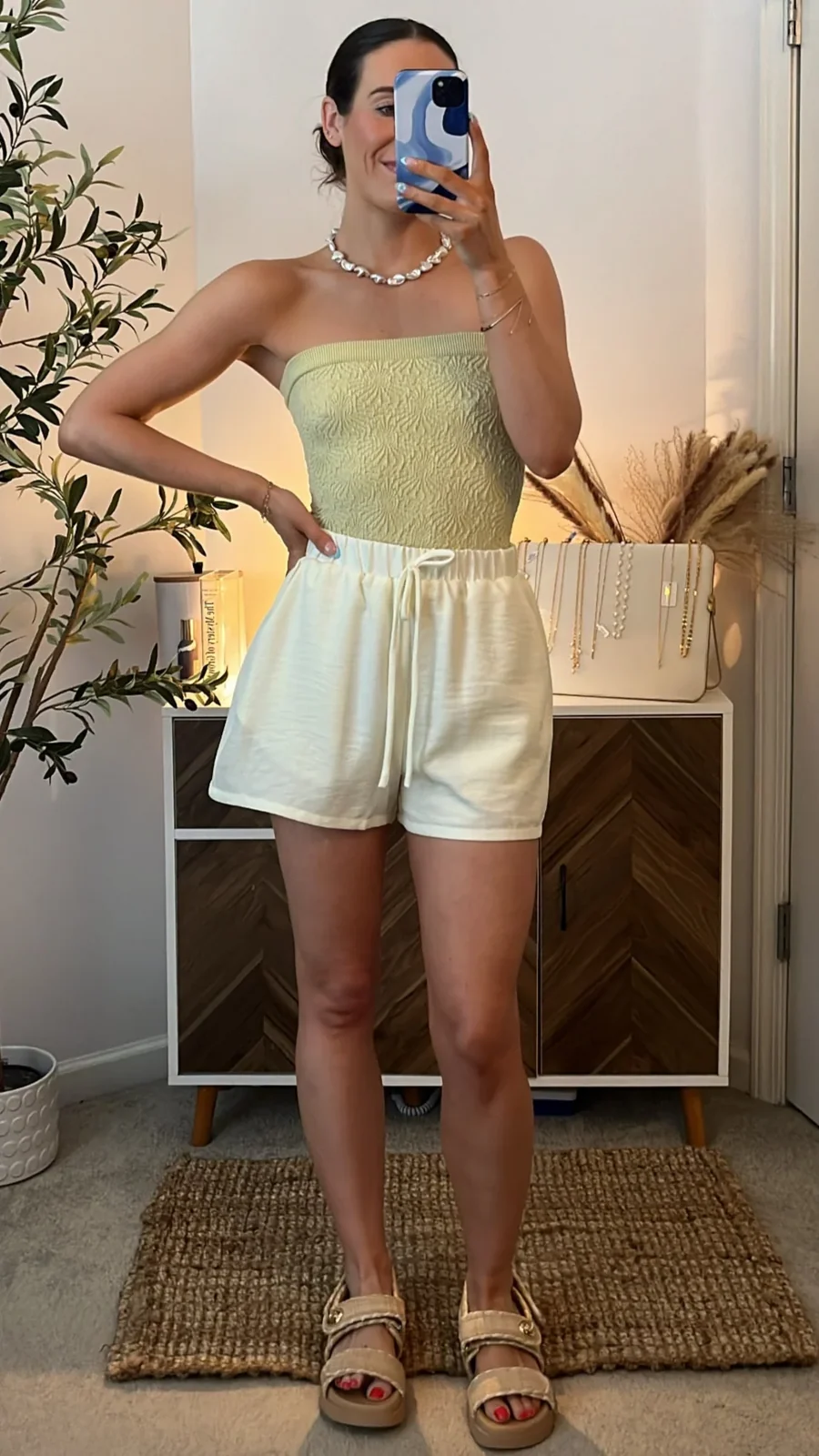
Pay attention to how the layers sit together. A bulky combination can feel awkward when you are seated, while a very loose outer layer may need frequent adjusting. Try the outfit at home and move as you expect to during the trip: sit, stand, reach, and walk. That quick check can reveal a sleeve that rides up or a waistband that feels restrictive. For another piece to consider as a base, the Barefoot Bay Tube Top is described as knit, seamless, and stretchy, with modal, nylon, and spandex listed as its materials. Review the product details to see whether it suits your plans.
Make the base outfit easy to repeat
A travel outfit does not need several competing elements. Pick one top and one bottom that you already know how to wear, then use color or shape to make the combination feel intentional. Neutral shades can make coordination simple, while one brighter piece can add interest without requiring a complicated outfit. The useful question is whether each piece works with the others you plan to bring, not whether the combination follows a rule about what travelers should wear.
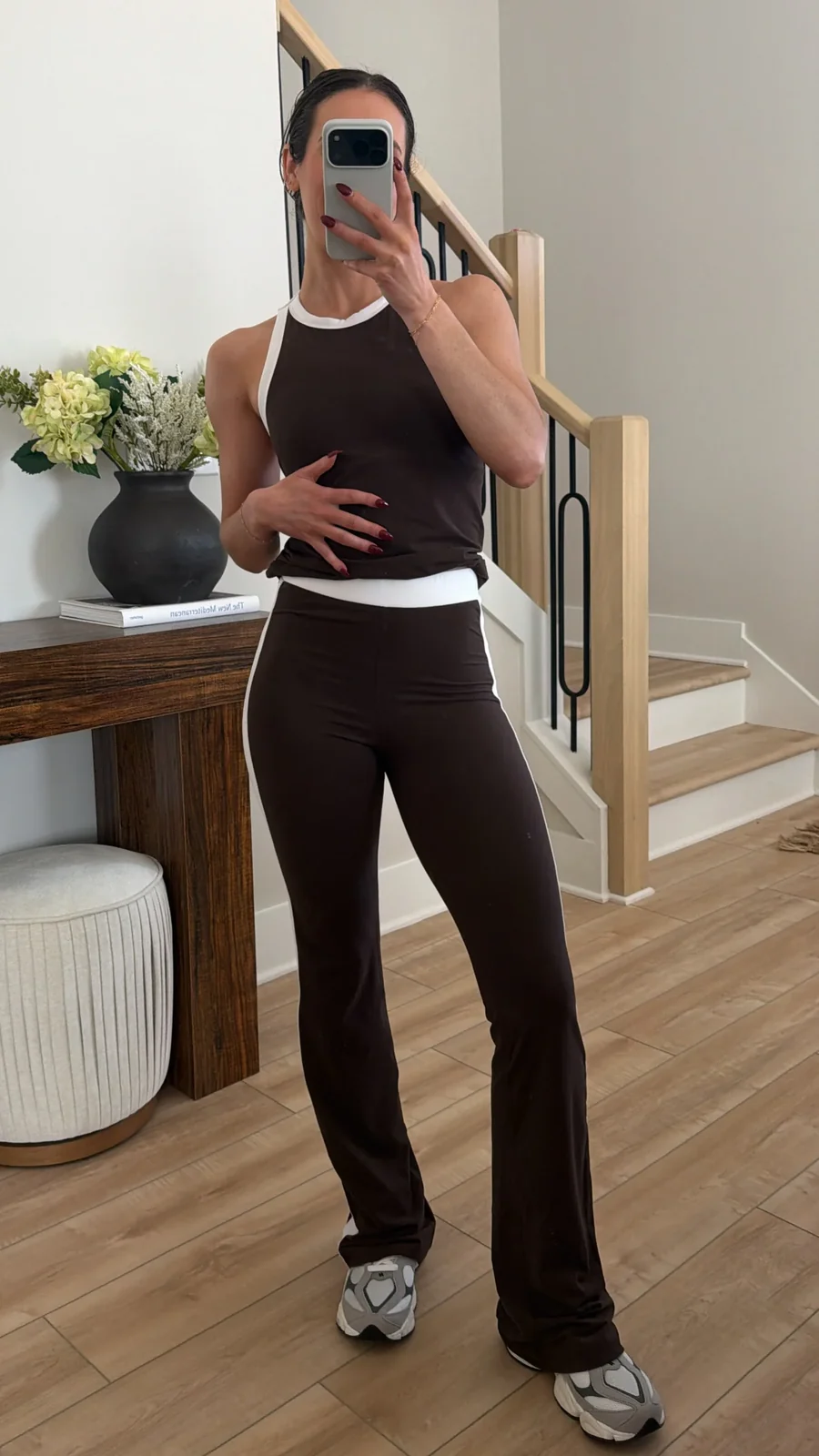
If you prefer a coordinated two-piece option, the Core Comfort Set is described as a two-piece set with a padded top, side-slit leggings, and an elastic waistband. The source description mentions unwinding and a Pilates class; it does not provide a fabric composition, so check the current product details for material information. You can browse the sets and loungewear collection for other options, then consider whether a particular outfit works for your itinerary. A matching set can simplify choosing an outfit, but it is still worth checking coverage, fit, and layering needs before you leave.
Choose bottoms for sitting and moving
Bottoms can feel different after hours of sitting than they do in a quick fitting-room check. Before traveling, wear your chosen pair at home for a little while. Notice whether the waistband stays where you want it, whether the fabric pulls when you sit, and whether the length works when you walk. Do not assume that a silhouette will suit every itinerary; a day with frequent transfers may call for a different choice than a direct ride followed by a quiet evening.
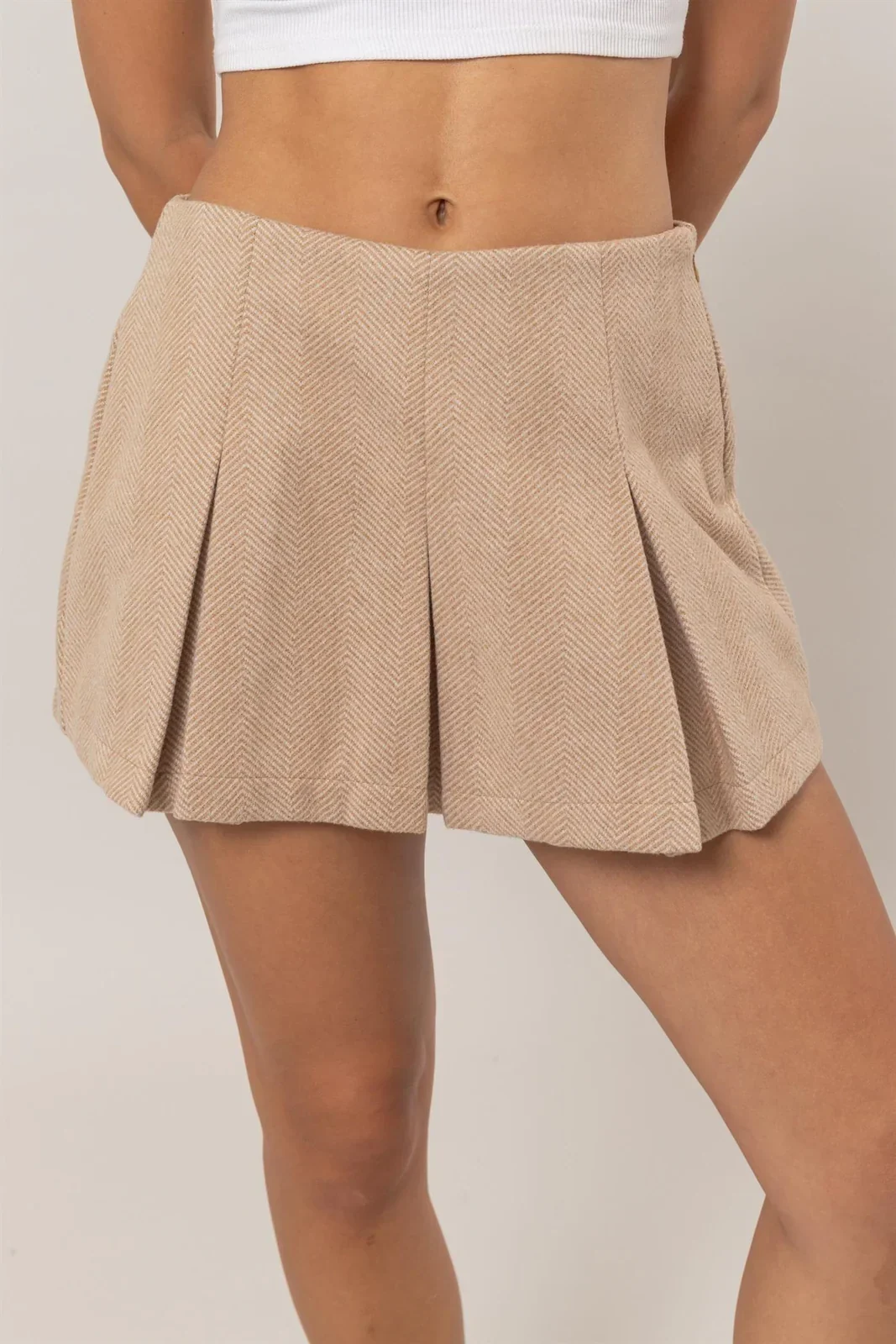
For a skirt-style option, the Parisian Pleated Skort is described as high-waisted, pleated, and secured with a side zip. Its material is listed as 100% polyester, and the description says it fits true to size. Those details can help you decide whether it fits your preferences, but they cannot answer every question about how it will feel during your trip. Check the size information and product details before deciding. You can also look through the bottoms collection to compare options, keeping your route and expected activity in mind.
Check product details before packing
Product descriptions can help you compare pieces, but do not fill in missing information with assumptions. Check the listed material, construction, sizing notes, and fit details for the exact item you are considering. A fabric name alone does not tell you how a garment will feel after several hours or how it should be washed. If a detail matters to your plans, look for it in the product information or ask the retailer rather than relying on a general rule.
Care instructions deserve a separate check, especially if the garment will need attention before or after the trip. The garment care label is the final authority; follow it rather than inferring washing or drying instructions from a fiber name. If you are deciding between two outfits, use the care label and product details as practical information, not as a reason to overpack. A piece that fits your actual plans and care routine is more useful than one chosen only because its fabric sounds convenient.
Keep the plan simple at departure
Lay out the full outfit before travel day and make sure the pieces work together without relying on an item you might remove. Then try sitting and moving in the combination. If a layer is too warm, awkward to take off, or difficult to coordinate, replace it with a simpler option. That small rehearsal gives you a chance to notice problems at home instead of during a transfer or while settling into your seat.
Finally, leave a little flexibility in the plan. Wear the layer that suits the first part of your day, and keep the rest of the outfit easy to adapt. You might encounter a colder cabin, a warmer station, or an unplanned stop; no single combination can predict every condition. A familiar base, one useful layer, and pieces that coordinate are a sensible starting point. Choose what works for your route, check the product information, and let the day—not an unrealistic promise of constant comfort—guide your final decision.